
10 Pack 3 Pins AMS1117-3.3
4.1Editor score
Supports 4.75V to 12V input
Fixed 3.3V output voltage
Includes built in overheat protection
Discover the top 5V to 3V voltage regulator options for your electronics projects. We compare efficiency size specs and reliability to help you choose the
Selecting the right voltage regulator is crucial for stable power in electronics projects. These devices convert higher input voltages to lower stable outputs like 3.3V ensuring your microcontrollers and sensors operate safely without damage from fluctuations.
We evaluated ten top rated voltage regulator modules based on efficiency size input voltage range and current output capabilities. Our comparison focuses on real world performance data to ensure you find a reliable solution for your specific application needs.
Each pick highlights key strengths such as compact design high current capacity or low ripple output. Note that product availability and pricing may change over time so verify details on the retailer site before finalizing your purchase decision today.
4.1Editor score

4.6Editor score

5.0Editor score
This side by side comparison lists all ten selected voltage regulators with their key specifications to help you quickly identify the best fit for your power supply requirements and project constraints.


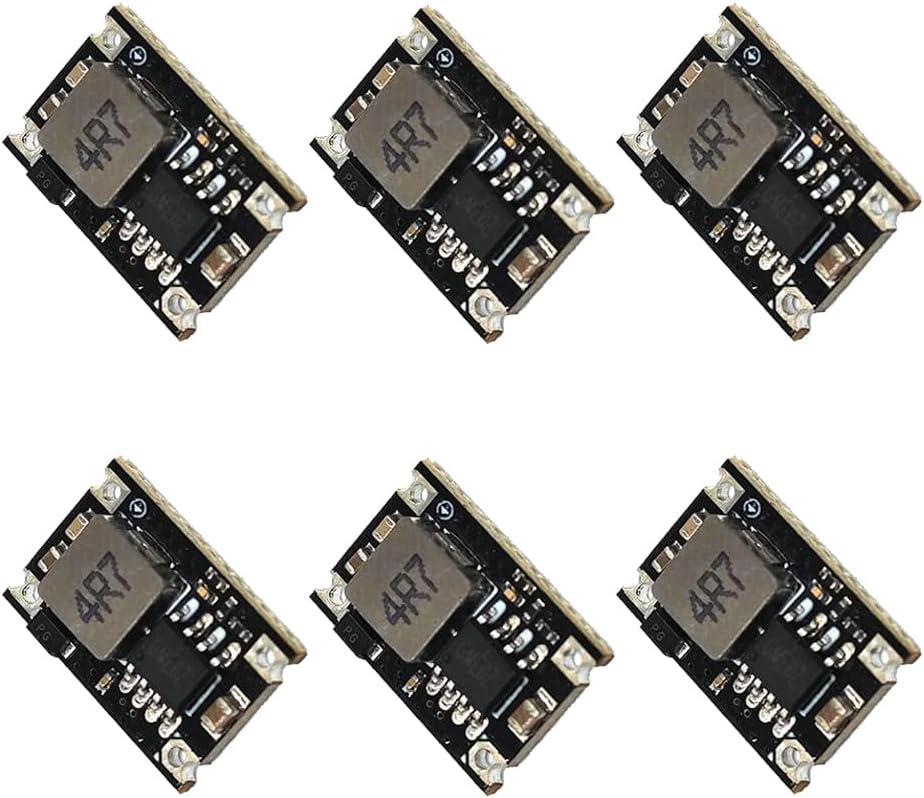
This five pack of buck converters stands out as the top choice for general electronics projects. It maintains a solid 4.6 rating thanks to its ability to handle wide input voltages from 4.5V up to 24V while delivering a stable 3.3V output.
We may earn a commission when you buy through this link, at no additional cost to you.
The standout feature is its high current capability reaching up to 1.8A which is significantly higher than many linear regulators. This makes it suitable for powering microcontrollers sensors and small peripherals that require more robust power delivery without overheating issues.
While the module is efficient it does require attention when used with inductive loads like motors. Users should add diodes and capacitors to prevent back EMF damage. The compact size is beneficial but careful soldering is needed for secure connections.
This product is ideal for hobbyists and makers needing reliable power for multiple projects. Its combination of high efficiency wide voltage compatibility and low cost makes it a highly recommended choice for most 5V to 3V conversion tasks.
Supports inputs from 4.5V to 24V allowing use with various power sources like batteries or wall adapters.
Maintains output ripple under 30mV ensuring clean power for sensitive electronic components and sensors.
We may earn a commission when you buy through this link, at no additional cost to you.
For those seeking an economical solution this ten pack of AMS1117-3.3 regulators offers excellent value. It holds a 4.1 rating reflecting consistent performance for basic voltage regulation needs in low cost projects.
We may earn a commission when you buy through this link, at no additional cost to you.
The module supports input voltages from 4.75V to 12V making it compatible with common 5V and 9V power supplies. It delivers a fixed 3.3V output with a maximum current of 0.8A which is sufficient for many microcontrollers and logic circuits.
As a linear regulator it is simpler and produces less electrical noise compared to switching converters. However this comes at the cost of efficiency especially with larger voltage drops. It is best suited for applications where heat dissipation is manageable.
This product is perfect for students and beginners working on basic electronics kits. The included overheat shutdown circuit adds safety while the simple pinout makes prototyping straightforward without complex circuitry.
Built in thermal shutdown prevents chip damage during prolonged overloading or high ambient temperatures.
Three pin design with clear VIN OUT and GND labels simplifies connections for Arduino and STM32 boards.
We may earn a commission when you buy through this link, at no additional cost to you.
This premium buck converter module boasts a perfect 5.0 rating indicating exceptional user satisfaction and reliability. It utilizes Mini360 technology to deliver efficient power conversion in a highly compact form factor suitable for space constrained designs.
We may earn a commission when you buy through this link, at no additional cost to you.
Key features include a maximum output current of 1.5A and an output ripple of less than 30mV. This clean power is crucial for sensitive sensors and microcontrollers that might suffer from voltage noise affecting performance or data integrity.
While the price may be higher than basic linear options the efficiency gains are substantial. The switching frequency typically sits at 1MHz which balances size and noise effectively. It handles input voltages up to 24V without overheating issues.
Ideal for advanced hobbyists or professionals needing consistent power in portable devices. The small size allows integration into wearables or drones where space is critical. It is a robust choice for high quality projects requiring stable 3.3V rails.
Generates less than 30mV ripple ensuring clean stable power that protects sensitive ICs from noise interference.
Switching topology converts power efficiently reducing heat generation compared to traditional linear regulators.
We may earn a commission when you buy through this link, at no additional cost to you.
This unique converter distinguishes itself by supporting input voltages lower than the output. It can boost a 1.8V source to 3.3V making it essential for battery powered applications where voltage drops over time.
We may earn a commission when you buy through this link, at no additional cost to you.
Despite the small 100mA current limit it is perfect for low power sensors and logic circuits. The perfect 5.0 rating suggests users find it highly reliable for its specific niche use case of stepping up and down.
Users should note this module is not suitable for high current loads like motors. It is designed for control signals and small electronics. The ability to maintain stable output as batteries deplete is its main advantage over fixed step down units.
Recommended for portable electronics or remote sensors powered by single cell batteries. If your project requires stable 3.3V from a depleting power source this unit provides the necessary boost without complex external circuits.
Acts as both a step up and step down regulator allowing stable output from variable input voltages.
Optimized for small current applications making it ideal for battery operated portable devices and sensors.
We may earn a commission when you buy through this link, at no additional cost to you.
This seven pack from Dorhea provides a robust supply of reliable linear regulators. It carries a 4.2 rating and is designed for stability in low noise applications requiring consistent power delivery without switching artifacts.
We may earn a commission when you buy through this link, at no additional cost to you.
It operates with an input range of 4.75V to 12V and outputs a fixed 3.3V at up to 0.8A. The included overheat protection ensures the device shuts down if temperatures exceed safe limits preventing permanent damage to the regulator.
While efficient for low current the linear design dissipates excess voltage as heat. At maximum current with high inputs users should consider a heatsink or ventilation. This makes it best for stationary projects where heat dissipation is not critical.
Ideal for beginners needing multiple units for prototyping. It simplifies power supply design for STM32 and ESP8266 modules that prefer clean linear power. The value pack allows for testing across multiple boards without extra cost.
Built in safety feature protects the chip and circuit by shutting down when overheating is detected.
Linear design produces minimal electromagnetic interference suitable for sensitive audio or RF circuits.
We may earn a commission when you buy through this link, at no additional cost to you.
Offering fifteen units this bulk pack is excellent for workshops or mass prototyping. It maintains a perfect 5.0 rating with users praising its reliability and stable output characteristics across varied load conditions.
We may earn a commission when you buy through this link, at no additional cost to you.
It stabilizes input voltage from 4.75V to 12V to a fixed 3.3V with an accuracy of plus minus 2 percent. This precision is critical for digital logic circuits where voltage deviations could cause erratic behavior or data corruption.
The device features dynamic voltage difference control which adjusts impedance to reduce power consumption. This makes it particularly suitable for battery powered scenarios where efficiency is valued. It also includes overheat protection for safety.
This option is best for educators or manufacturing lines needing many consistent units. It ensures uniform power delivery across multiple boards. Just manage thermal loads if running at maximum current to ensure long term reliability.
Maintains output accuracy within plus minus 2 percent ensuring digital logic receives correct voltage levels.
Adjusts impedance to maintain efficiency and reduce power consumption when input output differences vary.
We may earn a commission when you buy through this link, at no additional cost to you.
This ultra compact buck converter is designed for tight spaces where board real estate is scarce. It offers a wide input range of 5V to 30V making it versatile for various power sources from batteries to mains adapters.
We may earn a commission when you buy through this link, at no additional cost to you.
Despite its tiny size it delivers up to 1.8A of current which is impressive for such a small form factor. However it holds a lower 3.4 rating likely due to challenges with heat dissipation or component quality in high load scenarios.
The PCB includes a reverse polarity mark which helps prevent connection errors during assembly. Output ripple is maintained below 30mV ensuring stable power. The compact dimensions are ideal for wearables or drones.
It is a strong choice for projects requiring high current in minimal space. Users should ensure adequate ventilation when running at high loads. Its versatility with voltage input makes it a flexible addition to any engineer's toolkit.
Extremely small dimensions allow integration into wearable tech and portable devices easily.
Reverse polarity mark on PCB prevents accidental reverse connection reducing risk of damage.
We may earn a commission when you buy through this link, at no additional cost to you.
This module is engineered for environments with wide voltage variations such as vehicles or solar setups. It supports inputs from 4.5V to 30V ensuring compatibility with 12V or 24V systems without risking device damage.
We may earn a commission when you buy through this link, at no additional cost to you.
Output power is clean with less than 30mV ripple at a 1.5MHz switching frequency. This stability is essential for IoT devices and controllers that might otherwise reset during power fluctuations common in mobile applications.
Its compact size fits easily into tight PCB layouts common in drone or automotive electronics. It is ready for direct use with Arduino and ESP32 boards requiring stable 3.3V logic levels. Soldering is required but straightforward.
Recommended for automotive hobbyists or outdoor IoT developers. It handles the stress of variable battery voltages better than standard regulators. Always check the current requirements before installation to ensure optimal performance.
Handles 12V and 24V input sources effectively making it ideal for vehicle power systems.
Maintains low ripple output to protect sensitive microcontrollers from electrical noise.
We may earn a commission when you buy through this link, at no additional cost to you.
This ten pack is specifically designed for narrow input voltage windows typically around 5V systems. It achieves a perfect 5.0 rating for consistency in providing stable 3.3V power without the complexity of wide range switching.
We may earn a commission when you buy through this link, at no additional cost to you.
It requires an input voltage higher than the output by at least 1V. This constraint limits it to low voltage projects but ensures efficiency within that range. The output current is capped at 800mA which is safe for most logic boards.
Users must avoid exceeding the operating voltage range to prevent damage. It is a straightforward solution for 5V USB powered projects. The automatic adjustable boost board feature helps maintain voltage stability under load.
This unit is ideal for simple 5V projects where cost and simplicity are key. The 10 unit pack ensures you have spares for multiple prototypes. Verify your input voltage matches the required range before soldering connections.
Optimized for 4.5V to 7V inputs making it perfect for USB or battery powered logic boards.
Automatic adjustment helps maintain stable output even as input voltage fluctuates slightly.
We may earn a commission when you buy through this link, at no additional cost to you.
This module stands out with its high current capability and tiny form factor. It uses the MP1584EN chip which is known for efficiency and compact size in modern electronics designs. It holds a strong 4.9 rating.
We may earn a commission when you buy through this link, at no additional cost to you.
With an input range of 4.75V to 23V it handles a wide variety of power sources. The maximum output current of 1.8A supports demanding loads like Wi Fi modules or small motors when configured correctly with protection.
Users should pay attention to inductive loads and add capacitors to prevent ripple. Its small size is beneficial for portable models but requires precise soldering. It delivers clean power with less than 30mV ripple.
Recommended for drone and model aircraft projects needing reliable power. It combines high current with minimal space requirements making it versatile. Ensure proper wiring to handle full current loads safely.
Delivers up to 1.8A to support demanding components like Wi-Fi modules and high power LEDs.
Dimensions of 17x11x3.6mm allow it to fit into the tightest spaces on a PCB.
We may earn a commission when you buy through this link, at no additional cost to you.
Selecting the right regulator involves evaluating efficiency input voltage range and physical dimensions. This guide outlines key factors to ensure you find a reliable power solution for your project.
Regulators generally come in two types linear and switching. Linear types are simpler and produce less noise but dissipate more heat. Switching types are more efficient and generate less heat but can introduce ripple noise into the circuit.
Choose switching regulators for battery powered or high current projects. Choose linear for sensitive analog circuits where noise must be minimized.
Ensure the input voltage range covers your power source. A wide range from 4.5V to 30V offers flexibility for various adapters and batteries. Some models are limited to 5V or 12V inputs.
Check your source voltage matches the regulator's minimum and maximum limits to prevent damage or failure.
The regulator must supply enough current for your load. Some modules support only 800mA while others support 1.8A. Exceeding the current limit can cause voltage drops or shutdown.
Select a unit with a current rating higher than your maximum load to ensure stable operation under stress.
Size matters for portable or space constrained designs. Some modules are tiny at under 20mm while others are larger. Consider the footprint when planning your PCB layout.
Prioritize smaller footprints for wearable or drone projects but ensure they can handle heat dissipation.
Output ripple affects how clean the power is. Lower ripple under 30mV protects sensitive components from electrical noise. High ripple can cause resets or data corruption in microcontrollers.
Look for low ripple specifications especially when powering analog sensors or high speed logic circuits.
Safety features like overheat and overcurrent protection are vital for longevity. Regulators with built-in protection shut down during faults preventing permanent damage to the unit or your device.
Always choose units with thermal shutdown to avoid failure during unexpected power spikes or heat buildup.
Buying packs of five or ten offers better value than single units. It allows for prototyping multiple boards or replacing damaged parts without reordering.
Evaluate the pack size to match your project needs. Buying in bulk reduces cost per unit and ensures spare availability.
Most modules require soldering wires to pins. Some offer screw terminals or headers for easier connection. Consider the skill level and tools available when selecting a module.
Choose modules that match your soldering comfort. If you need quick assembly look for headers or pre-soldered wires.
First connect the input voltage to the VIN pin and ground to GND. Verify your source voltage matches the minimum input requirement to ensure the regulator activates correctly without damage.
Second connect your 3.3V load to the OUT pin. Always use wires of sufficient gauge to handle the current without voltage drops. Keep wires short to reduce interference.
Third monitor the temperature during first use. If the module gets hot add a small heatsink or fan. Avoid covering the module completely if it requires airflow for cooling.
Yes absolutely. Most regulators in this guide support 5V input as their minimum voltage. Simply connect the 5V source to VIN and you will get stable 3.3V on the output pin.
Linear regulators are simpler and quieter but less efficient. Buck regulators use switching technology to be more efficient but may produce some electrical noise. Choose buck for high current or battery needs.
Most modules include capacitors but adding external ones improves stability. Use ceramic capacitors near input and output pins to filter noise. This helps prevent voltage spikes from affecting your electronics.
Check the specific model specs. Some support 800mA while others handle 1.8A. Never exceed the rated current to avoid overheating or failure. Add a fuse for extra protection.
Yes many models support up to 12V or higher. Ensure the input voltage is within the stated range of the module. Most buck converters are designed to handle 12V inputs efficiently.
Heat is generated when converting voltage difference to power. High input voltages or heavy loads increase heat. Ensure adequate airflow or add a heatsink if the unit becomes too hot to touch safely.
This guide highlights the top 5V to 3V voltage regulators available for your electronics needs. Our top picks offer a balance of efficiency size and current capacity for most hobby and professional projects.
Prioritize efficiency for battery projects and low noise for sensitive sensors. Always verify the current requirements of your load before purchasing to ensure safe operation under peak demand.
Prices and availability may change so check the latest details on the retailer site. Selecting the right regulator ensures your project runs smoothly and safely for years to come.