
Bambu Lab A1
4.7Editor score
10000 mm/s² acceleration
Quiet operation
Full auto calibration
Compare the top 3D printers for fast printing speed including high-speed CoreXY models and multi-color systems to find the right rapid prototyping solution.
Modern 3D printing has evolved beyond slow prototyping into a rapid manufacturing tool. Speed matters when deadlines loom or iterations pile up. Selecting a printer built for velocity ensures your ideas move from digital files to physical objects without unnecessary delays.
We evaluated ten leading models known for their high-speed capabilities and reliable performance. Our analysis focuses on acceleration rates, build volumes, and software ecosystems that support fast workflows. Each candidate was chosen for its ability to maintain quality while pushing print speeds to the limit.
This guide highlights specific strengths and trade-offs for every model on the list. You will see detailed breakdowns of features like auto-leveling and multi-color support. Remember that prices fluctuate frequently so verify current offers before making your final purchase decision.
4.7Editor score

4.7Editor score

4.5Editor score
The following table provides a side-by-side comparison of all ten high-speed printers. It highlights key specifications like maximum speed, build volume, and special features to help you narrow down your options quickly based on your specific needs and budget constraints.
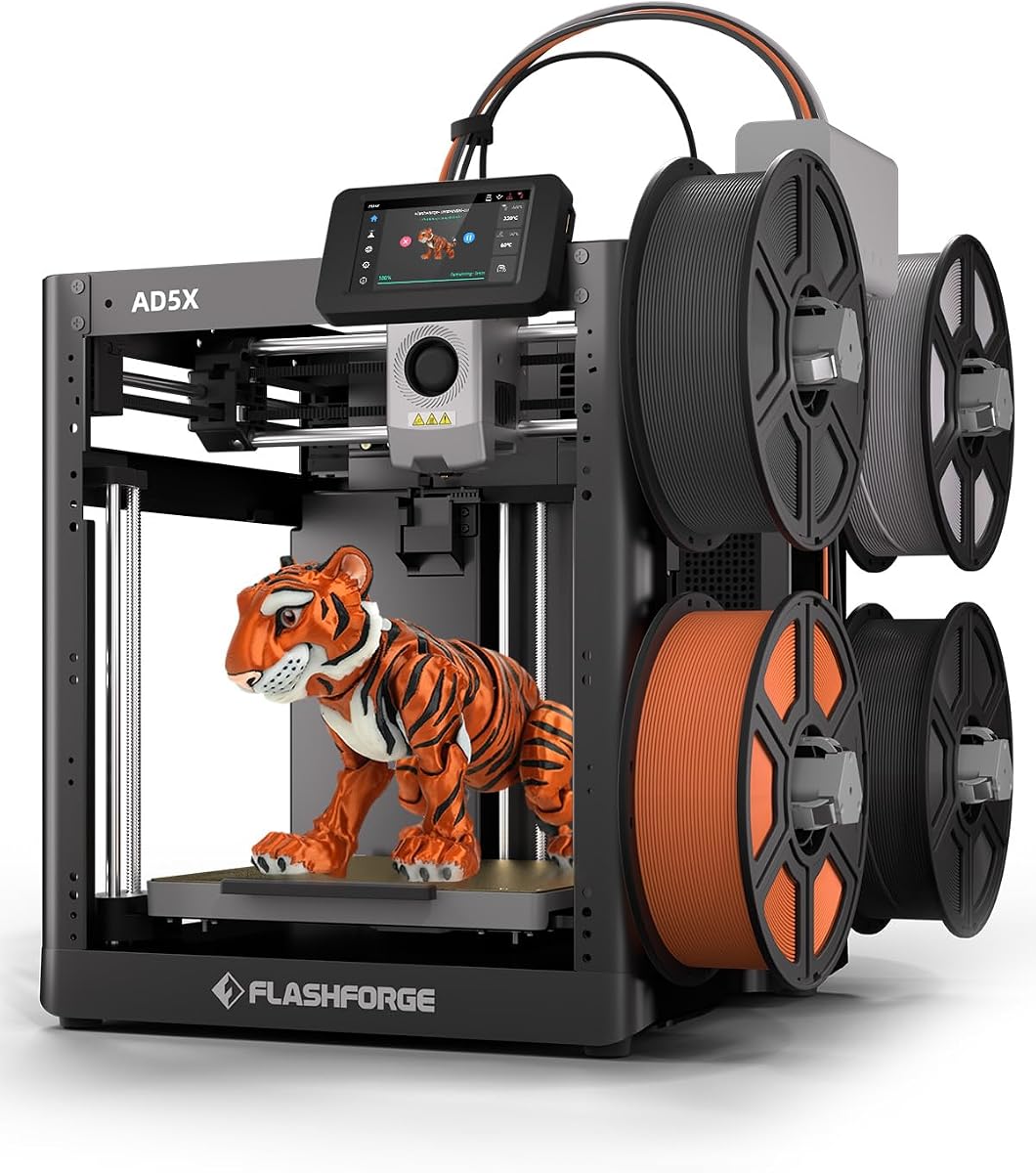



The FLASHFORGE AD5X stands out as a powerful option for users seeking rapid prototyping capabilities. With its CoreXY structure it delivers speeds up to 600mm/s while maintaining accuracy. This makes it ideal for batch production where time is a critical factor.
We may earn a commission when you buy through this link, at no additional cost to you.
Its multi-color capabilities are particularly impressive for a printer at this price point. The support for four colors simultaneously allows for vibrant designs without manual intervention. The 300°C extruder expands material compatibility to include engineering-grade filaments for tougher parts.
While the speed is commendable users should note that print quality requires tuning. The 1-Click Auto Leveling simplifies setup but consistent results depend on proper bed adhesion. The mobile app offers convenient remote monitoring which adds value to the workflow.
For makers needing speed and color versatility the AD5X is a strong contender. It balances performance with accessibility making it suitable for both hobbyists and small businesses. Ensure you allocate time for calibration to maximize its potential output.
Simultaneous four-color printing allows for complex designs without manual filament swaps or purging waste.
The 300°C direct drive extruder supports a wide range of materials including high-temperature engineering filaments.
We may earn a commission when you buy through this link, at no additional cost to you.
The Bambu Lab P2S Combo represents the pinnacle of high-speed consumer 3D printing. Its combination of the P2S printer and AMS 2 Pro offers a streamlined workflow for multi-color projects. Users report flawless corners and consistent results thanks to advanced servo technology.
We may earn a commission when you buy through this link, at no additional cost to you.
Speed is not just about velocity here; it is about reliability. The PMSM Servo Extruder and Active Flowrate Compensation ensure that fast prints do not sacrifice quality. The ability to dry filament internally keeps materials ready for immediate printing.
The setup process is remarkably fast requiring only fifteen minutes from unboxing to first print. This efficiency is supported by AI failure detection that monitors prints for errors in real-time. However the cost may be prohibitive for casual hobbyists on a tight budget.
For professional creators who value speed and color accuracy the P2S Combo is unmatched. It minimizes waste and maximizes uptime which justifies the investment for frequent users. The ecosystem of software and community models further enhances its value proposition.
PMSM Servo technology ensures precise control over filament flow for high-speed precision and consistent layer adhesion.
The AMS 2 Pro includes built-in drying to maintain material integrity and prevent moisture-related print failures.
We may earn a commission when you buy through this link, at no additional cost to you.
The Bambu Lab A1 brings high-speed printing to a more accessible price bracket without compromising on features. Its acceleration capabilities allow for rapid movement while maintaining precision. This makes it an excellent choice for beginners entering the world of fast 3D printing.
We may earn a commission when you buy through this link, at no additional cost to you.
Full-auto calibration eliminates the frustration of manual leveling which is a common pain point for new users. The Active Flow Rate Compensation algorithm ensures smooth extrusion even at higher speeds. Combined with quiet operation it fits well in shared living spaces or offices.
While the base model does not include multi-color printing it supports the AMS lite system for those who need it. The quick swap nozzle system simplifies maintenance and allows for easy upgrades. This flexibility extends the printer's utility over time.
For families or hobbyists prioritizing ease of use and speed the A1 is a top recommendation. It delivers consistent results with minimal intervention allowing users to focus on creation. The community support and software ecosystem are robust and welcoming.
Automated processes handle Z-offset and bed leveling ensuring a successful first layer every time without manual tuning.
Active motor noise canceling creates a quiet workspace suitable for environments where sound levels matter.
We may earn a commission when you buy through this link, at no additional cost to you.
The Anycubic Kobra X focuses on delivering native multi-color capabilities at a competitive price. It reduces purging and travel paths significantly which enhances speed and material efficiency. The LeviQ 3.0 system ensures a flawless first layer every time.
We may earn a commission when you buy through this link, at no additional cost to you.
With a maximum speed of 600mm/s it handles large models quickly. The AI monitoring features provide peace of mind by detecting spaghetti or foreign objects. Remote control via the app adds convenience for busy makers who cannot watch prints constantly.
Setup is straightforward allowing you to start printing within fifteen minutes of pickup. The large model library supports experimentation and learning for users of all levels. However the cost of filaments is extra which should be factored into your budget.
Ideal for schools or makerspaces the Kobra X balances performance with educational value. It offers a robust set of features that support diverse printing needs. Ensuring you have enough filament stocked will keep your workflow uninterrupted.
Reduced travel paths and purging save time and material compared to traditional multi-filament systems.
AI detection of foreign objects and spaghetti helps prevent print failures and saves valuable filament resources.
We may earn a commission when you buy through this link, at no additional cost to you.
The Snapmaker U1 introduces a unique approach to multi-material printing with its toolhead system. Swapping toolheads takes only five seconds which dramatically cuts down on downtime. This design minimizes waste and enables mixed-material prints seamlessly.
We may earn a commission when you buy through this link, at no additional cost to you.
Built for functionality it handles rigid and flexible materials together. The CoreXY motion system ensures stability even at high speeds. Smart calibration features adjust offsets automatically to maintain precision across different toolheads.
While expensive it offers capabilities that standard printers cannot match. Professionals can create complex assemblies with support materials that dissolve or break away easily. The included one-year warranty adds confidence for long-term use.
For workshops needing versatility the U1 is a powerful asset. It transforms how prototypes are built by reducing manual intervention. The learning curve is steeper but the results justify the effort for advanced users.
A robust locking mechanism allows tool changes in five seconds enabling fast transitions between materials.
Combine rigid and flexible filaments in one print for functional parts with integrated support structures.
We may earn a commission when you buy through this link, at no additional cost to you.
The Creality K2 Combo delivers a plug-and-play experience with high-speed capabilities. It is pre-assembled to minimize setup time so you can print immediately. The step-servo motors provide dynamic torque adjustment for consistent extrusion at high speeds.
We may earn a commission when you buy through this link, at no additional cost to you.
Quiet operation is a standout feature thanks to dynamically balanced fans. This makes it suitable for shared spaces where noise is a concern. The AI camera monitors the build for failures helping you catch issues early.
While the build volume is generous users need to purchase CFS units for multi-color. This flexibility allows scaling but adds to the total cost. The auto leveling sensor focuses only on the target area which speeds up calibration.
Best for users needing reliability and volume the K2 Combo is a solid choice. It balances speed with precision for a wide range of applications. Monitoring the community feedback can help resolve any firmware quirks quickly.
Step-servo motors adjust torque dynamically to maintain accuracy and reduce noise during high-speed movements.
The leveling sensor probes only the relevant print area saving time and improving calibration precision.
We may earn a commission when you buy through this link, at no additional cost to you.
Revisiting the A1 in this section highlights its consistent performance. It excels at maintaining speed without introducing vibration artifacts. The user-friendly interface makes it approachable for younger users or less technical enthusiasts.
We may earn a commission when you buy through this link, at no additional cost to you.
Active flow rate compensation keeps layers consistent even at high velocities. This feature is crucial for maintaining quality on detailed models. The quick-swap nozzle reduces downtime during maintenance which keeps the workflow moving.
Noise levels are low enough to fit in quiet offices or homes. This is a significant advantage over traditional printers that hum loudly. While it is not an industrial machine it handles hobbyist and educational tasks perfectly.
Choose the A1 if you value ease of use and quiet operation. It brings professional features to a consumer-friendly package. Regular firmware updates ensure it remains competitive in the fast-paced market.
Active flow rate compensation adjusts extrusion in real time for smooth surfaces on fast prints.
The 1-Clip nozzle system simplifies tool changes and cleaning for minimal downtime.
We may earn a commission when you buy through this link, at no additional cost to you.
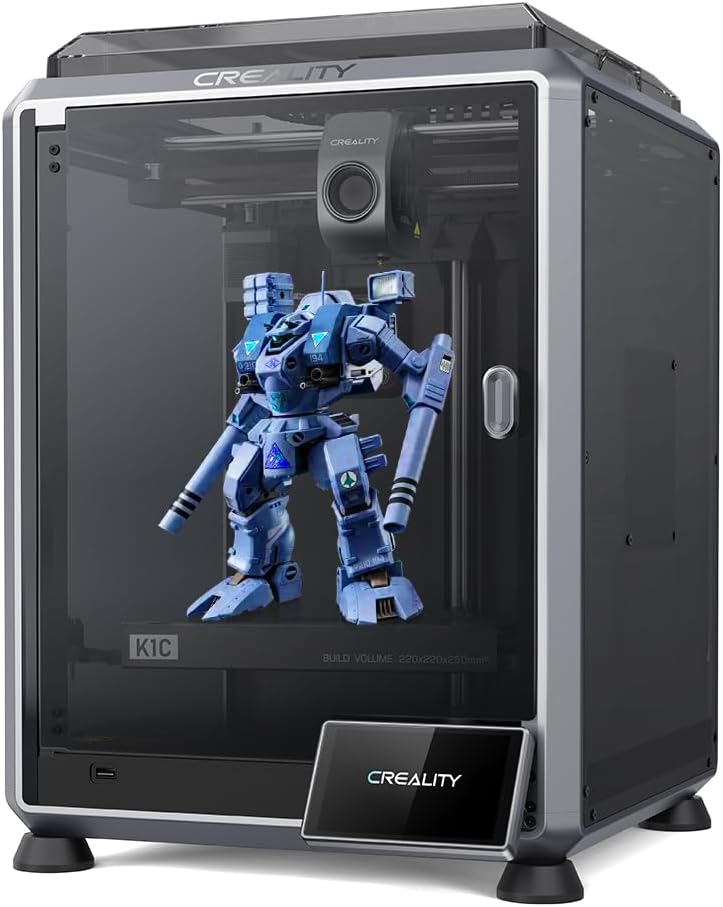
The Creality K1C is designed for users who need speed and material versatility. It supports carbon fiber filaments which are strong but abrasive. The clog-free direct extruder grips filament tightly to prevent slackening during rapid moves.
We may earn a commission when you buy through this link, at no additional cost to you.
Setup is incredibly fast allowing you to print within minutes of unboxing. Auto calibration handles Z-offset and leveling so you spend less time tinkering. The upgraded cooling structure ensures overhangs remain crisp even at high speeds.
AI monitoring tracks failures and debris which saves material on long prints. The hardened steel nozzle is essential for durable composite materials. This makes the K1C a workhorse for functional parts that require strength.
Ideal for engineering projects the K1C balances performance with practicality. It handles advanced filaments while keeping operation simple. Regular nozzle checks will extend its lifespan given the abrasive nature of its materials.
Designed specifically to handle carbon fiber filaments for strong and lightweight functional prototypes.
A bolster spring and ball plunger prevent clogging during rapid speed movements and material transitions.
We may earn a commission when you buy through this link, at no additional cost to you.
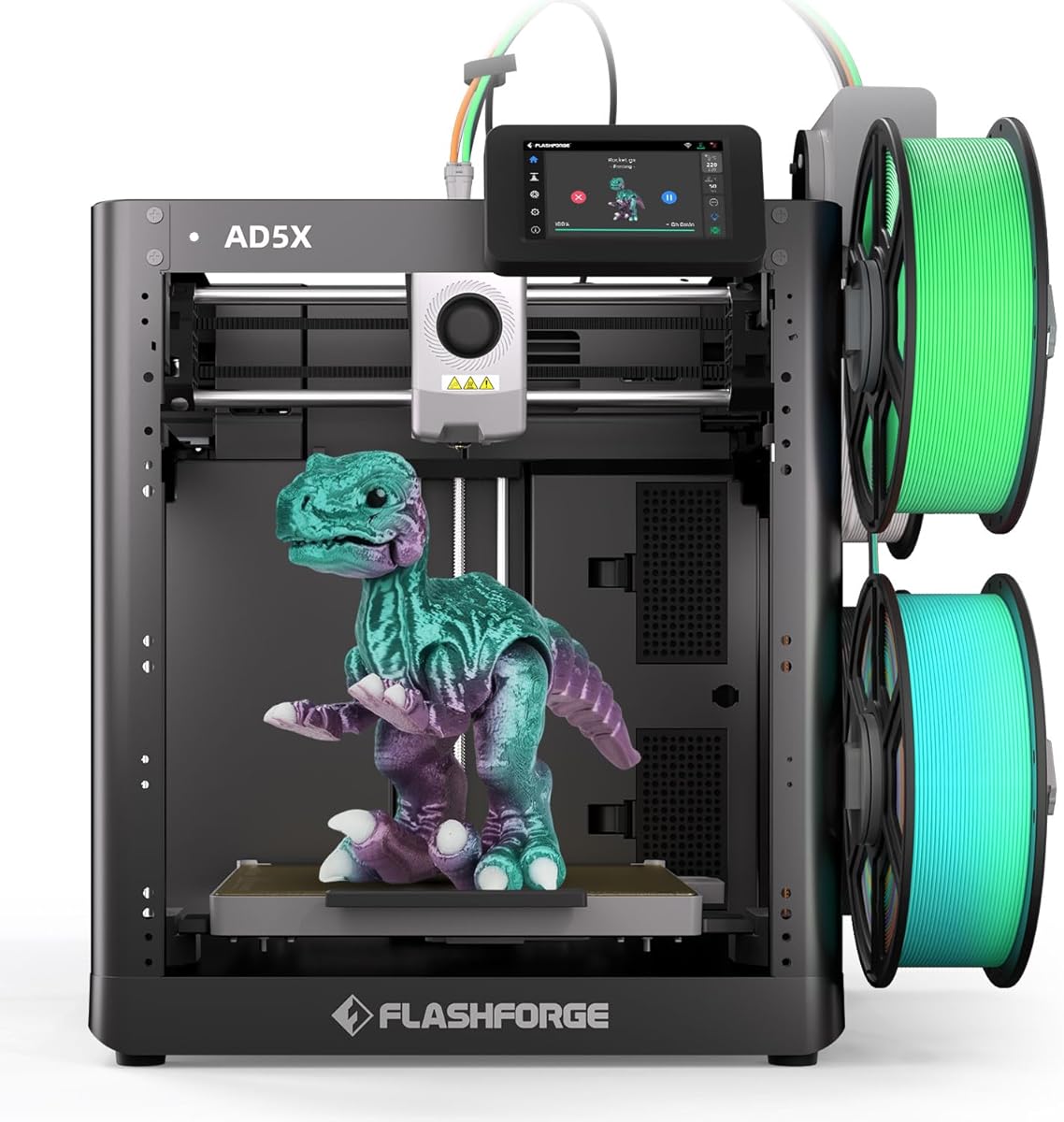
This variant of the AD5X focuses on multi-material workflows through the IFS system. It allows four colors to be managed side by side for compact setups. Vibration suppression algorithms ensure layers stay aligned during fast prints.
We may earn a commission when you buy through this link, at no additional cost to you.
Full auto calibration measures multiple points for precise bed leveling. Filament backup features prevent mid-print failures by switching to a reserve spool. This reliability is crucial for unattended overnight printing sessions.
The CoreXY structure provides rigidity that minimizes mechanical shifts. You can achieve high speeds without compromising dimensional accuracy. This makes it suitable for creating detailed models with varied textures.
For users wanting versatility and speed the Multi-Material AD5X is excellent. It combines high speed with color variety in a space-efficient design. Proper maintenance ensures the system remains accurate over time.
IFS allows multiple colors and materials to print simultaneously without manual intervention.
Algorithms minimize layer alignment shifts ensuring consistent quality on fast prints.
We may earn a commission when you buy through this link, at no additional cost to you.
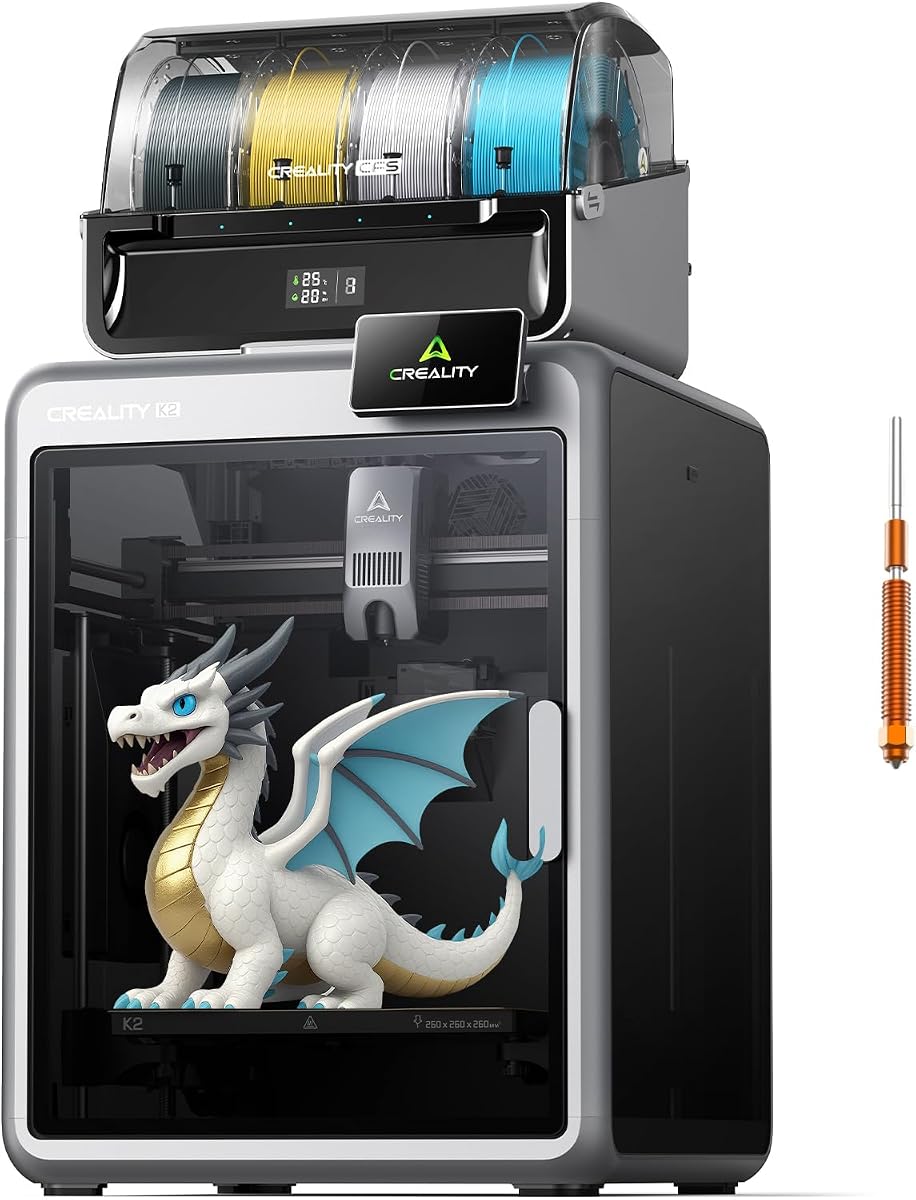
The K2 Combo offers a professional experience with high-speed printing. Its aerospace-grade aluminum frame ensures stability and zero wobble during motion. Silent mode keeps the workspace peaceful even during long printing jobs.
We may earn a commission when you buy through this link, at no additional cost to you.
Up to sixteen colors are supported when expanding with additional CFS units. The airtight design with desiccants keeps filament dry for better quality. Air purifiers filter VOCs which is a safety benefit for indoor printing.
Local storage and Wi-Fi connectivity make file management easy. The direct drive extruder handles high-flow materials efficiently. While setup is smooth initial calibration might benefit from following guides closely.
For advanced users needing reliable color printing the K2 Combo is a strong choice. It balances industrial features with usability for home and office environments. Regular checks on the CFS units ensure smooth filament transitions.
Dual Z-axis and steel X-rails deliver ultra-smooth layer consistency for fast high-quality prints.
Built-in air purifiers filter VOCs for a safer printing environment in enclosed spaces.
We may earn a commission when you buy through this link, at no additional cost to you.
Selecting a printer built for speed requires looking beyond just top numbers. You must consider acceleration, mechanical stability, and software support to ensure high-speed printing delivers quality results consistently.
Maximum speed refers to the fastest the nozzle moves while acceleration determines how quickly it reaches that speed. High acceleration allows for faster starts and stops which is critical for detailed shapes without sacrificing throughput.
Look for models with high acceleration ratings to ensure rapid prototyping without warping or layer issues.
CoreXY motion systems are often preferred for high-speed printing because they separate the X and Y axes for balanced movement. This reduces vibration and maintains accuracy even when the print head is moving at top velocity.
Choose a printer with a rigid frame and motion system to minimize wobble during high-speed operations.
Speed can introduce errors if the bed is not level or the nozzle is not calibrated correctly. Auto-leveling and automatic calibration ensure that the first layer adheres properly so fast prints do not fail immediately.
Prioritize models with full auto-calibration to save time and ensure consistent results every session.
High-speed printers require slicing software that supports advanced flow compensation and vibration damping. A robust ecosystem ensures you can optimize print settings to match the machine's speed capabilities.
Ensure the manufacturer provides regular updates and user-friendly software to manage fast prints effectively.
If you need speed along with color you need a system that minimizes purging and filament swaps. Tools like AMS or independent toolheads can reduce downtime significantly during complex multi-color jobs.
Check if the system supports multi-filament setups without drastically slowing down your overall workflow.
A larger build volume allows you to print multiple parts in one go which saves time. Support for various materials like PETG and TPU ensures you can print durable items at high speeds without clogging.
Select a build volume that matches your typical project size to maximize efficiency per print cycle.
Fast printers can generate noise which might be disruptive in a home office. Look for features like silent mode or vibration compensation to maintain a pleasant working environment.
Opt for models with vibration suppression to reduce sound and protect the machine over time.
High-speed models often require tuning that benefits from active user communities. Strong support ensures you can troubleshoot issues quickly and share best practices for optimizing speed.
Choose a brand with an active user base to get help when settings need adjustment.
Always start by ensuring the build plate is clean and calibrated. High speeds amplify any adhesion issues so proper bed leveling is critical before starting your first print of the day.
Keep your nozzles clean and replace them regularly. Fast printing generates friction which can wear down nozzles faster. Using hardened nozzles helps maintain quality when working with abrasive filaments.
Monitor prints frequently during the first few layers. Even with auto features initial observation helps catch issues early. Use the provided mobile apps to check progress remotely if you cannot stay nearby.
Models like the Bambu Lab P2S and Creality K1C offer speeds up to 600mm/s for home use. These machines balance velocity with quality to deliver rapid prototypes. Check current reviews to confirm their latest performance metrics.
Not if they have proper compensation features. Advanced algorithms for flow rate and vibration help maintain accuracy at high speeds. Look for models with active flow compensation to ensure layer consistency.
Use the built-in auto leveling and calibration routines before each session. Most models allow you to run tests that adjust offsets automatically. Follow manufacturer guides to ensure settings match your specific filament.
Yes especially those with larger build volumes like the Anycubic Kobra X. High speeds reduce the total time for large prints significantly. Just ensure your filament spools are large enough for long jobs.
Many new models feature silent modes and noise-canceling motors to reduce sound. Models like the Creality K2 offer quieter operation suitable for shared spaces. Always check decibel ratings before buying.
Standard PLA and PETG are ideal for fast printing without issues. Engineering materials like ASA may need slower speeds to prevent warping. Check manufacturer recommendations for specific material speeds.
CoreXY systems balance the X and Y axes independently for smoother movement. This reduces mass on the moving parts allowing for higher acceleration. It is a preferred choice for fast and precise printing.
If you need vibrant prints without post-processing then yes. Systems like AMS reduce the need for manual swaps. They streamline workflow and maintain speed while adding color variety to your projects.
This guide has highlighted top models like the Bambu Lab P2S and Creality K1C that lead in speed and reliability. Each offers unique features tailored to different needs from multi-color printing to raw velocity.
Prioritize speed capabilities that match your typical project size and complexity. Ensure the ecosystem supports your workflow with tools like auto calibration and remote monitoring to maximize efficiency.
Remember that prices change frequently so verify current offers before purchasing. Check the provided links to see the latest deals and availability for these high-performance machines.