
Canon EF 100-400mm f/4.5-5.6L IS USM Lens + Filter Kit + More
4.0Editor score
Professional L-series optical quality
Optical image stabilization technology
Compatible with teleconverters
This guide compares ten top camera lenses for long distance wildlife photography, evaluating reach, stabilization, autofocus speed, and build quality to help
Capturing wildlife from a safe distance requires powerful optics that deliver clarity and precision. A good lens provides the reach needed to frame subjects tightly while maintaining sharpness and reliable autofocus performance in varied conditions.
We analyzed ten highly rated lenses based on their focal ranges, stabilization features, and user feedback. This list covers options for Canon and Nikon systems, offering choices for beginners and professionals seeking long-range capabilities.
Each pick highlights specific strengths like zoom range, weight, and optical quality to guide your decision. Note that availability and pricing may shift, so verify current details before purchasing to ensure you get the best value available.
4.0Editor score
4.7Editor score
4.0Editor score
The following table provides a side-by-side overview of all ten lenses featured in this guide, highlighting key specifications and links to product pages for detailed exploration.



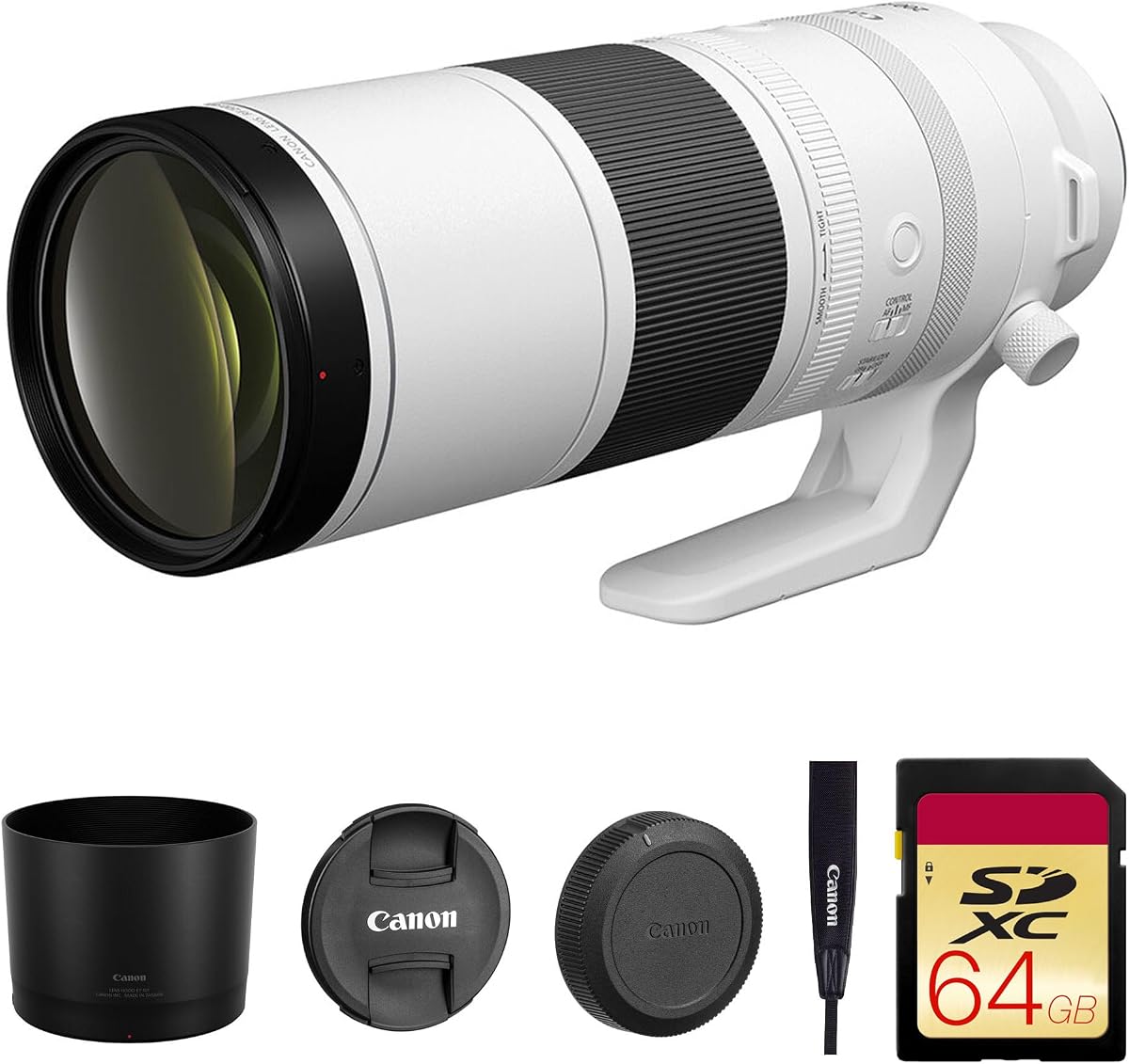
This Canon RF bundle stands out as a top choice for wildlife photographers needing extensive reach. With a rating of 4.7, it offers a super-telephoto zoom from 200mm to 800mm, making it ideal for birdwatching and nature shots without needing a tripod.
We may earn a commission when you buy through this link, at no additional cost to you.
The lens features built-in image stabilization that supports handheld shooting even at full zoom. Its advanced USM autofocus system ensures sharp focus on fast-moving subjects quietly and quickly, which is critical for capturing fleeting wildlife moments accurately.
While the variable aperture means less light at maximum reach, the optical quality remains high. The compact and field-ready design makes it easy to handle during long outdoor adventures, balancing performance with portability effectively.
Photographers looking for a reliable mirrorless option with extreme reach should consider this lens. It provides unmatched zoom flexibility and stability, making it a versatile tool for wildlife, sports, and birding enthusiasts seeking quality results.
From 200mm to 800mm, this lens covers a wide range for various wildlife scenarios.
Enjoy shake-free results even at full zoom with built-in image stabilization for handheld shooting.
We may earn a commission when you buy through this link, at no additional cost to you.
This lens is recognized as the world's first AF super-telephoto zoom with an 800mm telephoto end. It delivers powerful capabilities from 200mm through 800mm, offering excellent mobility for outdoor sports and wildlife photography without heavy equipment.
We may earn a commission when you buy through this link, at no additional cost to you.
Its lightweight and compact design allows for comfortable handling during extended use. The optimized optical design maintains high image quality throughout the zoom range, ensuring clear shots even at extreme distances in natural lighting conditions.
Compatibility with extenders like the RF1.4x and RF2x adds versatility to the zoom range. While it focuses on super-telephoto reach, the lens retains enough sharpness and contrast to produce professional-quality images suitable for various outdoor environments.
Photographers seeking a lightweight mirrorless solution with long reach will find this lens appealing. It balances optical performance with portability, making it a strong candidate for wildlife and nature photography where movement and stability are key.
Powerful telephoto capabilities with zoom range from 200mm through 800mm.
Allows for comfortable handheld shooting and excellent mobility in the field.
We may earn a commission when you buy through this link, at no additional cost to you.
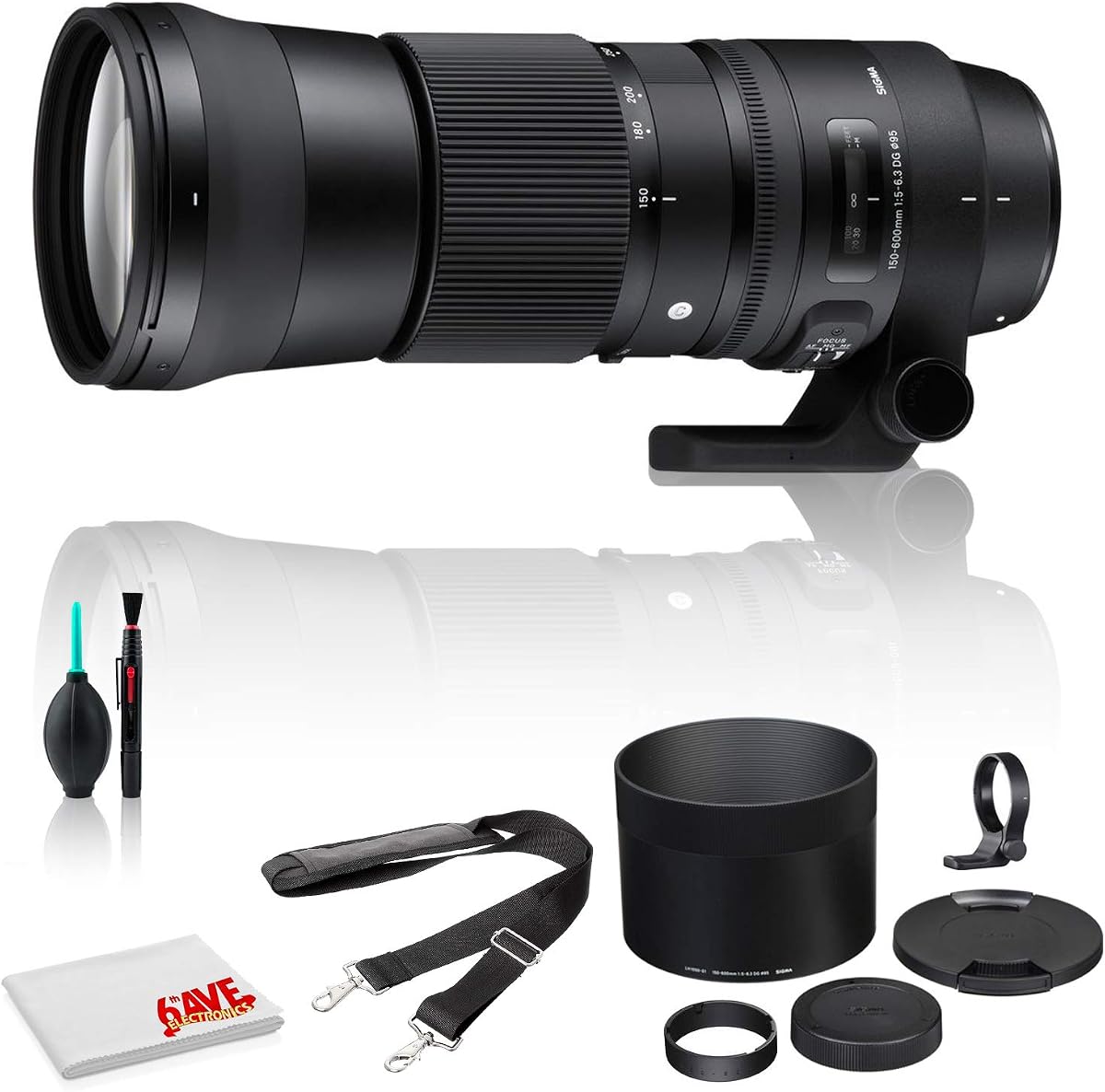
Designed for Canon EF mounts, this lens offers a versatile range from 150mm to 600mm. Its construction includes One FLD and Three SLD Elements to minimize aberrations, ensuring sharp and clear images for wildlife and nature photography.
We may earn a commission when you buy through this link, at no additional cost to you.
The Hyper Sonic Motor AF System provides fast and quiet focusing, while the Optical Stabilizer with Accelerometer helps reduce camera shake. This combination supports handheld shooting even at longer focal lengths where stability is crucial.
Although it weighs more than mirrorless alternatives, its optical performance remains robust. The bundle includes a cleaning kit which is helpful for maintaining lens clarity in dusty outdoor environments during extended shooting sessions.
Wildlife photographers using Canon DSLR bodies will appreciate its reach and optical quality. It offers a balance of performance and value, making it a reliable choice for capturing detailed shots of distant subjects in natural habitats.
Optical Stabilizer with Accelerometer reduces camera shake for sharper handheld images.
Fast and quiet autofocus system ensures quick focus on moving wildlife.
We may earn a commission when you buy through this link, at no additional cost to you.
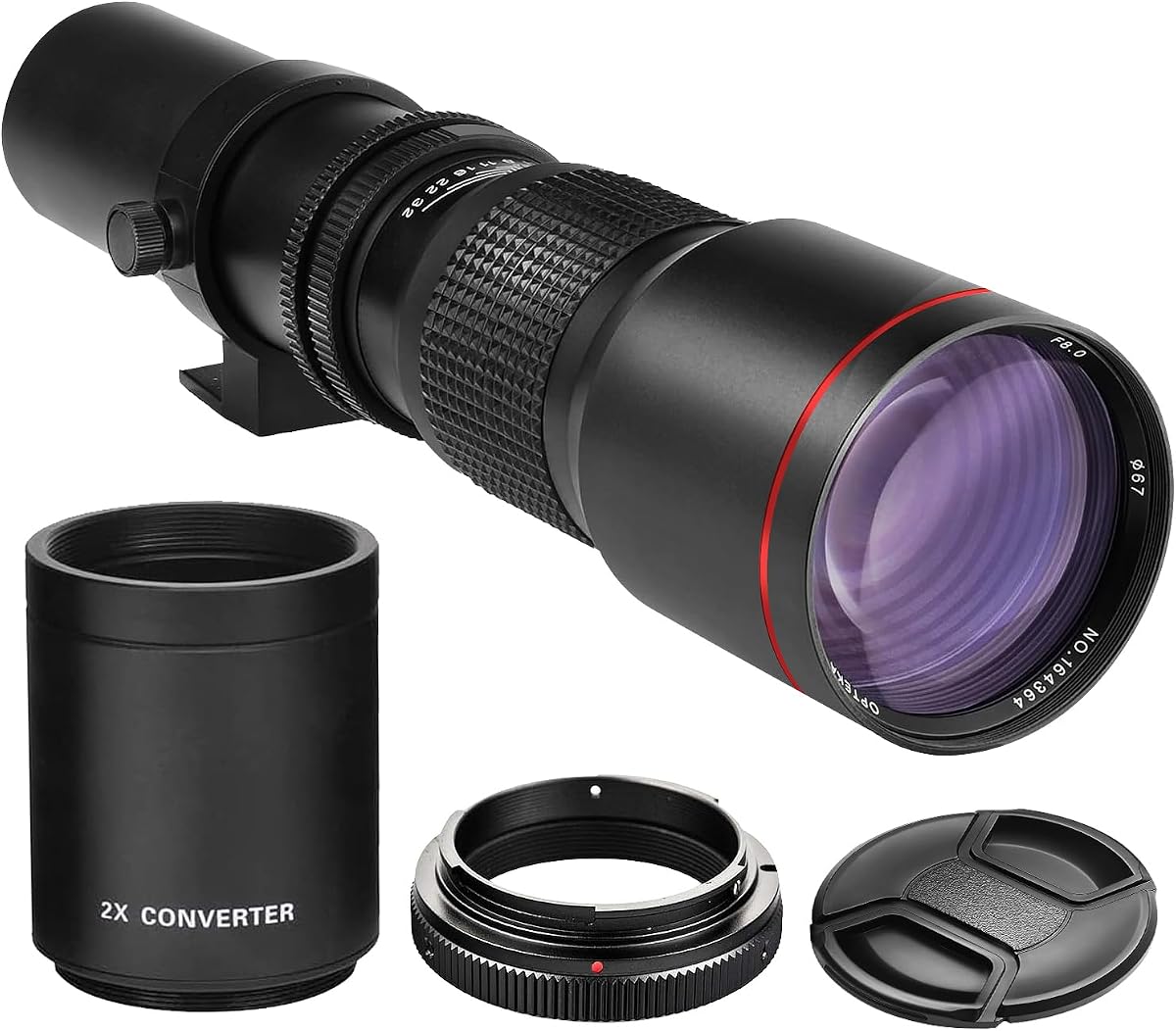
This manual telephoto lens provides an affordable entry into long-distance photography with reach up to 1000mm using the included teleconverter. Its multi-coated optical glass assures clear, sharp photos, making it a reliable companion for outdoor adventures.
We may earn a commission when you buy through this link, at no additional cost to you.
The EF-Mount compatibility ensures it secures easily to DSLR cameras for superior integration. Manual focus and aperture settings allow complete creative control, enabling users to fine-tune shots for unparalleled expression and versatility in varied conditions.
While lacking autofocus, its robust black finish and durable construction withstand outdoor rigors. This lens brings subjects closer than ever thought possible for celestial wonders or distant landscapes without high costs.
Beginners or hobbyists on a budget will find this lens practical for learning telephoto techniques. It offers exceptional magnification and durability, making it a cost-effective solution for capturing wildlife when manual focus is acceptable.
The 2X Teleconverter doubles lens power to 1000mm for close-ups.
Manual focus and aperture give you complete creative control over images.
We may earn a commission when you buy through this link, at no additional cost to you.
This professional L-series lens covers a range from 100mm to 400mm with optical image stabilization. It includes one fluorite element and four aspherical elements to minimize chromatic and spherical aberrations for clear, color-accurate images.
We may earn a commission when you buy through this link, at no additional cost to you.
The ring-type Ultrasonic Motor delivers fast and quiet autofocus with full-time manual override. A dedicated panning stabilization mode supports continuous tracking of moving subjects, making it ideal for sports and wildlife action shots.
Built with a removable rotating tripod collar for balanced support, it ensures stable handling. An eight-blade diaphragm produces smooth background blur, helping to isolate subjects with pleasing depth and separation in your compositions.
Photographers needing versatile, high-quality glass for DSLR systems will value its optical performance. It maintains consistent sharpness throughout the zoom range, ensuring dependable results for capturing distant action and wildlife effectively.
Uses fluorite and aspherical elements to minimize chromatic and spherical aberrations.
Delivers fast, precise, and quiet autofocus with manual override options.
We may earn a commission when you buy through this link, at no additional cost to you.
Designed for capturing clear long-distance camera shots, this lens offers flexibility from 420mm to 1600mm. It provides enhanced photographic flexibility, making it a premier choice for capturing sports or wildlife with extreme reach on Canon DSLRs.
We may earn a commission when you buy through this link, at no additional cost to you.
The EF-Mount compatibility allows it to secure to a variety of Canon models including Rebel and EOS lines. The 2X Teleconverter doubles the lens power to 1600mm, bringing elusive wildlife closer than ever with enhanced detail.
With a 420mm to 800mm focal length and 62mm filter thread, it captures intricately detailed photos. The sophisticated f/8.3 aperture ensures photos are crisp and clear, highlighting subject matter beautifully in natural light conditions.
Hobbyists and beginners seeking high magnification without breaking the bank will find this valuable. Its precision design ensures sharp shots, making it a practical tool for distant landscapes or celestial wonders.
The 2X Teleconverter doubles lens power to 1600mm for extreme reach.
Crisp photos captured with sophisticated f/8.3 aperture and filter thread.
We may earn a commission when you buy through this link, at no additional cost to you.
This RF telephoto lens offers a versatile zoom range of 100-400mm in a compact, lightweight design. With an Optical Image Stabilizer providing up to 5.5 stops of shake correction, it supports handheld shooting in challenging light.
We may earn a commission when you buy through this link, at no additional cost to you.
Its autofocus utilizes Canon’s Nano USM for high speed, smoothness, and quiet operation. The minimum focusing distance of 2.89 feet at 200mm allows for closer subject interaction, making it versatile for various wildlife and birding scenarios.
When paired with EOS R series cameras featuring In-Body Image Stabilizer, shake correction increases to up to 6 stops. This enhances stability significantly, ensuring sharp images even in low-light conditions or during extended handheld sessions.
Photographers looking for a travel-friendly RF option will appreciate its balance of reach and weight. It delivers high-image quality in a portable form, making it ideal for those prioritizing mobility in their wildlife photography toolkit.
Provides up to 5.5 Stops of shake correction for steady shots.
Delivers high speed, smooth, and quiet autofocus performance.
We may earn a commission when you buy through this link, at no additional cost to you.
This lens provides a 75-300 millimeter telephoto zoom range for Canon SLR cameras with a smooth zooming mechanism. Its front zoom ring features a silver finish, adding a touch of style to its functional design and handling.
We may earn a commission when you buy through this link, at no additional cost to you.
Weighing only 16.8 ounces and measuring compact, it is easy to carry for general photography. The closest focusing distance of 4.9 feet allows for decent detail in closer subjects, while a 32- to 8-degree angle of view offers flexibility.
Although it lacks image stabilization, its simple design makes it a lightweight option for beginners. It is a reliable companion for casual shooters needing basic telephoto capabilities without the bulk of professional equipment.
Photographers looking for an affordable, lightweight option for learning telephoto basics will find this suitable. It serves well for portraits and wildlife when distance allows, offering a practical introduction to Canon optics.
Makes zooming smoother with a silver ring on the front zoom ring.
Measures 2.8 inches in diameter and 4.8 inches long.
We may earn a commission when you buy through this link, at no additional cost to you.
This bundle includes a super telephoto zoom lens crafted for FX sensors with compatibility extending to DX. It provides a versatile 300-750mm equivalent focal length, ensuring unwavering performance across the entire zoom spectrum at f/5.6.
We may earn a commission when you buy through this link, at no additional cost to you.
Three extra-low dispersion elements reduce color fringing and chromatic aberrations for clarity. The Silent Wave Motor ensures rapid, silent, and accurate autofocus complemented by full-time manual focus override for precise subject control.
Vibration Reduction minimizes camera shake, offering up to 4.5 stops of stabilization. A dedicated Sport Mode helps in fast-paced situations, making this lens ideal for capturing wildlife or sports action with balanced support.
Photographers using Nikon DSLRs will appreciate its robust optical design and included accessories. The rotating tripod collar supports stable shooting in both orientations, making it a practical choice for nature and wildlife enthusiasts.
Minimizes camera shake with up to 4.5 stops of stabilization.
Ensures rapid, silent, and accurate autofocus with manual override.
We may earn a commission when you buy through this link, at no additional cost to you.
This renewed lens provides a 75-300mm zoom range with a DC autofocus motor for Canon SLRs. Its renewed status offers an affordable option for photographers needing basic telephoto capabilities without compromising on essential optical quality.
We may earn a commission when you buy through this link, at no additional cost to you.
The improved mechanism ensures smoother zooming while the front zoom ring sports a silver finish. It measures compact at 2.8 inches in diameter and 4.8 inches long, weighing only 16.8 ounces for easy handling in the field.
With a 58mm filter thread and 4.9-foot minimum focus distance, it is ready for general outdoor shots. While it lacks stabilization, its lightweight design makes it a practical choice for casual wildlife photography.
Photographers looking to save money without losing quality will find this renewed option suitable. It delivers reliable performance for entry-level users who want to explore telephoto photography affordably.
Provides quick and quiet autofocus for standard shooting needs.
Mechanism makes zooming smoother with a silver zoom ring finish.
We may earn a commission when you buy through this link, at no additional cost to you.
Selecting the right lens involves balancing optical quality, weight, and autofocus features. These factors ensure your gear meets the demands of outdoor photography where precision and mobility matter.
Focal length determines how close you can get to wildlife without physically moving. Look for lenses starting at 200mm or higher to ensure sufficient reach for distant subjects.
A longer range like 400mm or 800mm is ideal for skittish animals or birds.
Stabilization reduces camera shake, which is critical at long focal lengths. Optical or in-body systems help maintain sharpness during handheld shooting in varied terrain.
Choose lenses with effective stabilization to ensure clear images without a tripod.
Fast autofocus systems are necessary to track moving animals. Models with ultrasonic or silent wave motors deliver quick, quiet focus to capture fleeting moments.
Prioritize lenses with advanced AF mechanisms for sports and wildlife action.
Optical construction affects sharpness and color accuracy. Elements like fluorite or low dispersion glass minimize aberrations for high-quality results across the zoom range.
Look for professional series or premium optics to ensure detailed, vibrant photos.
Lightweight lenses are easier to carry on long hikes. A balance between reach and weight ensures comfort during extended outdoor sessions without sacrificing performance.
Choose lighter models if mobility is a priority over maximum focal length.
Ensure the lens matches your camera mount. EF, RF, or F-mount options must correspond with your DSLR or mirrorless system for proper integration.
Check mount compatibility to avoid adapters or reduced functionality.
Manual lenses offer control but require practice. Automatic options simplify shooting but may lack precision in specific scenarios.
Select based on your skill level and preference for creative control.
Outdoor shooting demands robust construction. Lenses with durable finishes and weather resistance withstand rough conditions during wildlife photography.
Prioritize build quality to ensure long-term reliability.
Always ensure your lens is securely mounted to the camera body before shooting. Proper alignment prevents optical issues and protects the mount from accidental damage during active use in the field.
Use image stabilization when shooting handheld at long focal lengths to reduce blur. If possible, support the lens on a tripod or monopod for maximum sharpness and consistent results.
Clean lenses gently with a soft cloth and proper solutions to remove dust or water spots. Store them in a dry case when not in use to protect optical elements from scratches and moisture.
For wildlife, a focal length of at least 300mm is recommended to capture detailed shots without disturbing animals. Longer lenses like 500mm or 800mm provide even more reach for distant subjects in natural environments.
Image stabilization is highly recommended for telephoto lenses as it reduces camera shake at long focal lengths. This ensures sharper images, especially when shooting handheld or in low-light conditions.
Yes, adapters often allow DSLR lenses to work on mirrorless bodies, though native RF or Z mount lenses offer better performance. Check specific adapter compatibility for your camera system.
Manual telephoto lenses offer a budget-friendly option for photographers comfortable with manual focus. They provide excellent reach but may be challenging for fast-moving wildlife due to lack of autofocus.
Use a soft microfiber cloth and a specialized lens cleaning solution to gently wipe the glass. Avoid harsh chemicals or paper towels that could scratch the surface.
Use higher shutter speeds to counteract movement and camera shake. Adjust aperture for depth of field and ISO to balance light exposure, ensuring sharp, clear images.
This guide highlights ten exceptional lenses tailored for long-distance wildlife photography. Top picks include the Canon RF 200-800mm bundle for its unmatched reach and stabilization, along with budget and premium options.
When choosing, prioritize focal length and stabilization based on your shooting conditions. Consider weight and mount compatibility to ensure your lens fits seamlessly into your current photography setup.
Remember to verify current availability and details before purchasing as offerings may change. These recommendations provide a strong starting point for enhancing your wildlife photography gear.