
Acxico 3Pcs Mini Micro N20 Gear Motor
4.6Editor score
3V to 6V voltage range
Full metal gearbox construction
D type shaft included
This guide compares the top ten DC motors for robots, evaluating torque, voltage, gear ratios, and build quality to help you select the ideal motor for your
Selecting the right DC motor for your robotic project is crucial for performance and reliability. Whether you are building a simple wheeled vehicle or a complex articulated arm, the motor determines speed, torque, and precision. Understanding the nuances of gearboxes, shaft types, and voltage requirements ensures your robot moves smoothly and efficiently under load.
We evaluated ten highly-rated DC motors based on real-world specifications and user feedback. Our analysis focuses on torque output, voltage ranges, gear reduction ratios, and durability. Each product was assessed for its suitability in DIY robotics, smart cars, and automated systems to provide a clear comparison for builders at any skill level.
Each pick in this list highlights specific strengths such as high torque, compact size, or encoder feedback. You will find detailed breakdowns of pros and cons along with technical specs. Please note that prices and availability can change frequently, so verify current details before making your final purchase decision for your next robotics build.
4.6Editor score

4.7Editor score

4.6Editor score
This side by side comparison reviews all ten selected DC motors for robots. We examine voltage ratings, torque values, gear ratios, and physical dimensions to help you compare features at a glance.
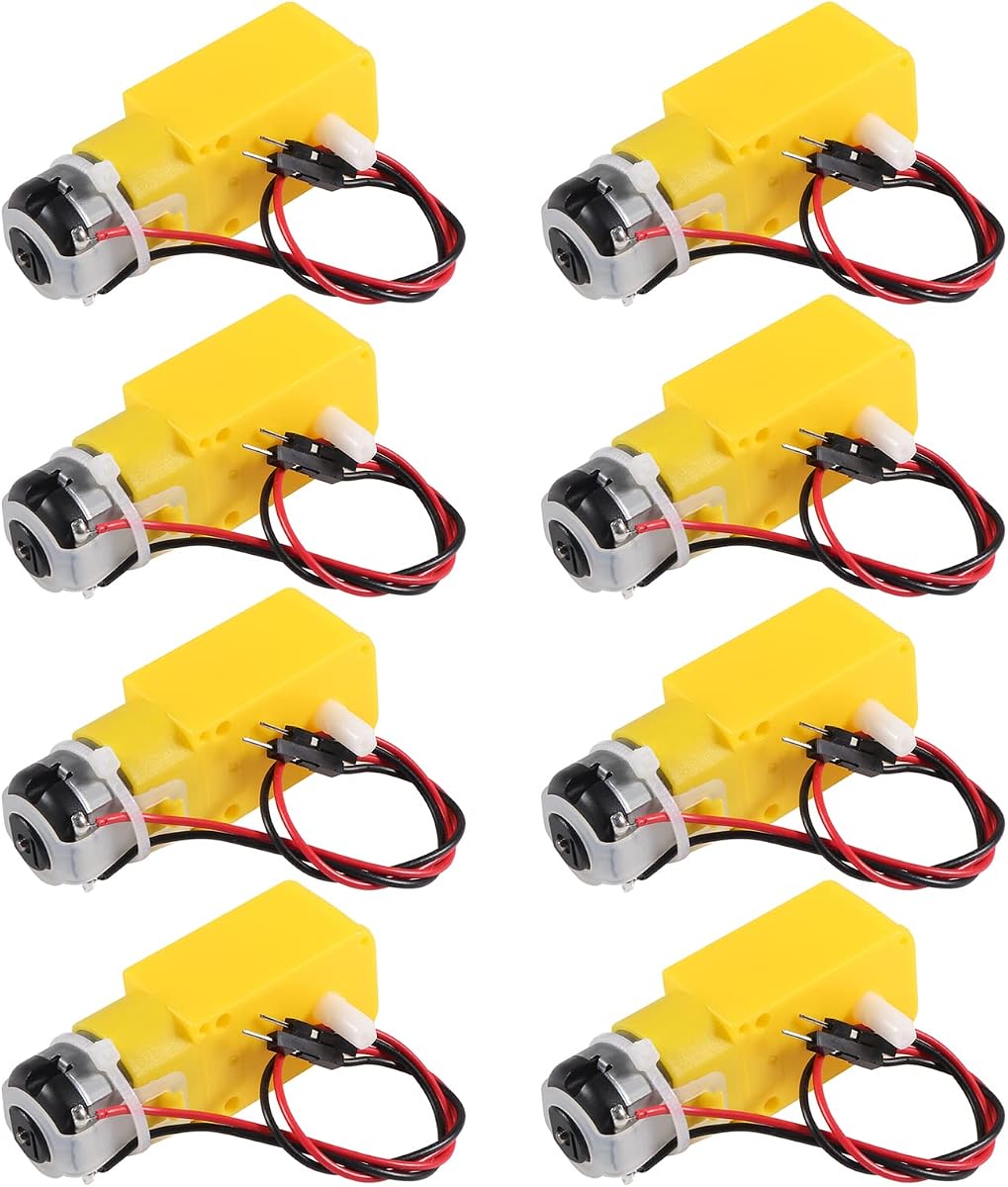


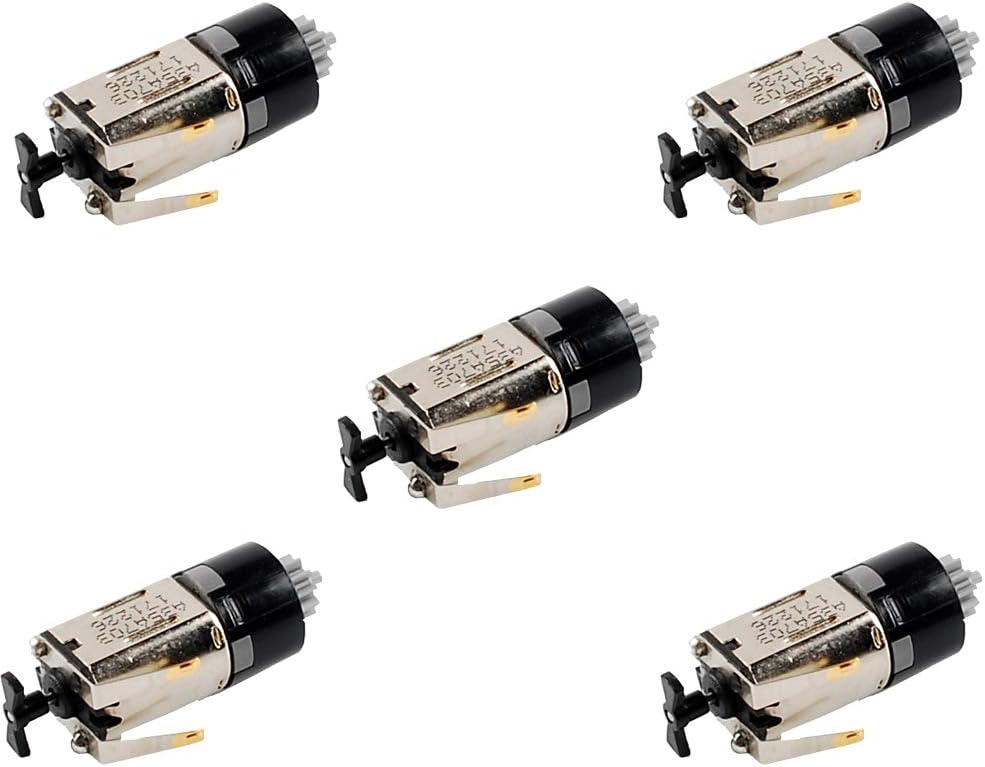

This budget-friendly kit offers three N20 gear motors ideal for light robotics tasks. With a 4.6 rating, users praise its metal gearbox and smooth operation. It suits small DIY car projects where high torque is not critical.
We may earn a commission when you buy through this link, at no additional cost to you.
The motors operate between 3V and 6V making them compatible with standard battery packs. The full metal gearbox ensures longevity compared to plastic alternatives. The D type shaft prevents wheel slippage during movement.
While torque is limited it performs well for educational robots or prototypes. The price point makes it accessible for beginners testing motor concepts without large investment. It lacks feedback sensors for precise control.
Buy this if you need multiple reliable low-cost motors for a swarm or fleet of small robots. It delivers consistent performance for its price range and is easy to integrate into breadboard circuits.
The metal gearbox provides better durability than plastic versions at a similar price point.
Standard wiring and shaft dimensions make this motor easy to mount and connect.
We may earn a commission when you buy through this link, at no additional cost to you.
This motor delivers massive torque suitable for heavy lifting or rotating tasks. Rated 4.6 it features a planetary gear system for high efficiency. It handles voltages up to 22V for flexible power options.
We may earn a commission when you buy through this link, at no additional cost to you.
The 90kg.cm torque enables moving heavy loads without strain. Users appreciate the robust metal construction and the ability to reverse rotation easily. It fits well into industrial or serious hobby robotics.
Its size and cost may be overkill for simple toys. The high torque requires careful mechanical design to avoid damage. It excels where strength and durability are paramount over compactness.
Choose this for robotic arms, automated doors, or rotating tables. The performance justifies the investment for projects requiring significant force and reliable long term operation.
The planetary gear design delivers 90kg.cm torque for demanding mechanical tasks.
Operating from 6V to 22V allows connection to various power systems.
We may earn a commission when you buy through this link, at no additional cost to you.
This kit combines TT motors with encoders for precise motion control. Rated 4.7 it features a 1:90 gear ratio for strong torque. The all metal build ensures durability in active robots.
We may earn a commission when you buy through this link, at no additional cost to you.
The Hall encoder allows speed and position feedback crucial for smart cars. The dedicated PH2.0 interface simplifies wiring. Users report smooth performance and reliable data for PID loops.
The encoder adds slight complexity for beginners but enables advanced projects. The metal shaft resists bending under load. It balances performance and price better than many competitors.
Select this for autonomous robots needing accurate movement. It provides the best mix of feedback precision and torque for general robotics applications.
The 12 PPR Hall encoder enables accurate speed and position tracking.
All metal gears and shafts handle heavy loads without deformation.
We may earn a commission when you buy through this link, at no additional cost to you.
This pack offers eight motors perfect for building multiple robots. Rated 4.5 it includes wheels and wires for immediate use. The 1:48 ratio provides moderate speed and torque.
We may earn a commission when you buy through this link, at no additional cost to you.
Wires have 2.54mm connectors for easy breadboard integration. The metal gear construction resists wear better than plastic. It is ideal for classrooms or group projects needing many units.
Torque is limited compared to larger motors so use for light loads. The consistent quality across the batch is reliable. It may not suit high performance or heavy lifting.
Buy this for educational workshops or bulk builds. The value per unit is excellent and the included accessories reduce setup time.
Eight motors with wheels allow multiple builds from a single package.
Pre attached wires with standard connectors simplify assembly.
We may earn a commission when you buy through this link, at no additional cost to you.
This motor balances speed and torque for smart car builds. Rated 4.4 it features magnetic shoes and pure copper for efficiency. The rubber tire kit enhances traction on various surfaces.
We may earn a commission when you buy through this link, at no additional cost to you.
The mounting bracket simplifies integration into chassis designs. Full metal gears ensure durability under stress. It runs at 500 RPM which is steady for controlled movement.
It lacks an encoder so precise speed control requires external sensors. The 12V voltage is standard but limits battery options. It is a solid all rounder for DIY models.
Use this for general robot cars needing reliable performance. The included accessories make it a convenient choice for quick prototyping.
High strength magnetic shoes and pure copper coils improve efficiency and life.
Rubber tire wheels improve grip for better movement on floors.
We may earn a commission when you buy through this link, at no additional cost to you.
This motor provides exceptional torque due to its 70:1 ratio. Rated 4.6 it runs at 6V or 12V for versatility. The metal bracket aids secure mounting in tight spaces.
We may earn a commission when you buy through this link, at no additional cost to you.
Stall torque reaches 27 kg.cm at 12V for heavy loads. The compact size fits into smaller chassis designs. Users report reliable operation for lifting or dragging tasks.
Speed is limited to 150 RPM at 12V making it slow. It is not suited for fast moving robots but great for power. The metal construction adds weight but ensures strength.
Choose this when torque matters more than speed. It excels in balance cars or robots that need to push heavy objects smoothly.
The 70:1 ratio multiplies torque for demanding mechanical tasks.
Included metal bracket ensures stable installation on robot frames.
We may earn a commission when you buy through this link, at no additional cost to you.
This motor achieves a 5.0 rating for quiet robust performance. It operates from 6V to 12V with high torque output. The double shaft design allows connections on both ends.
We may earn a commission when you buy through this link, at no additional cost to you.
Pure copper winding increases efficiency and torque by 30 percent. Metal gears ensure durability under heavy use. The low noise makes it ideal for indoor projects.
It is slightly more expensive than standard options. The compact dimensions fit many chassis types well. It is a top pick for RC cars needing reliable power.
Use this for remote control vehicles or precision robots. The build quality and performance justify the price for serious hobbyists.
Low noise levels make this motor suitable for indoor robotics.
Double shaft design allows gear or wheel attachment on both sides.
We may earn a commission when you buy through this link, at no additional cost to you.
These miniature motors offer high speed for lightweight tasks. Rated 4.2 they reach 16000 RPM at 3V. The 6 pack provides extras for experimentation.
We may earn a commission when you buy through this link, at no additional cost to you.
Lead wires are pre attached for quick connection. The small size fits into tight spaces for mini bots. They are suitable for fans or simple propulsion.
Torque is minimal so gears are needed for movement. They are not durable for high load applications. The low cost makes them perfect for testing circuits.
Buy this for small scale hobby projects or fans. It is an economical choice for light duty robotics where speed is prioritized.
Up to 16000 RPM allows fast spinning for lightweight props.
Small 15x20mm size fits into tight robot chassis easily.
We may earn a commission when you buy through this link, at no additional cost to you.
These micro motors use planetary reduction for torque in tiny sizes. Rated 4.4 they run at 3V to 5V. The slow speed is offset by strong output.
We may earn a commission when you buy through this link, at no additional cost to you.
Current draw is low at 42MA for battery life. The 5 pack is useful for multi robot projects. They are quiet and efficient for small tasks.
Speed is limited to 110 RPM so they are not for fast movement. The small shaft needs careful mounting. They work well for precision or slow robots.
Use this for miniature robotics where power is limited. The torque to size ratio makes them a niche but effective choice.
Low current draw extends battery life for portable robots.
Planetary gears provide smooth torque in a compact package.
We may earn a commission when you buy through this link, at no additional cost to you.
This simple motor offers high speed for basic RC projects. Rated 4.4 it fits 6V to 12V systems. The shaft is compatible with many hobby gears.
We may earn a commission when you buy through this link, at no additional cost to you.
It provides reliable performance for small replacements. The low price makes it easy to stock. It is common in power wheels and toy cars.
Without a gearbox torque is low so external gearing may be needed. It is not robust for heavy loads. The compact size fits many chassis easily.
Buy this for simple hobby repairs or prototypes. It delivers basic functionality at a budget price for quick builds.
Up to 12000 RPM provides fast rotation for small props.
2.3mm shaft matches many hobby gears for DIY upgrades.
We may earn a commission when you buy through this link, at no additional cost to you.
Choosing the right motor requires balancing torque speed voltage and size. This guide explains key factors to ensure your robot performs reliably.
Match the motor voltage to your battery or power supply to prevent damage. Common ranges include 3V to 12V for small bots and up to 24V for larger units. Ensure your driver circuit supports the voltage level.
Verify the operating voltage range before purchasing to ensure compatibility with your power source.
Torque determines how much weight your robot can move. High torque motors are needed for heavy chassis or climbing. Check the stall torque value to understand maximum load capacity.
Calculate your total robot weight and choose a motor with sufficient torque to move it smoothly.
Gearboxes reduce speed to increase torque. A higher ratio like 1:90 slows the motor but boosts power. Select a ratio based on whether you need speed or lifting strength.
Choose a gear ratio that balances speed and torque for your specific application.
The output shaft must match your wheels or gears. Common types are D type or round shafts with specific diameters. Incorrect fit can cause slipping or mechanical failure.
Confirm the shaft diameter and shape align with your chosen mechanical components.
Encoders allow precise speed and position control. Motors with Hall or optical encoders are vital for autonomous movement. Consider if your project needs closed loop feedback for accuracy.
Select motors with encoders if precise motion control is required for your robot.
Metal gears last longer than plastic under load. All metal builds resist wear and heat better for demanding tasks. Check reviews for durability reports before choosing plastic alternatives.
Prefer metal gearbox construction for durability in active robotics projects.
Measure your chassis space to ensure the motor fits. Large motors may require custom mounts while small ones may lack power. Check diameter and length before finalizing your build.
Verify the motor dimensions fit within your robot's physical constraints.
Wires and connectors affect integration ease. Pre attached wires or standard connectors like PH2.0 simplify assembly. Plan your electrical connections early to avoid rewiring later.
Ensure the motor has compatible wires or connectors for your control board.
Install the motor securely using the mounting bracket or screws. Align the shaft with your wheels or gears to prevent friction and wear.
Connect the motor to a driver circuit that supports the voltage. Avoid direct battery connection to manage speed and direction safely.
Regularly inspect wires and connections for wear. Clean dust from gears and lubricate shafts to maintain smooth operation and extend life.
Most small robot motors operate between 3V and 12V. Check the motor rating to match your battery voltage. Using higher voltage increases speed but may damage the motor.
Gears increase torque which is essential for moving robots. Most DIY motors come with gearboxes to reduce speed and boost power. Direct drive is rare for wheeled robots.
Use a motor driver like L298N or TB6612FNG between the Arduino and motor. The Arduino controls the driver which handles the higher current needed by the motor.
Encoder motors provide feedback on speed and position for precise control. Non encoder motors are simpler but lack data for accurate motion loops.
Reverse polarity of the motor leads or use a driver that supports direction control. Some motors allow reversing by swapping wires at the power source.
Metal gears are more durable and handle higher torque. Plastic gears are lighter and quieter but may wear faster under heavy loads.
The top three picks cover budget encoder and high torque needs for most robotics projects. The Acxico kit offers value for multiple units while the encoder pack delivers precision control.
Prioritize torque and voltage compatibility when selecting a motor for your specific build requirements. Consider physical size and connection type for easy integration.
Always verify current availability and specifications before purchase as details may change. Choose a motor that aligns with your performance goals and budget.