
Lenovo ThinkPad P16s Gen 4
4.0Editor score
Intel Ultra 7 255H Processor
32GB DDR5 RAM
1TB PCIe SSD Storage
Choosing the right laptop for electrical engineering requires balancing raw computational power with portability and display accuracy. Engineers need machines capable of running CAD software, simulation tools, and programming environments smoothly without frequent crashes or slowdowns.
We evaluated ten leading models based on processor speed, memory capacity, graphics performance, and build quality. Our selection includes high-end workstations and portable designs, ensuring there is an option for every budget and work environment preference.
Each pick highlights specific strengths like ISV certification, thermal management, and connectivity options. While we provide detailed insights, remember that prices and availability change frequently, so verify current details before making your final purchasing decision.
4.0Editor score

4.4Editor score

5.0Editor score
As an Amazon Associate we earn from qualifying purchases.
Below is a detailed side-by-side comparison of all ten selected laptops. We highlight key specifications and unique features to help you quickly identify the model that best fits your specific engineering requirements.




The Dell Precision 7680 stands out as a flagship workstation designed for the most demanding engineering tasks. With a powerful Intel i9 processor and high-speed DDR5 RAM, it handles complex simulations and 3D rendering with ease.
We may earn a commission when you buy through this link, at no additional cost to you.
Its ISV certifications ensure that professional software like AutoCAD and MATLAB runs smoothly without unexpected crashes. The display offers sharp visuals, and the extensive port selection allows you to connect multiple monitors and peripherals effortlessly.
While the device is robust and feature-rich, it comes with a higher price tag compared to consumer laptops. Additionally, its weight might make it less ideal for students who need to carry it across campus daily.
If you prioritize raw performance and reliability over portability, this laptop is an excellent investment. It is best suited for professionals or students working on large-scale projects who need a machine that will not bottleneck their workflow.
The system is built to handle intensive workflows including video editing and complex data analysis without throttling performance.
Equipped with Thunderbolt 4 and HDMI ports, you can easily expand your workspace with multiple external displays for better productivity.
We may earn a commission when you buy through this link, at no additional cost to you.
This model offers a balanced approach by combining a dedicated NVIDIA RTX GPU with a capable mid-range processor. It is designed to handle professional workloads like 3D rendering and CAD design more efficiently than integrated graphics solutions.
We may earn a commission when you buy through this link, at no additional cost to you.
The inclusion of ISV certification means you can trust it to run engineering software reliably. The display and keyboard are designed for long hours of work, ensuring comfort and clarity during critical tasks.
Compared to the higher-end i9 version, the CPU performance is somewhat reduced, which might impact very heavy computational tasks. However, for most standard engineering applications, it provides excellent value and stability.
This laptop is a smart choice for users who need professional features without paying for top-tier specifications. It strikes a good balance between power and cost for students and junior engineers.
The dedicated GPU accelerates rendering tasks, making it suitable for visualization work in architecture and engineering projects.
Built with the same rugged chassis as the flagship model, it ensures durability for daily use in various environments.
We may earn a commission when you buy through this link, at no additional cost to you.
The Lenovo ThinkPad P16s brings workstation-class capability to a more portable and affordable package. It features the latest Intel Ultra 7 processor and ample memory for smooth multitasking during study or work.
We may earn a commission when you buy through this link, at no additional cost to you.
Its ISV certification and MIL-STD durability make it a reliable choice for fieldwork or daily commuting. The screen offers good brightness and viewing angles, suitable for detailed circuit design and documentation.
The main limitation is the integrated graphics which may struggle with heavy 3D modeling compared to dedicated GPU systems. However, for circuit simulation and coding, it is more than capable of meeting your needs.
This option is ideal for students who need a lightweight machine that can handle professional software without breaking the bank. It delivers essential performance where it matters most.
With Wi-Fi 7 and Thunderbolt 4 ports, this laptop ensures fast data transfer and future-proof connection capabilities.
Includes a built-in fingerprint reader and enterprise-grade security features to protect your sensitive engineering data.
We may earn a commission when you buy through this link, at no additional cost to you.
This configuration is designed for power users who need to run multiple heavy applications simultaneously. With 64GB of RAM and a professional-grade GPU, it excels in complex simulation and data analysis tasks.
We may earn a commission when you buy through this link, at no additional cost to you.
The high user rating reflects its consistent performance and build quality. The large SSD ensures you have plenty of space for extensive project files and software libraries without worrying about storage limits.
While it offers exceptional power, the weight and cost may be prohibitive for some users. It is generally overkill for basic tasks, but essential for advanced engineering work.
Buy this if you are a professional or advanced student who needs to maximize system uptime and speed. It is a robust machine that will support demanding workflows for years.
The 64GB of RAM allows you to keep numerous applications open without performance degradation or system slowdowns.
The RTX GPU supports real-time rendering, which is crucial for detailed visualization in engineering design projects.
We may earn a commission when you buy through this link, at no additional cost to you.
This workstation offers a compelling mix of professional graphics and solid processing power. It is designed to handle rendering and engineering software efficiently, making it a strong contender for technical workflows.
We may earn a commission when you buy through this link, at no additional cost to you.
The ISV certification ensures compatibility with critical industry tools. The keyboard and trackpad are designed for precision, which is helpful when working on detailed diagrams or code.
Some users have reported a lower satisfaction rating compared to other models, possibly due to specific batch issues or expectations. However, the core specs remain high for professional usage.
It is a solid choice for office-based professionals who need reliability and performance. If you work primarily from a desk, this model provides the tools you need to succeed.
Certified to work seamlessly with major engineering software, reducing the risk of software conflicts or crashes.
Designed to maintain performance under load, ensuring that your system stays cool during long simulation runs.
We may earn a commission when you buy through this link, at no additional cost to you.
This laptop is engineered for professionals who need to move between sites or classrooms. Weighing only 3.13 lbs, it combines portability with workstation certification for reliable performance in the field.
We may earn a commission when you buy through this link, at no additional cost to you.
The ISV certification means it is optimized for professional apps like AutoCAD and SolidWorks. Despite its size, it offers robust connectivity with Thunderbolt 4 ports and a high-resolution display for clear visuals.
The integrated graphics limit its capability for heavy 3D rendering compared to larger models. However, for CAD drafting and programming, it performs admirably without adding bulk to your bag.
If you value mobility and build quality, this is a top-tier choice. It is perfect for engineers who travel frequently and need a machine that keeps up with their schedule.
Designed with a battery that supports extended work sessions, reducing the need to find outlets constantly.
Includes fingerprint readers and facial recognition to keep your proprietary engineering designs and data secure.
We may earn a commission when you buy through this link, at no additional cost to you.
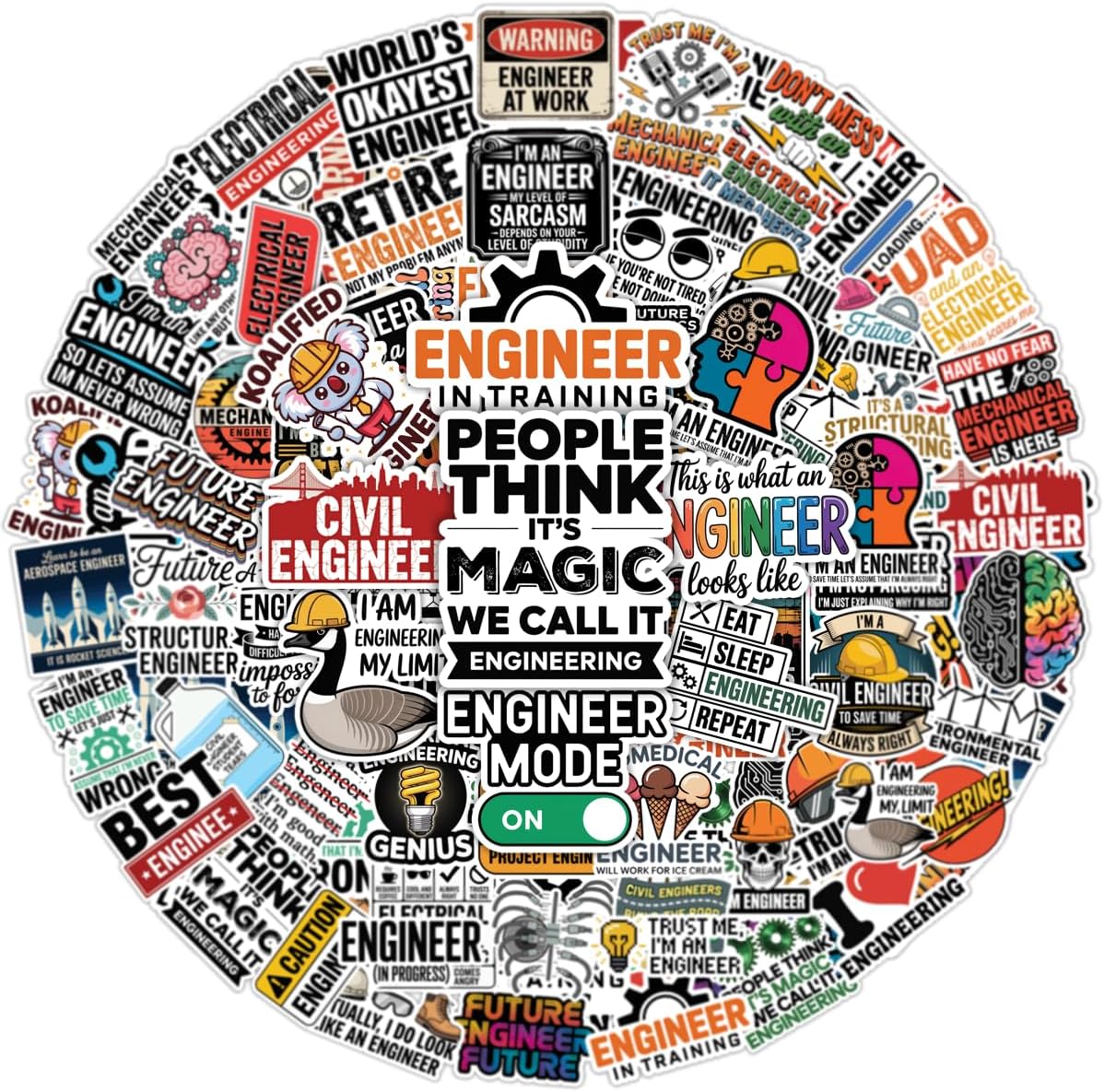
These stickers provide a fun way to personalize your engineering gear and workspace. They are made of high-quality vinyl that resists water and scratches, making them ideal for laptops and water bottles.
We may earn a commission when you buy through this link, at no additional cost to you.
The collection includes themes from various engineering disciplines, allowing you to showcase your specific field. They are easy to peel and apply without leaving residue, ensuring a clean look.
While not a functional laptop accessory, they add personality to your setup. The bright colors and technical graphics make them a great conversation starter in a lab or classroom.
Consider these if you want to add a touch of flair to your devices. They are an affordable addition to your engineering toolkit that expresses your passion for the field.
These decals allow you to customize your equipment, making it easier to identify in a shared workspace or lab environment.
Made to withstand outdoor conditions, ensuring they stay vibrant even when your gear is exposed to the elements.
We may earn a commission when you buy through this link, at no additional cost to you.
This model offers a larger 17.3-inch display which is beneficial for viewing detailed schematics and multiple windows side by side. It comes with powerful internal components to ensure smooth performance on demanding tasks.
We may earn a commission when you buy through this link, at no additional cost to you.
The 99% DCI-P3 color gamut ensures accurate visuals for design work. Connectivity options are comprehensive, allowing you to connect multiple monitors for an expanded workspace without needing a dock.
Portability is compromised significantly due to the size and weight. It is best suited for a stationary setup where screen real estate is more important than carrying it around.
Choose this if you need a desktop replacement that can handle professional engineering work. It provides an immersive experience that smaller screens cannot match for complex projects.
The larger screen reduces eye strain during long work sessions by allowing more detailed views of complex engineering diagrams.
Paired with an i9 processor and professional GPU, this laptop handles the most intensive rendering and simulation tasks efficiently.
We may earn a commission when you buy through this link, at no additional cost to you.
These stickers are designed to add humor to your professional gear. They feature funny quotes and physics concepts that engineers will appreciate. The vinyl is waterproof and weather-resistant for lasting use.
We may earn a commission when you buy through this link, at no additional cost to you.
They are easy to apply and remove, allowing you to change up your look as needed. The designs are vibrant and suitable for helmets, hard hats, or laptops in a workshop setting.
While not a tool for engineering, they serve as a morale booster and conversation starter. They are particularly well-suited for field workers who want to keep a bit of personality on their equipment.
Pick these up if you want a small, affordable way to express your engineering spirit. They make great gifts for students or colleagues who appreciate a bit of fun.
Adding a sticker like this to your hard hat or laptop shows your passion for the field in a lighthearted way.
These decals work well on various surfaces from tools to personal items, ensuring you can display them anywhere you need.
We may earn a commission when you buy through this link, at no additional cost to you.
This laptop offers a large display and solid storage for basic productivity tasks. It is budget-friendly and includes decent battery life for general use without constant charging needs.
We may earn a commission when you buy through this link, at no additional cost to you.
The Ryzen 3 processor and 8GB RAM handle web browsing and document editing well. The fast SSD ensures quick boot times and smooth application launches for everyday computing.
For complex engineering software like 3D modeling or simulation, the limited memory and basic graphics will likely struggle. It is better suited for light coding or school research.
If your budget is tight and your workload is light, this model is a viable option. It provides essential features at a lower cost but lacks the power of dedicated workstations.
Designed for general tasks like web browsing and media streaming, it offers smooth performance for non-intensive applications.
The large screen provides a wide viewing area which is helpful for multitasking with documents and reference materials.
We may earn a commission when you buy through this link, at no additional cost to you.
Selecting the right laptop involves understanding the specific demands of engineering software and your working environment. This guide breaks down the critical factors you should evaluate.
For electrical engineering tasks like simulation and rendering, a multi-core processor is essential. Look for Intel Core i7 or i9 series, or AMD Ryzen 7 and 9 chips to ensure smooth operation under heavy loads. Modern architectures provide better efficiency and speed for complex calculations required in circuit design.
Prioritize processors with higher clock speeds and core counts to handle multitasking and intensive software without lag.
RAM is critical for running multiple engineering applications simultaneously. Aim for at least 32GB of DDR5 memory to support virtual machines and large datasets without slowing down your system. Storage should be fast and capacious, so a 1TB NVMe SSD is highly recommended.
Ensure you have enough memory to keep your tools open while working on large projects to avoid constant reloading and delays.
While basic CAD might run on integrated graphics, 3D modeling and rendering benefit greatly from a dedicated GPU. NVIDIA RTX professional series cards offer stability and certification for engineering software. Check if the laptop supports specific ISV certified graphics drivers.
A dedicated graphics card ensures that visualization tasks are rendered quickly and accurately without taxing the CPU.
A sharp and large display helps reduce eye strain during long design sessions. Look for Full HD or higher resolution with good brightness. A 16-inch or larger screen provides enough space for toolbars and design grids without feeling cramped.
Choose a display with high color accuracy and anti-glare coating to maintain visibility in various lighting conditions.
If you work in different locations or on campus, weight and battery life are important factors. Aim for a laptop under 4 lbs with at least 6 hours of battery life. Portable workstations balance power with the ability to move around easily.
Select a model that fits your daily commute needs so you do not rely solely on power outlets during the day.
Engineering laptops often face harsh environments or frequent transport. Look for devices that meet MIL-STD-810H standards for durability. A sturdy chassis protects internal components from shock and vibration during travel.
Investing in a rugged build ensures your device lasts longer and withstands the rigors of professional use.
Access to various ports like Thunderbolt 4, HDMI, and Ethernet is vital for connecting external monitors and peripherals. Having these built-in means you do not need dongles or docks to expand your workspace at a desk.
Verify that the laptop supports multiple external displays to maximize your productivity on a single machine.
Ensure the operating system and drivers are compatible with the engineering tools you use. Windows 11 Pro is often preferred for its features and security. ISV certifications confirm that hardware will work correctly with specific industry software.
Check the software requirements of your programs to confirm your hardware meets or exceeds the minimum recommendations.
Keep your laptop clean from dust and debris to maintain cooling efficiency. Use a soft cloth to wipe the screen and keyboard regularly. Avoid using abrasive materials that could scratch the display or damage the finish.
Manage your battery health by avoiding extreme temperatures and overcharging. Use the manufacturer’s recommended charger and unplug the device when it is fully charged to prolong battery lifespan.
Perform regular system updates and driver checks to ensure stability and security. Install only essential software to prevent performance slowdowns and keep your workspace organized for efficiency.
Most professional engineering applications recommend at least 16GB of RAM, but 32GB is ideal for multitasking. Running simulations and CAD software simultaneously requires ample memory to avoid slowdowns. Higher-end tasks like 3D rendering benefit significantly from 64GB.
Yes, workstation laptops are certified to run engineering software reliably. They offer better durability and professional-grade graphics support. While more expensive, they prevent crashes and errors that could impact project deadlines.
MacBooks can run coding and simulation tools but may lack compatibility with some Windows-based CAD software. Virtualization software allows running Windows applications but may impact performance. Check your specific software requirements before choosing a Mac.
A 16-inch screen offers a good balance between portability and workspace. Larger screens like 17 inches are great for detailed design but add weight. Ensure the display has high resolution to view intricate schematics clearly.
If you work with 3D models or complex simulations, a dedicated graphics card is essential. Integrated graphics handle basic drafting but struggle with heavy rendering tasks. Professional GPU cards ensure smooth visualization and stability.
ISV certification guarantees that your hardware works seamlessly with specific engineering software. It reduces the risk of software errors and instability. It is highly recommended for professionals using critical tools like AutoCAD or MATLAB.
We explored ten diverse options ranging from powerful workstations to portable designs. Each model offers unique strengths tailored to different engineering needs and budgets. Selecting the right one depends on your specific workflow priorities.
Prioritize performance and compatibility to ensure your machine can handle the software you use daily. Balance power with portability based on where you work most often. A reliable laptop is an investment in your academic and professional success.
Remember to check current availability and details before purchasing. Technology evolves rapidly so verifying the latest specs ensures you get the best value. We hope this guide helps you find the perfect tool for your engineering journey.