
Sipeed Tang Nano 20K
4.5Editor score
20K LUT FPGA
Open source support
USB 2.0 HS
Discover the top Fpga Retro Consoles for 2026. We compare performance, features, and compatibility to help you choose the best FPGA retro console for classic
Fpga Retro Consoles offer authentic hardware emulation with low latency and precise timing. These devices use field programmable gate arrays to recreate classic consoles with high accuracy and flexibility for modern setups.
We evaluated ten top models based on FPGA capacity, output options, expandability, and ecosystem support. Our analysis includes developer boards, handhelds, and dedicated units to cover every user need from hobbyists to collectors.
Each pick highlights key strengths, trade-offs, and ideal use cases for different budgets. Prices and availability change frequently so verify current details before purchasing your next retro gaming console.
4.5Editor score
4.9Editor score

5.0Editor score
This side by side comparison highlights the unique strengths of each FPGA retro console option. Evaluate key specifications and capabilities to find the perfect match for your gaming preferences and technical requirements.



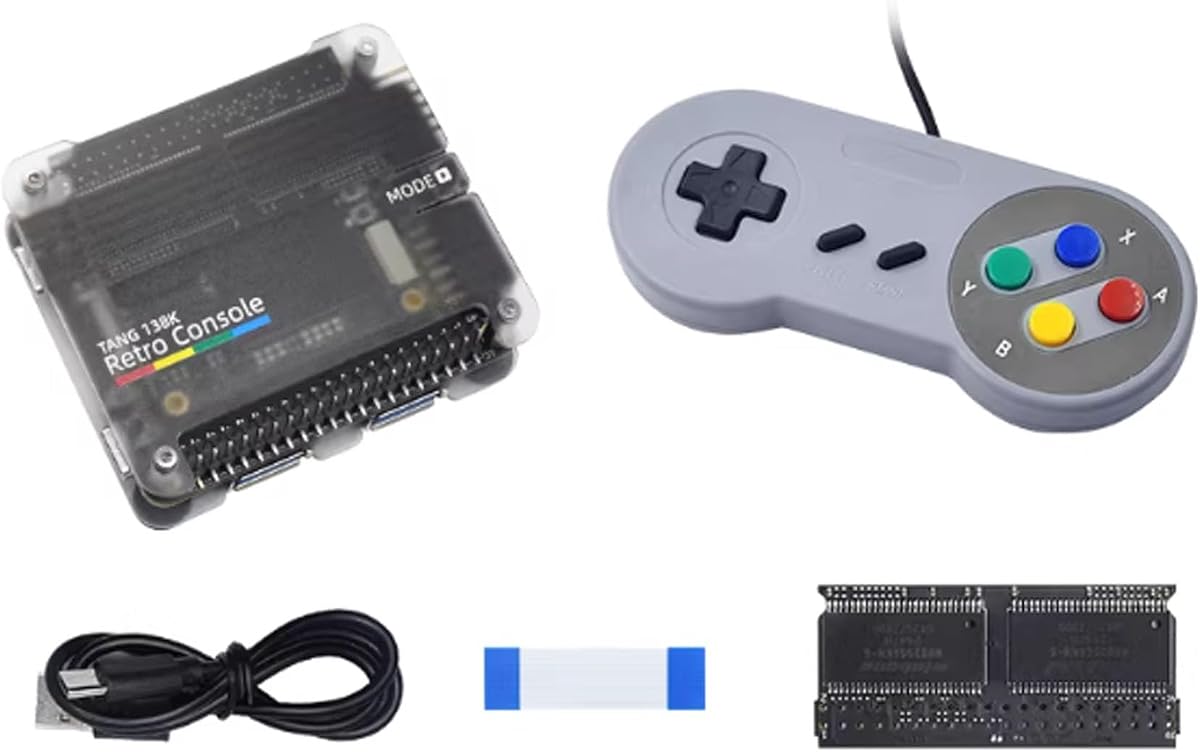
The Sipeed Tang Console 138K stands out as a leading FPGA retro console with powerful performance and versatility. Its 138K LUT FPGA allows running complex cores like NES SNES and Amiga smoothly while the fanless design ensures silent operation during long sessions.
We may earn a commission when you buy through this link, at no additional cost to you.
Key strengths include the 800MHz RISC-V hardcore and 1GB DDR3 memory which enable modern game cores and applications. HDMI output at 1080P 30Hz connects directly to TVs and monitors making it ideal for home arcade setups without external converters.
Trade-offs involve the learning curve for FPGA programming and the lack of a pre built case. These are acceptable for enthusiasts seeking customization and performance over plug-and-play simplicity typical of commercial handhelds.
Buyers who value open-source flexibility and high fidelity emulation should choose this model. It delivers a premium FPGA retro console experience with room to grow projects through PMOD and GPIO expansion options.
The 138K LUT count supports demanding cores and custom logic designs beyond standard emulation needs.
Dual USB 3.0 ports and HDMI allow flexible controller and display configurations for any setup.
We may earn a commission when you buy through this link, at no additional cost to you.
This FPGA retro console offers exceptional value for developers and gamers wanting entry level FPGA performance. The 60K LUT configuration handles classic 8-bit and 16-bit systems well while the onboard BL616 MCU simplifies firmware and debugging tasks.
We may earn a commission when you buy through this link, at no additional cost to you.
Its USB 3.0 ports enable high-speed data transfers for game saves and media while HDMI output provides crisp visuals for retro games. The small form factor fits easily into card boxes making it highly portable for on-the-go testing and gaming.
Limitations include reduced logic resources compared to higher-end models which may restrict complex core development. This trade-off is acceptable given the price point and focus on core retro gaming rather than heavy custom design work.
Budget-conscious users seeking a capable FPGA development platform will find this model ideal. It balances cost and performance effectively for learning FPGA programming and building retro consoles without large upfront investment.
The included SDK and forum support help beginners navigate FPGA IDE programming and firmware updates.
Compact design allows fitting the console in card boxes for easy transport and casual use.
We may earn a commission when you buy through this link, at no additional cost to you.
The RG40XXV is a premium handheld console that simplifies retro gaming with Linux and preloaded titles. Its high user rating reflects reliable performance and satisfaction among players seeking plug-and-play convenience without sacrificing quality.
We may earn a commission when you buy through this link, at no additional cost to you.
This model emphasizes ease of use with a complete system ready for immediate play. The Linux foundation offers flexibility for managing libraries while the ergonomic design supports extended handheld sessions comfortably.
Limitations involve less customizability than FPGA dev boards since cores and hardware are fixed. This suits casual players prioritizing experience over tinkering and provides a polished alternative to open platforms.
Buyers wanting a premium retro console experience out of the box should consider this. It delivers a hassle free gaming experience with strong build quality and full Linux access for customization when needed.
Preloaded games and Linux OS allow instant play without technical configuration steps for users.
Ergonomic build and high quality display enhance comfort and visual experience during long sessions.
We may earn a commission when you buy through this link, at no additional cost to you.
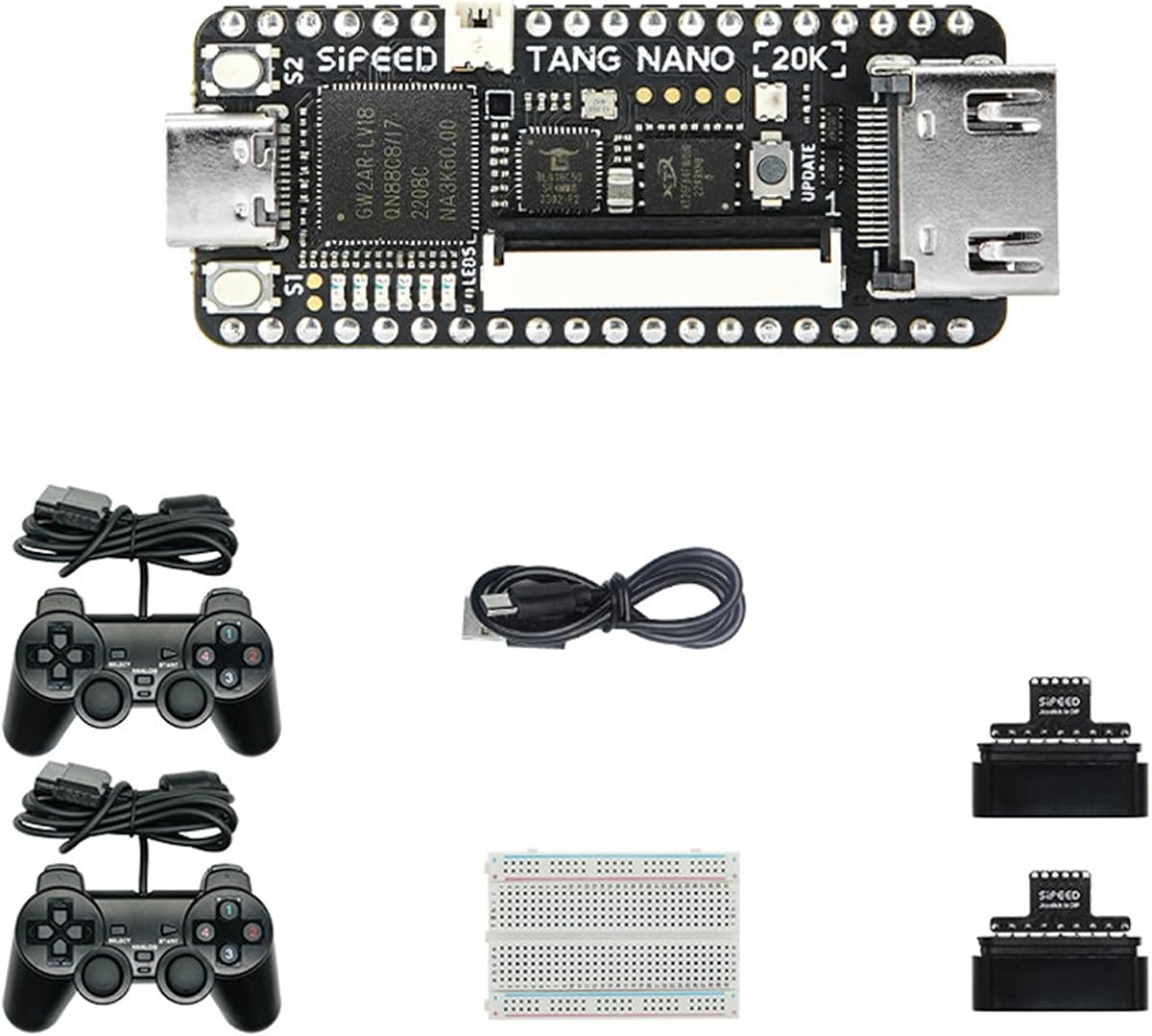
The Tang Nano 20K is a cost effective entry point into FPGA development for retro consoles. Its 20K LUT capacity supports essential game cores while the JTAG port and RISC-V soft core enable flexible programming and debugging.
We may earn a commission when you buy through this link, at no additional cost to you.
Strengths include open source tools and community support making it accessible for learners and tinkerers. The compact board integrates well with peripherals like microSD and RGB displays for versatile retro projects.
Constraints involve limited logic resources for advanced cores and the need for external peripherals. These are minor drawbacks for beginners learning FPGA basics without significant financial commitment.
Newcomers seeking a portable FPGA platform will appreciate this board. It offers solid performance for entry level emulation and development while fostering skills transferable to larger projects.
Onboard JTAG port enables easy FPGA configuration and debugging without extra hardware adapters.
Support for RGB LCD and microSD allows custom display and storage setups for retro gaming.
We may earn a commission when you buy through this link, at no additional cost to you.
This kit bundles the Tang Nano 20K with essential components for a seamless FPGA retro console experience. Linux support and HDMI output make it suitable for direct gaming setups without complex wiring or converters.
We may earn a commission when you buy through this link, at no additional cost to you.
Its BL616 debugger simplifies FPGA uploads and configuration improving workflow for developers. The open source ecosystem provides extensive community resources for building and modifying retro game cores.
Trade-offs include mid tier FPGA capacity limiting very high-end core performance. This is acceptable for users prioritizing ease of setup and cost over maximum logic resources.
Starter kits offer the best value for learners. They provide a complete platform to begin FPGA development and retro gaming projects with reliable support and tools.
The BL616 chip offers USB serial and SPI communication for smooth FPGA programming and testing.
Community wikis and forums provide extensive guides and cores for customizing your console setup.
We may earn a commission when you buy through this link, at no additional cost to you.
The Tang Nano 20K SBC blends gaming and computing for versatile retro projects. Its multiple display outputs allow connection to screens simultaneously while Linux RISCV provides a robust software environment.
We may earn a commission when you buy through this link, at no additional cost to you.
NES emulator support ensures immediate functionality for classic gaming out of the box. The BL616 debugger aids efficient development and testing for users refining core logic or building new applications.
Limitations involve configuration needs and mid range FPGA capacity compared to high-end boards. These are manageable for most hobbyists aiming for functional retro setups rather than heavy custom hardware.
Users seeking a hybrid computing and gaming console will find this model compelling. It offers flexibility for diverse tasks while maintaining solid retro performance and developer friendly features.
Support for multiple screens enables unique setups and extended display options for games.
Linux integration allows running scripts and tools alongside retro games for enhanced control.
We may earn a commission when you buy through this link, at no additional cost to you.
The Arduboy FX-C is a pocket sized console designed for coding and classic 8-bit gaming. Its preloaded library and USB-C multiplayer add value for users wanting portable play and creative programming.
We may earn a commission when you buy through this link, at no additional cost to you.
Strengths include durable polycarbonate build and 8-hour battery life supporting extended use. The built-in flash ensures games are safe from loss while the OLED screen delivers crisp visuals in compact form.
Limitations are the 8-bit focus and small screen size which may not suit modern gamers seeking higher fidelity. These trade-offs are acceptable given the portability and coding features.
Buyers wanting a portable console for learning C++ and retro gaming will find it ideal. It provides a fun entry into development and classic play without needing external storage or cables.
Arduino IDE tutorials and open source access help users learn C++ through game creation.
Custom I2C link cable enables head-to-head gaming battles with friends using modern USB-C ports.
We may earn a commission when you buy through this link, at no additional cost to you.
The Trimui Brick Pro features a large IPS display and powerful performance for retro gaming. Hall joysticks prevent drift and the 5000mAh battery ensures long play sessions with fast USB-C charging.
We may earn a commission when you buy through this link, at no additional cost to you.
Its Allwinner A133P chip delivers high frame rates and minimal lag for smoother gameplay. The vibration motor adds immersion while the OLED screen provides sharp visuals for classic games.
Limitations involve the lack of included memory card requiring user setup for games. This is a minor inconvenience given the strong hardware specs and high quality display performance.
Users seeking a high-resolution handheld experience should consider this model. It balances screen quality with battery life and performance for a premium retro console on the go.
Hall effect sensors provide precise analog control without mechanical wear and drift issues.
1024×768 resolution ensures sharp details and vibrant colors for classic game visuals.
We may earn a commission when you buy through this link, at no additional cost to you.
This Linux-powered handheld offers full control over game libraries with TRIMUI OSD interface. Dual USB Type-C ports allow accessory connections while Hall joysticks ensure precise and reliable gameplay control.
We may earn a commission when you buy through this link, at no additional cost to you.
The 5000mAh battery supports hours of uninterrupted play with fast charging capability. Mood lighting and vibration enhance immersion while the high-resolution display delivers crisp visuals for retro games.
Limitations include no preinstalled games requiring user installation which adds effort but provides complete flexibility. This suits users wanting to curate their own ROM collections and settings.
Users wanting a customizable Linux handheld will find this appealing. It combines strong battery life with open-source software and premium hardware for a tailored gaming experience.
Linux 4.9 with TRIMUI OSD enables deep customization of settings and game libraries for users.
Two Type-C ports support charging and external controllers for expanded connectivity options.
We may earn a commission when you buy through this link, at no additional cost to you.
This FPGA development board provides high capacity logic and HDMI output for advanced retro projects. The RaspberryPi 5 PCIe HAT compatibility expands functionality while dual PMOD ports enable custom peripherals and sensors.
We may earn a commission when you buy through this link, at no additional cost to you.
Strengths include powerful FPGA resources and flexible interfaces supporting diverse development needs. It integrates well with RaspberryPi ecosystems for hybrid computing and retro gaming environments.
Limitations involve technical setup and learning curve for FPGA programming which may deter casual users. This focus suits hobbyists and engineers seeking high-end FPGA capabilities over ready-to-play simplicity.
Buyers wanting a powerful development platform will appreciate its versatility. It provides high-performance resources for custom projects and retro console creation within a familiar Pi-compatible framework.
Pi HAT support enables integration with existing RaspberryPi projects for expanded functionality.
Standard PMOD interfaces allow connecting custom modules and sensors to extend console capabilities.
We may earn a commission when you buy through this link, at no additional cost to you.
Selecting the right FPGA retro console depends on performance needs, expandability, and ease of use. This guide outlines key factors to evaluate before making a purchase.
FPGA capacity measured in LUTs determines how many retro game cores the device can run simultaneously and with high fidelity. Higher counts like 138K support complex cores like Amiga or SNES while 20K suits basic 8-bit systems.
Look for FPGA capacity that matches your target consoles to avoid performance bottlenecks and ensure smooth gameplay.
Video outputs such as HDMI enable direct connection to modern displays without adapters. Some boards support RGB or LCD interfaces for more authentic retro monitor integration.
Choose outputs compatible with your existing display setup for seamless integration and visual quality.
Ports like PMOD, USB, and GPIO allow adding controllers, sensors, or storage. Dual USB 3.0 ports improve data speed while GPIO supports custom hardware projects.
Prioritize ports that fit your controller and peripheral needs for a flexible and expandable console.
Linux or open-source firmware provides flexibility for updates and customization. Preloaded systems simplify use while dev boards require manual setup.
Select system support matching your technical comfort to balance ease of use with customization options.
Lower power usage helps battery life in handhelds and reduces heat in desktop setups. Fanless designs maintain silent operation for quiet gaming sessions.
Check power specs to ensure efficient energy use and comfortable operation during extended play.
Durable materials like polycarbonate and aluminum improve longevity and portability. Hall joysticks reduce wear and drift for consistent controller performance.
Look for robust build materials to ensure reliability during travel and daily gaming use.
Active communities provide guides, cores, and troubleshooting tools. Vendor documentation and wikis help resolve setup or firmware issues quickly.
Evaluate community resources to ensure ongoing support and access to new cores and updates.
Entry models cost less but offer fewer resources while premium boards deliver advanced features. Balance cost with needed capabilities to avoid overspending or underpowered devices.
Match your budget with essential features to find the best value for your specific use case.
Begin by installing firmware or loading cores via microSD or USB following vendor instructions. Ensure all cables are securely connected to HDMI and power sources for stable operation.
Keep the console in a dry, dust-free environment and clean ports periodically. Use soft cloths to wipe surfaces avoiding moisture near internal components or expansion slots.
Update firmware regularly to access new features and performance improvements. Store backups of your game saves and custom configurations to prevent data loss during updates.
An FPGA retro console uses a programmable chip to emulate classic hardware with high accuracy and low latency. It offers flexibility for custom cores and updates unlike fixed-function consoles.
Basic use may require loading cores or firmware but many models include user-friendly interfaces. Developers may use IDEs to create custom cores or modify settings.
Yes most support HDMI output for direct connection to modern displays. Some offer scaling options to fit 1080P or 4K screens without lag.
Many models support microSD slots for storing ROMs and saves. Ensure card compatibility and format as instructed for optimal performance.
Power varies by model but most consume under 5W during operation. Handhelds often have 5000mAh batteries lasting hours of play.
Some handheld models come with preloaded ROMs while FPGA dev boards usually require manual loading. Always check product details before purchase.
USB controllers and custom PMOD pads are widely supported. Bluetooth and wireless options depend on firmware and hardware compatibility.
Updates typically involve downloading files and flashing via USB or SD following vendor guides. Backup your saves before updating to prevent data loss.
We reviewed ten top FPGA retro consoles highlighting strengths from development boards to handhelds. The Sipeed Tang Console 138K leads overall while the Tang Nano 20K offers budget entry.
Prioritize FPGA capacity and connectivity for your needs and consider Linux support for flexibility. Hall joysticks and battery life enhance comfort for handheld models.
Prices and availability change frequently so check current listings before buying. These consoles deliver authentic retro gaming with modern convenience for any enthusiast.