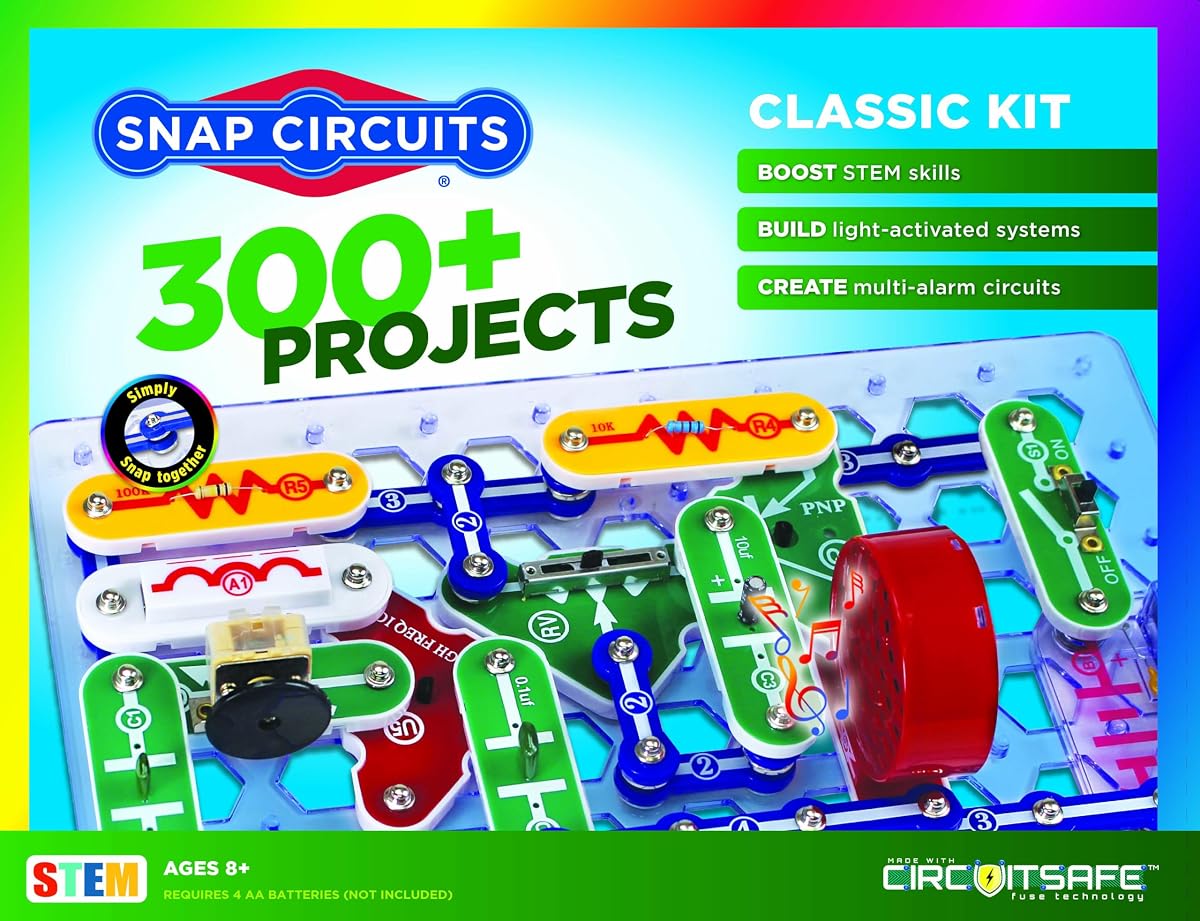
SNAP CIRCUITS Classic SC-300 STEM Electronics Kit, 300+ Projects, Ages 8+
4.8Editor score
No Soldering Required
300+ Exciting Projects
Color-Coded Snap Parts
This guide compares the top electronics kits for teens to help you find the perfect STEM learning tool for coding, robotics, or hands-on soldering projects.
Finding the right electronics kits for teens can spark a lifelong passion for engineering and coding. These tools provide hands-on experience with circuits, sensors, and microcontrollers while teaching valuable problem-solving skills in a fun environment.
We evaluated ten top-rated kits based on component quality, project variety, ease of use, and educational value. Each product offers unique features ranging from no-soldering snap circuits to advanced Arduino-based robotics and custom soldering challenges.
Each pick highlights specific strengths like guided tutorials, expandability, or real-world applications. Please note that availability and pricing change frequently so verify details before purchasing to ensure the best fit for your teen skill level and interests.
4.8Editor score

4.7Editor score

4.5Editor score
The following table compares all ten selected kits across key specifications to help you quickly identify which matches your teen needs. Look at component counts, soldering requirements, and project types to narrow down your final choice.


This kit stands out as the most comprehensive option available for teens ready to dive deep into electronics. With a rating of 4.7 stars it offers a robust set of tools that grow with the learner skills from simple LED blinks to complex RFID access systems.
We may earn a commission when you buy through this link, at no additional cost to you.
The MEGA 2560 R3 board provides significantly more memory and I/O pins than standard boards allowing for larger builds with multiple sensors and displays. Pre-soldered modules and a dedicated storage case ensure setup is quick and components stay organized between projects reducing frustration during learning.
While the sheer number of components might intimidate a complete novice the guided lessons break everything down into manageable steps. The ability to modify code and thresholds encourages creative experimentation turning structured exercises into unique interactive projects like alarms or environmental monitors.
We recommend this kit for teens who want a serious entry point into STEM and maker culture. It balances complexity with accessibility making it perfect for coding clubs or dedicated homeschool units. The durability and organization make it a long-term investment in tech education.
The 256 KB flash memory allows teens to store larger code libraries and handle multiple simultaneous sensor inputs without performance lag.
Pre-soldered modules and a small-parts box keep components easy to find reducing setup time between lessons.
We may earn a commission when you buy through this link, at no additional cost to you.
The ELEGOO UNO R3 Project Kit offers a slightly more accessible entry point compared to the Mega version while maintaining high quality. It comes highly rated at 4.7 stars and focuses on core concepts like LEDs, motors, and environmental monitoring using standard Arduino protocols.
We may earn a commission when you buy through this link, at no additional cost to you.
Everything needed to start is included in the box from the controller board to the power supply and battery. The pre-soldered modules and solderless breadboard mean teens can focus on logic and coding without needing tools or soldering iron right away.
Some teens might eventually outgrow the pin limitations if they plan massive multi-sensor builds but for most learning purposes this is sufficient. The included PDF tutorial and example code provide a clear roadmap for turning guided lessons into original creations.
This kit is ideal for teens starting their Arduino journey or for classroom settings where uniformity and ease of setup are important. It strikes a perfect balance between educational value and fun making it a reliable choice for early STEM exploration.
Includes a 9V power supply and battery so you can run projects without relying solely on USB connections.
Works seamlessly with the official Arduino IDE making it easy to find additional resources online.
We may earn a commission when you buy through this link, at no additional cost to you.
For teens fascinated by robotics this kit turns coding and engineering into a tangible driving experience. Rated at 4.5 stars it allows builders to assemble a programmable car that can see obstacles and track lines using advanced sensors and a camera module.
We may earn a commission when you buy through this link, at no additional cost to you.
The standout feature is the onboard camera which supports FPV video streaming through an app adding a layer of immersion to the project. Keyed connectors simplify the wiring process preventing mistakes during assembly while the rechargeable lithium battery ensures long play sessions.
While more expensive than basic kits the complexity justifies the cost by offering real-world robotics applications. Teens can modify code to create custom routes or automate behaviors which deepens understanding of control logic and sensor integration beyond simple examples.
We recommend this for teens who have some basic coding experience or are ready to step up from static projects. It is perfect for weekend family builds or advanced STEM classes. The interactive nature keeps engagement high and results are instantly gratifying.
The FPV feature lets teens control the car remotely while seeing the path in real time through the app.
Ultrasonic sensors automatically detect barriers allowing the car to navigate environments safely.
We may earn a commission when you buy through this link, at no additional cost to you.
This classic kit is the perfect introduction to electrical engineering without any coding or soldering barriers. With a high rating of 4.8 stars it offers over 300 projects that demonstrate real electronics principles like circuits, switches, and sensors through colorful snap-together parts.
We may earn a commission when you buy through this link, at no additional cost to you.
The design prioritizes safety and ease of use making it suitable for teens who want immediate gratification without the learning curve of a microcontroller. The instruction book is detailed and guides users from simple circuits to more complex gadgets like radios and alarms.
While it lacks the programmability of Arduino kits it excels at teaching fundamental circuit theory quickly. The price point makes it an excellent gift or starter kit that can be combined with other Snap Circuits sets to expand possibilities further.
We suggest this for teens who are curious about how electricity works or prefer tactile learning over coding. It is also great for classrooms needing a safe, low-cost option for many students. The instant success builds confidence to tackle harder projects later.
Parts snap together quickly so you can build and test gadgets within minutes of opening the box.
No sharp tools or soldering irons are needed ensuring a safe experience for younger learners.
We may earn a commission when you buy through this link, at no additional cost to you.
For teens ready to move beyond plug-and-play kits this offers a practical way to learn soldering while building a usable device. It allows users to assemble a functional Bluetooth speaker with a clear acrylic case and flashing lights providing immediate real-world value.
We may earn a commission when you buy through this link, at no additional cost to you.
The kit includes a pre-soldered amplifier board to simplify the process so beginners can focus on connecting wires and LEDs. A detailed paper manual guides every step ensuring even first-time solderers can complete the build with minimal frustration or risk of damage.
The main trade-off is the lower rating which reflects minor challenges with component versions or manual updates. However for a focused soldering exercise it remains a strong option that teaches essential electronics skills in a fun context rather than abstract practice boards.
We recommend this for teens who want to learn a tangible skill like soldering without needing a complex microcontroller setup. It serves well as a workshop project or personal challenge. The finished speaker is functional enough to use in daily life.
Unlike practice boards this kit results in a working speaker you can actually use in your room.
The included manual features clear steps for soldering connections to help avoid common mistakes.
We may earn a commission when you buy through this link, at no additional cost to you.
This kit is designed for teens who need a clear path from zero knowledge to basic coding skills. With a solid 4.7 rating it offers 22+ guided lessons that cover essential topics like digital input, analog sensing, and motor control using an UNO board.
We may earn a commission when you buy through this link, at no additional cost to you.
The included LCD display and joystick add variety to the projects allowing teens to create interactive games and status screens. The breadboard power module simplifies wiring meaning fewer errors during setup and faster progress through the tutorial steps.
While it has fewer components than larger kits the focused approach reduces overwhelm and ensures mastery of core concepts first. Teens can use the example code as a base to experiment with thresholds and sequences building confidence gradually.
We recommend this for homeschool units or beginners who want a step-by-step progression. The price makes it accessible while still providing enough variety to stay engaged. It is a reliable foundation before moving to more complex robotics.
The pre-soldered LCD lets you create visual interfaces without extra soldering work.
An illustrated component list makes finding parts fast so you don't get stuck during lessons.
We may earn a commission when you buy through this link, at no additional cost to you.
This project combines audio engineering with visual flair making it an engaging option for teens interested in multimedia electronics. Rated 4.7 stars it features a 10-LED visualizer that pulses with music adding a vibrant element to the standard Bluetooth speaker build.
We may earn a commission when you buy through this link, at no additional cost to you.
The high-resolution illustrated manual ensures that every soldering step is clear reducing errors during assembly. It provides a complete package of components including dual speakers and an acrylic case so nothing needs to be sourced separately.
While it requires some foundational soldering knowledge the detailed visuals support learning effectively. The light show aspect adds immediate excitement making the effort worth it. It is a great project for those who enjoy visual feedback during tech builds.
We recommend this for teens looking for a fun weekend project that results in a cool desktop item. It bridges the gap between simple soldering practice and a finished product. The visualizer creates an immersive experience that basic speakers lack.
The 10 LEDs sync with audio frequencies creating a responsive light show during playback.
Every component placement is shown visually so you can see exactly where parts go.
We may earn a commission when you buy through this link, at no additional cost to you.
This kit offers a distinct educational experience by allowing teens to build a musical instrument that responds to hand movements. With a 4.5 rating it uses electric fields to create sound teaching physics concepts like capacitance in a tangible and fun way.
We may earn a commission when you buy through this link, at no additional cost to you.
The assembly uses a breadboard and snap connections meaning no soldering is required making it accessible for younger teens. The colorful 22-page booklet guides builders step-by-step and breaks down breaks to verify work and understand circuit behavior.
While it is a single-project kit rather than a system it focuses on a specific and engaging application of electronics. The novelty factor keeps interest high and serves as a great talking point at science fairs or school presentations.
We recommend this for teens who love music or physics and want something different from standard robotics. It works well as a standalone project or a complement to broader electronics studies. The hands-on nature helps visualize invisible fields.
You can create sound waves without any soldering iron using simple breadboard connections.
Learn how electrical capacitance creates sound by moving your hands near the antenna.
We may earn a commission when you buy through this link, at no additional cost to you.
This is the ultimate add-on for teens who already have a controller board and want to maximize project possibilities. Rated 4.7 stars it includes 37 distinct modules ranging from flame detectors to tilt sensors enabling a wide range of creative experiments.
We may earn a commission when you buy through this link, at no additional cost to you.
The included tutorial and datasheets help beginners understand pin requirements and wiring diagrams. It supports various boards like UNO, MEGA, and ESP-32 ensuring versatility as projects grow in complexity and scope over time.
The main limitation is that it does not include a controller so it is not a standalone starter kit. However for expanding existing setups it offers excellent value and encourages teens to explore how different inputs affect outputs.
We recommend this for teens moving beyond basic kits who need specialized components. It is perfect for final school projects or advanced hobby builds. The variety ensures you will never run out of new ideas for what to build.
From ultrasonic to light detection this kit covers almost every common input type.
Pin diagrams and example code make integrating modules straightforward even for new users.
We may earn a commission when you buy through this link, at no additional cost to you.
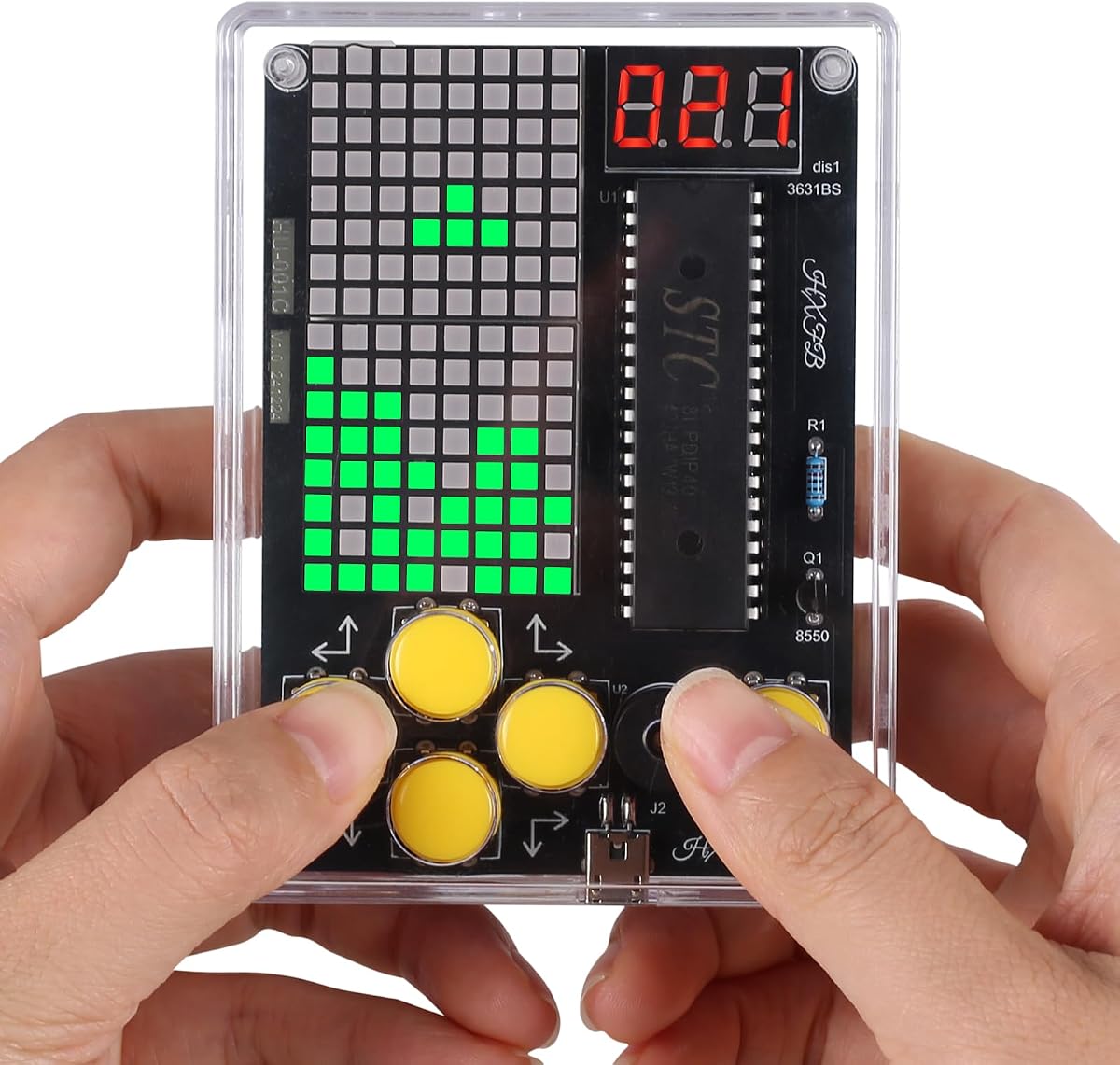
This kit is designed specifically for teens aged 15 and up looking to combine soldering practice with interactive game functions. Rated 4.1 stars it offers three difficulty levels so learners can adjust the challenge to match their soldering experience.
We may earn a commission when you buy through this link, at no additional cost to you.
The package includes a color-printed manual and video guidance making it easier to follow complex wiring steps. Once completed the device provides seven built-in interactive functions that keep the user engaged beyond just the build process.
While it is aimed at older teens the step-by-step support ensures that even those with limited experience can succeed. The structured approach helps develop precision and patience which are critical skills for any electronics or engineering career.
We recommend this for school workshops or teens ready for more precise assembly. The game-like features make it more engaging than generic soldering kits. It is a solid choice for developing manual dexterity and electronic understanding together.
The finished project includes interactive functions that respond to user inputs for entertainment.
Three levels allow you to match the build complexity to your current skill level.
We may earn a commission when you buy through this link, at no additional cost to you.
Selecting the right kit depends on your teen's skill level and interests. Consider these key factors to ensure the product matches their learning goals and provides long-term value.
Determine if your teen is a complete beginner or has some coding experience. Kits like Snap Circuits require no coding and are perfect for starting, while Arduino kits need some logic understanding.
Match the kit to their current abilities to avoid frustration or boredom.
Some kits require soldering which teaches physical skills but adds difficulty. Others use breadboards or plug-in modules for immediate results without tools.
Choose solder-free kits for quick gratification or soldering kits for skill development.
Look for kits with many guided projects to keep interest high over time. A wide range ensures teens explore different areas like motors, sensors, and displays.
More projects mean more learning opportunities and longer usage.
Kits that support additional sensors or boards allow growth as skills improve. Check compatibility with popular platforms like Arduino or Raspberry Pi.
Expandable kits prevent the need for buying a new kit as your teen progresses.
Clear manuals, video tutorials, and online communities help resolve issues quickly. Good documentation is essential for troubleshooting when projects fail.
Strong support resources reduce frustration and encourage independent problem-solving.
Price varies based on component count and complexity. Determine how much you are willing to spend and weigh it against the educational value and durability.
Higher cost often means better quality components that last through many projects.
Ensure the kit meets safety standards especially if teens will be using tools. Check battery requirements and voltage to prevent electrical hazards.
Always supervise younger teens when using soldering irons or high-voltage components.
Decide if the goal is robotics, audio engineering, or basic circuits. Choose a kit that aligns with their specific interests to maintain motivation.
Aligning the kit with their passion increases the likelihood of long-term engagement.
Start by reading the manual carefully and organizing components into small bins. Keeping parts sorted reduces lost pieces and speeds up setup time significantly.
Always follow the wiring diagrams provided and double-check connections before powering on. Mistakes in wiring can short circuit boards or damage components permanently.
Store the kit in a cool dry place away from direct sunlight when not in use. Proper storage prevents damage to batteries and plastic parts ensuring longevity.
Most kits included in this guide are designed with safety in mind and include clear instructions. Kits like Snap Circuits use low voltage and no soldering making them safe for beginners. Always supervise teens when using soldering irons or handling batteries.
Some kits like Snap Circuits require no coding at all. However Arduino-based kits require basic programming skills. Many include tutorials that teach coding from scratch so beginners can learn as they build.
Yes many of these kits are designed to be expandable. You can add extra sensors or connect to other platforms. This allows teens to keep adding to their projects over time.
Kits using disposable batteries will need periodic replacement depending on usage. Rechargeable options like the Robot Car kit are more convenient and eco-friendly for heavy users.
Most kits come with organized storage boxes to prevent loss. If parts are missing many manufacturers offer replacement parts or spare components. Contact support for assistance if needed.
Yes popular Arduino kits have active online forums where users share tips and code. These communities are invaluable for troubleshooting and finding new project ideas from other enthusiasts.
Most kits require a standard desk or table surface. Soldering kits need good ventilation so a well-ventilated room is best. Always ensure your workspace is clean and organized for safety.
Most kits are designed for independent work once the basics are learned. Younger teens should have initial adult support for setup or soldering tasks for safety.
We reviewed ten top electronics kits for teens ranging from snap-together circuits to advanced robotics. Each offers unique benefits depending on whether you prioritize coding, soldering, or quick assembly.
Prioritize kits that match your teen skill level and interests to keep them engaged long-term. Expansion capabilities and clear documentation ensure the kit grows with their learning needs.
Remember to check current prices and availability before buying as stock can change frequently. Investing in the right kit now can spark a passion that lasts a lifetime.