
Vogzone for MCX4121A-ACAT ConnectX-4 Lx 25GbE Dual SFP28 PCIe 3.0 x8 NIC
4.7Editor score
Mellanox ConnectX-4
Dual SFP28 Ports
Wide OS Support
This guide compares the top 25GbE Network Cards for enterprise and home labs, evaluating performance, compatibility, and value to help you upgrade your network.
High-speed networking is essential for modern data centers and storage systems. A reliable 25GbE Network Card ensures fast data transfer and low latency for critical applications.
We evaluated ten top-rated adapters based on controller quality, port configuration, and operating system support. Our analysis highlights performance and compatibility for diverse environments.
Each pick shows key specs and real-world strengths for your setup. Prices change frequently so verify current listings before purchasing your next network upgrade.
4.7Editor score

5.0Editor score

5.0Editor score
The following table provides a side-by-side comparison of all ten network cards to help you quickly identify the best match for your infrastructure needs.


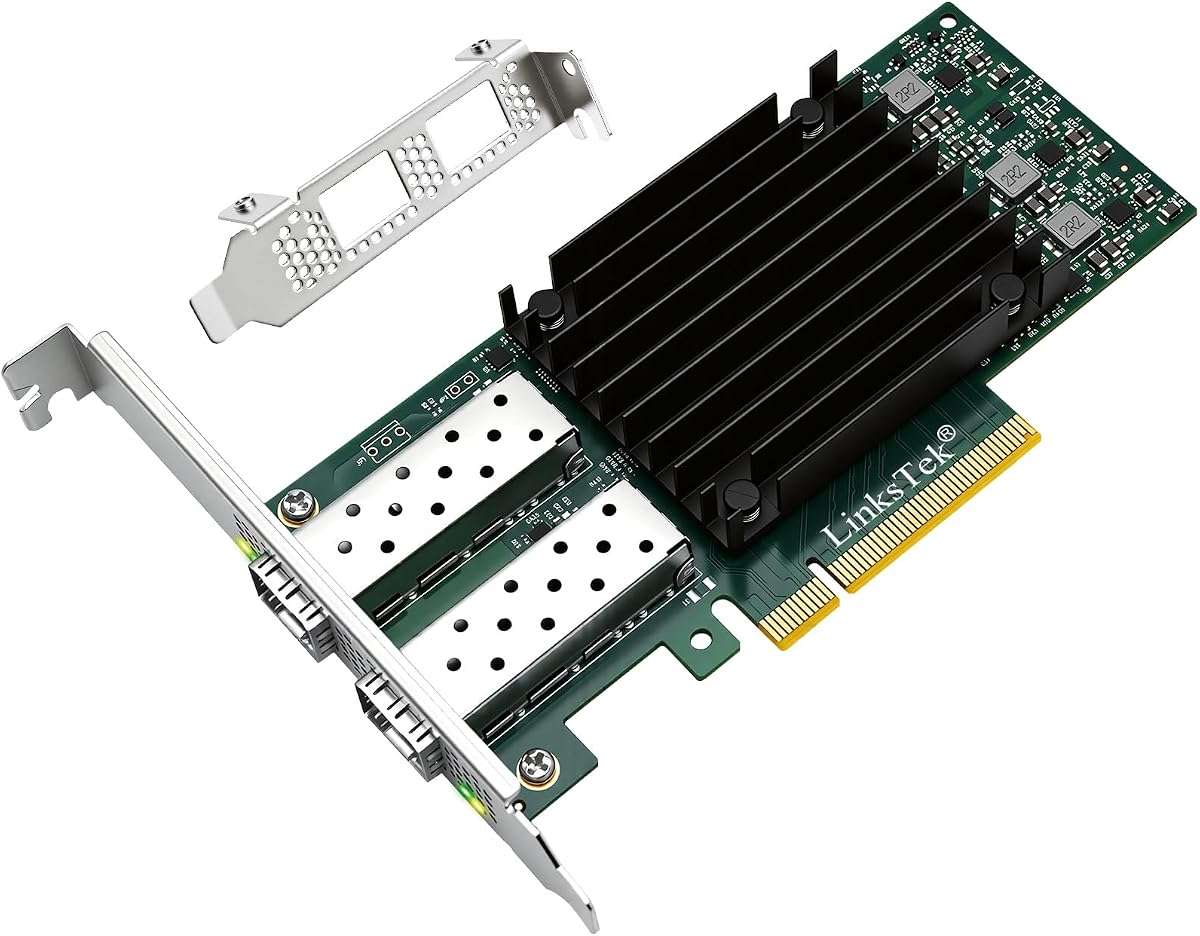


This QNAP adapter uses an Intel E810 controller to deliver reliable high-speed networking for enterprise-level environments. It supports two 25GbE ports for fast data transfer across multiple devices.
We may earn a commission when you buy through this link, at no additional cost to you.
Key strengths include Port Trunking which combines both ports for up to 50 Gbps transfer speeds. Forward Error Correction ensures data integrity during intensive file sharing tasks.
The main trade-off is its specific focus on QNAP systems which limits broader server compatibility. However for QNAP NAS owners this is a dedicated solution for upgrading their infrastructure.
It is ideal for QNAP users needing fast storage connectivity. We recommend this card for anyone looking to maximize their NAS performance without complex configuration.
Forward Error Correction ensures data integrity during intensive file sharing tasks in enterprise environments.
Port Trunking combines both ports to achieve up to 50 Gbps transfer speeds for high performance.
We may earn a commission when you buy through this link, at no additional cost to you.
This Synology adapter is purpose-built for high-performance storage applications within the Synology ecosystem. It enables higher simultaneous throughput and supports port failover for reliability.
We may earn a commission when you buy through this link, at no additional cost to you.
Strengths include a comprehensive five-year warranty and native support for load balancing and failover mechanisms. It integrates smoothly with DSM 7.1.1 and later updates.
The limitation is that it only works with Synology NAS systems which may restrict flexibility for hybrid setups. It is also priced higher than third-party alternatives that offer broader compatibility.
You should buy this if you own a Synology NAS and want seamless integration. It is the best choice for users prioritizing warranty and native support.
Purpose-built for use with Synology systems ensuring compatibility and ease of setup.
Supports port failover and load balancing to maintain network availability during interruptions.
We may earn a commission when you buy through this link, at no additional cost to you.
This adapter offers exceptional value using a Mellanox ConnectX-4 Lx controller at a budget-friendly price point. It provides true hardware-based I/O isolation and unmatched scalability.
We may earn a commission when you buy through this link, at no additional cost to you.
Strengths include support for Web 2.0 cloud data analytics and storage platforms. It supports a wide range of operating systems including Windows Linux and VMware ESXi.
The main limitation is that it does not include optical transceivers which must be purchased separately for fiber connectivity. Brand support may be less centralized than major manufacturers.
Buy this for high performance without the premium price tag. It is perfect for budget-conscious users who need robust RDMA and virtualization capabilities.
Original Mellanox ConnectX-4 Lx controller provides true hardware-based I/O isolation and unmatched scalability.
SR-IOV technology enables efficient management of I/O resources for multiple virtual machines.
We may earn a commission when you buy through this link, at no additional cost to you.
This 10Gtek card features an Intel E810 controller and PCIe 4.0 interface for high performance in modern servers. It supports 25GbE ports with robust RDMA capabilities for efficient data transfers.
We may earn a commission when you buy through this link, at no additional cost to you.
Key strengths include a perfect 5.0 rating and extensive operating system support. It supports Windows Linux and VMware ESXi making it versatile for various environments.
The primary trade-off is the lack of macOS support which restricts use to server and workstation environments. It also lacks branded packaging which may affect warranty perception for some buyers.
Choose this for high-speed data center or home lab use. It is an excellent choice for those prioritizing PCIe 4.0 speed and RDMA features on a budget.
PCIe v4.0 (16.0GT/s) x8 interface delivers faster data throughput for modern server environments.
Support RD iWARP RDMA RoCEv2 RDMA and Giant frame up to 9.5KB for efficient processing.
We may earn a commission when you buy through this link, at no additional cost to you.
This CX4121A adapter is built for Web 2.0 cloud data analytics and storage platforms with a Mellanox ConnectX-4 Lx controller. It delivers a flexible and cost-effective Ethernet solution.
We may earn a commission when you buy through this link, at no additional cost to you.
Strengths include overlay network support like NVGRE VXLAN and GENEVE which are critical for modern cloud environments. It also supports RDMA over RoCE for high performance.
The main limitation is the lack of included transceivers requiring separate purchases for fiber connectivity. Users should verify compatibility with their existing network cabling.
This card is ideal for cloud deployments and virtualization needs. It offers top-tier performance for users needing advanced overlay network features.
Intelligent RDMA Ethernet adapter designed for cloud and storage platforms with advanced features.
Supports I/O virtualization and SR-IOV for maximum performance in virtualized servers.
We may earn a commission when you buy through this link, at no additional cost to you.
The Intel XXV710-DA2 is a robust network adapter for enterprise environments. It supports PCIe 3.0 and 25GEthernet.org specification compliance for reliable high-speed connectivity.
We may earn a commission when you buy through this link, at no additional cost to you.
Key strengths include network virtualization offloads like VXLAN and GENEVE which improve packet processing efficiency. It is optimized for DPDK ensuring fast performance in NFV deployments.
The higher price may be a barrier for small labs compared to third-party options. It also requires a PCIe 3.0 x8 slot which may not fit all older server chassis.
Choose this for enterprise-grade stability and advanced virtualization features. It is perfect for users prioritizing official Intel support and performance optimization.
DPDK optimized for efficient packet processing ensuring excellent small packet performance for network appliances.
Intelligent offloads enable high performance on servers with Intel Xeon processors.
We may earn a commission when you buy through this link, at no additional cost to you.
This GLOTRENDS card delivers stable 25GbE throughput with an Intel E810 controller designed for OCP 3.0 server environments. It offers robust traffic management and virtualization capabilities.
We may earn a commission when you buy through this link, at no additional cost to you.
Key strengths include on-chip QoS traffic management and Flexible Port Partitioning which allows efficient workload distribution. It supports RDMA and RoCEv2 for high-speed data transfers.
The main limitation is its specific OCP 3.0 form factor which may not fit standard PCIe slots. It also lacks included transceivers which must be sourced separately for fiber setups.
It is ideal for modern data centers using OCP standards. Choose this for stable throughput and advanced traffic management features.
Original Intel E810 controller delivers on-chip QoS and traffic management for optimized performance.
PCI-SIG SR-IOV support enables efficient virtualization cloud and NFV workload handling.
We may earn a commission when you buy through this link, at no additional cost to you.
This Sonnet adapter adds dual 25GbE connections to Thunderbolt 5 computers for high-performance networking. It includes SFP28 optical transceivers enabling immediate deployment.
We may earn a commission when you buy through this link, at no additional cost to you.
Key strengths include support for 25GbE over Thunderbolt 5 which delivers full bandwidth for both ports. It is compatible with Mac Windows and Linux systems for broad usability.
The high price is a trade-off but justified by the included transceivers and Thunderbolt 5 capabilities. It requires a Thunderbolt 5 or USB4 port which limits older computer compatibility.
Choose this for Mac or high-end workstation users needing fast networking without PCIe slots. It is ideal for media production and AI workflows.
Delivers full 25GbE performance over Thunderbolt 5 supporting both ports simultaneously.
Includes two 25GBASE-SR SFP28 optical transceivers for immediate deployment on fiber networks.
We may earn a commission when you buy through this link, at no additional cost to you.
This Sonnet adapter provides dual optical 25GbE connections to computers with PCIe slots. It includes high-performance 25GBASE SFP28 transceivers for immediate deployment.
We may earn a commission when you buy through this link, at no additional cost to you.
Strengths include compatibility with Mac Windows and Linux systems making it versatile for mixed environments. It also supports 10GbE backward compatibility for seamless upgrades.
The limitation is that it may require Apple updates for full macOS 15 support. The price is high compared to non-branded alternatives but the included transceivers add value.
Buy this for Mac or PCIe expansion users needing easy setup. It is perfect for studios and offices requiring high-speed shared storage.
Simply powerful way to add dual optical 25GbE connections with included transceivers.
Backward compatible with 10GbE infrastructure now and upgrades to 25GbE later.
We may earn a commission when you buy through this link, at no additional cost to you.
This Mellanox adapter provides intelligent RDMA capabilities for Web 2.0 Cloud Storage and Telco platforms. It features a ConnectX-5 EN controller for advanced application offloads.
We may earn a commission when you buy through this link, at no additional cost to you.
Strengths include dual-port SFP28 connectivity and advanced RDMA offloads for efficient network processing. It offers a proven reliable solution for high-throughput environments.
The main limitation is the tall bracket size which may not fit low-profile cases. It also requires separate optical transceivers for fiber connectivity which adds to the cost.
Choose this for established Mellanox users needing proven enterprise performance. It is ideal for data centers requiring advanced offloads and reliability.
Intelligent RDMA-enabled network adapter with advanced application offload capabilities.
Dual-Port SFP28 connectivity for robust data transfer in demanding storage environments.
We may earn a commission when you buy through this link, at no additional cost to you.
Selecting the right network card depends on several factors including interface compatibility, controller performance, and specific use cases. This guide breaks down key considerations.
The controller determines the card's performance capabilities and features. Intel E810 and Mellanox ConnectX-4 or 5 offer different strengths. Look for supported offloads and RDMA capabilities.
Always verify the controller model matches your performance needs and software compatibility requirements.
SFP28 ports are standard for 25GbE but require compatible transceivers or DAC cables. Some cards include these while others require separate purchase. Check cable compatibility with existing switches.
Ensure you budget for the correct cables or modules to avoid extra costs later.
Driver availability is crucial for smooth installation. Major systems like Windows Server Linux and VMware ESXi are widely supported but check specific versions. Some adapters may lack support for macOS or niche systems.
Confirm that the card supports your current OS version before purchasing.
25GbE cards typically use PCIe 3.0 or 4.0 x8 interfaces. Newer cards offer better bandwidth for future upgrades. Ensure your motherboard has a compatible slot size.
Match the card to your PCIe slot version to maximize data transfer speeds.
Features like RDMA SR-IOV and Port Trunking can significantly enhance performance. RDMA reduces CPU load for high-speed transfers while SR-IOV helps virtualized environments. Check which features are needed.
Prioritize features that match your workload needs like storage or virtualization.
Reputable brands often offer better support and warranties. Some third-party brands provide lower prices but may have limited warranty terms. Consider the importance of support for your infrastructure.
Choose a brand that offers the warranty and support level you need for stability.
Cards come in low-profile or full-height brackets. Check your server or PC case clearance. Some OCP server cards have specialized form factors that fit specific chassis.
Verify physical dimensions to ensure the card fits your hardware enclosure.
Most options are dual-port for redundancy or aggregation. Ensure your switch supports multiple ports. Single-port options exist but offer less flexibility.
Choose dual-port cards for better reliability and potential load balancing.
Install the card into a compatible PCIe slot and secure it properly. Connect SFP28 transceivers or cables ensuring they click into place securely. Verify physical connection lights turn on.
Install the latest drivers from the manufacturer website. Configure network settings and IP addresses through your OS network panel. Test connectivity by running speed tests to verify performance.
Monitor temperature and ensure adequate cooling inside the server or PC. Regularly check for firmware updates to maintain security and stability. Avoid excessive vibration to extend hardware lifespan.
Yes most 25GbE cards support backward compatibility with 10GbE switches. They auto-negotiate to match the switch speed automatically. This allows seamless integration without replacing all existing switches at once.
Most standard PCIe cards do not include transceivers so you must purchase them separately. Some premium adapters like Sonnet models include transceivers as part of the package. Always check the product description before buying.
Yes Linux systems typically require specific OFED or kernel drivers for full functionality. Check the manufacturer website for supported Linux versions and driver downloads. Some kernels include built-in support for common controllers.
Yes many models support QNAP and Synology systems for high-speed storage access. Ensure compatibility with your NAS model and firmware version before purchasing. Port trunking can help boost throughput for media streaming.
RDMA allows direct data transfer between memory bypassing CPU involvement for lower latency. This is ideal for high-performance computing and storage tasks. It significantly improves speed compared to traditional TCP IP transfers.
No most PCIe cards draw power directly from the motherboard slots. However ensure your power supply can handle system load increases from fast networking. Check voltage requirements in manual specs.
Some brands like Sonnet offer macOS compatibility but many standard cards may not support Mac OS. Check product details for macOS support specifically. Intel based models might require additional drivers for Mac systems.
We reviewed ten top options from Intel Mellanox and Sonnet offering choices for every need. The Intel XXV710-DA2 leads for enterprise reliability while Vogzone offers strong budget performance.
Prioritize your interface compatibility controller features and OS support before buying. Consider whether you need RDMA or just fast file transfer speeds for your use case.
Prices change frequently so check current listings on Amazon for the best deals. Ensure transceivers are included or budget for them to complete your setup.