
M-AUDIO Keystation 88 MK3
4.5Editor score
Semi weighted keys
Plug-n-play USB
Slimline design
Explore our expert guide comparing the top 88 key weighted MIDI controllers for 2026, featuring detailed reviews of hammer action keys, DAW integration, and
Finding the right 88 key weighted MIDI controller can transform your music production workflow. These instruments offer the realistic touch of an acoustic piano, allowing for expressive playing and dynamic control over your digital audio workstation. Whether you are a beginner or a seasoned professional, selecting the perfect controller is essential for creating polished tracks.
We have evaluated ten leading models based on key action quality, connectivity options, software bundles, and overall build durability. Our comparison focuses on how each device integrates with popular production software and supports creative workflows. This guide helps you navigate the features that matter most for your specific musical needs and studio setup.
Each recommendation highlights unique strengths, from budget-friendly options to premium professional tools. You will find detailed insights into key feel, control surfaces, and included software to help you make an informed decision. Please note that pricing and availability may change over time, so check current listings before purchasing your next controller.
4.5Editor score

4.6Editor score

4.3Editor score
This table provides a side-by-side comparison of all ten products reviewed in this guide, highlighting key specifications and features to help you quickly identify the best fit for your studio.



The Novation Launchkey 88 [MK3] stands out as a top choice for producers seeking seamless integration with their software. It features a premium full-size keybed with 88 semi-weighted keys that offer a balanced feel for both playing and programming. With a solid rating, it is praised for its ability to connect deeply with various digital audio workstations.
We may earn a commission when you buy through this link, at no additional cost to you.
Its standout quality lies in the deep integration across all leading DAWs, providing immediate access to controls needed for production tasks. The powerful arpeggiator with strum mode helps unlock new creative ideas by generating melodic and rhythmic patterns effortlessly. Creative scale and chord modes allow users to trigger complex harmonies with single finger presses.
While the device offers many benefits, some users might find the semi-weighted action less realistic compared to fully weighted alternatives. The price point is also higher than basic models, which could be a consideration for those on a tight budget. However, the value provided through software and features often justifies the investment.
This controller is ideal for producers who need reliable hardware that works intuitively with their existing software setup. Whether you are composing tracks or performing live, the customizable modes and high-quality controls make it a versatile tool. It is recommended for those prioritizing workflow efficiency and creative flexibility.
The controller offers deep integration across leading digital audio workstations, providing immediate access to all necessary controls for efficient production workflows.
Features like the powerful arpeggiator and scale modes allow users to unlock new melodic and harmonic ideas during the songwriting process.
We may earn a commission when you buy through this link, at no additional cost to you.
The M-AUDIO Keystation 88 MK3 is an essential tool for music production at an accessible price point. It features 88 full-size velocity-sensitive semi-weighted keys that provide expressive control over virtual instruments and synthesizers. Its high rating reflects its popularity among beginners and budget-conscious producers looking for reliable MIDI control.
We may earn a commission when you buy through this link, at no additional cost to you.
Key strengths include effortless plug-n-play USB connectivity to Mac or PC without needing drivers or a power supply. The slimline design ensures it fits any desk or studio setup perfectly, while advanced functionality customizes controls for recording software. It comes with a suite of production software like MPC Beats and Ableton Live Lite.
Trade-offs include the semi-weighted key action which may not suit those seeking a piano-like feel. The control surface is also basic with fewer knobs and pads compared to higher-end models. These limitations are acceptable given the device's focus on core MIDI functionality and ease of use.
This controller is best suited for beginners or those needing a straightforward MIDI keyboard for virtual instrument control. It offers everything needed for pro music production without unnecessary complexity. We recommend it for anyone prioritizing cost-effectiveness and immediate usability.
Users can connect effortlessly via USB without needing additional drivers or power supplies, making setup quick and simple for any system.
The slimline design is engineered to fit any desk, studio, or stage setup perfectly while providing advanced customization options.
We may earn a commission when you buy through this link, at no additional cost to you.
The Arturia KeyLab 88 mk3 offers a fully weighted hammer-action keybed that mimics the touch of a traditional piano. It stands out with 12 pressure-sensitive performance pads and a USB-C connection for modern studio setups. This premium controller is designed for serious producers who demand high-quality build and expressive performance capabilities.
We may earn a commission when you buy through this link, at no additional cost to you.
Its key strengths include the authentic feel of the weighted keys which allow for dynamic control and nuanced playing. The inclusion of a sheet music stand and sustain pedal inputs ensures all essential tools are at hand. The USB-C power simplifies connectivity and reduces cable clutter in professional environments.
Trade-offs involve the higher price point compared to semi-weighted alternatives and the potential weight of the unit. Some users may find the full hammer action too heavy for fast electronic music styles. However, for classical or expressive work, these factors are minor compromises for the quality provided.
This controller is ideal for producers seeking a premium instrument with a realistic playing experience. It suits those who value build quality and advanced features over budget savings. We recommend it for anyone building a professional studio setup.
The fully weighted hammer-action keys provide a realistic piano feel that allows for dynamic control and expressive playing styles.
USB-C power ensures a cleaner setup and reliable connectivity, reducing the need for external power supplies or adapters.
We may earn a commission when you buy through this link, at no additional cost to you.
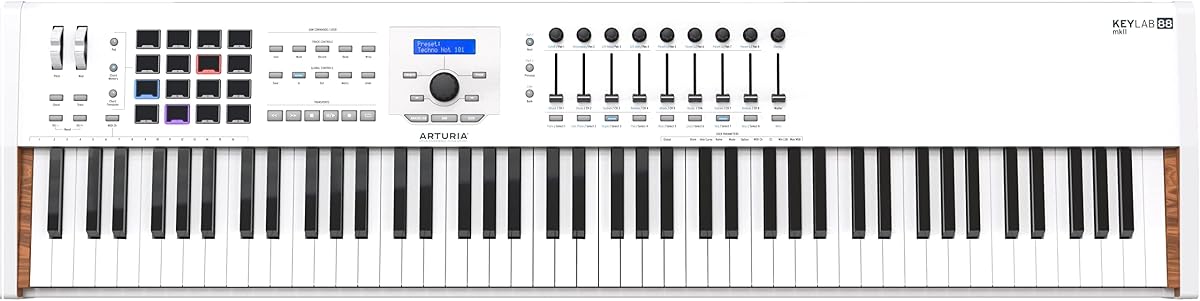
The white version of the Arturia KeyLab 88 mk3 offers the same premium features as the black model but with a distinctive aesthetic. It features a fully weighted hammer-action keybed and 12 performance-sensitive performance pads for versatile control. This controller is designed for users who want a clean look in their studio while maintaining high performance standards.
We may earn a commission when you buy through this link, at no additional cost to you.
Its strengths include the realistic piano-like feel of the keys which support expressive playing and dynamic performance. The USB-C power simplifies setup and the included sheet music stand adds practical value. The white finish can help it stand out in a visual studio environment.
Trade-offs include a slightly lower rating average compared to other models and the higher cost associated with premium gear. Some users might prefer the black version for better stain resistance. However, the core functionality remains identical to the standard model making it a solid choice.
This controller is suitable for producers who prioritize both performance and visual style in their workspace. It is a great option for those seeking a high-quality hammer-action controller with a unique look. We recommend it for users who value aesthetics alongside functionality.
The white finish offers a distinctive look that can enhance the visual appeal of any modern studio setup or performance space.
Despite the color change, it retains all the premium features like the fully weighted keybed and USB-C power connectivity.
We may earn a commission when you buy through this link, at no additional cost to you.
The Studiologic SL88 MK2 is a robust MIDI keyboard controller featuring 88 weighted keys and an onboard display for easy navigation. It supports Numa player compatibility and includes 7 encoders for precise control over parameters. Its high rating reflects its reliability and utility for users needing dedicated hardware control.
We may earn a commission when you buy through this link, at no additional cost to you.
Key strengths include the weighted keys which provide a comfortable touch for extended playing sessions. The onboard display allows for quick adjustments without relying on software windows. The encoders offer tactile control that is essential for mixing and tweaking synth parameters during recording.
Trade-offs include a limited software bundle compared to competitors which may require users to purchase additional plugins. Some users may find the interface requires a learning curve to utilize fully. These are acceptable given the focus on hardware reliability and core control features.
This controller is ideal for users who need a reliable keyboard with tactile controls for professional settings. It suits those who prioritize hardware feedback over extensive bundled software. We recommend it for producers focused on live performance or studio tweaking.
The inclusion of 7 encoders allows for precise tactile control over various parameters, enhancing the efficiency of the production process.
An onboard display provides immediate visual feedback on settings, making it easier to adjust parameters without checking software interfaces.
We may earn a commission when you buy through this link, at no additional cost to you.
The YAMAHA P71 is a digital piano that offers a true acoustic piano feel through its touch-sensitive keys. It allows for dynamic performance and expression with a weighted action that replicates the real instrument. With an excellent rating, it is highly regarded for its sound quality and ease of use.
We may earn a commission when you buy through this link, at no additional cost to you.
Key strengths include the ability to choose from 10 unique voices including rich grand piano tones. The Layered Sound dual mode lets you blend two voices for a rich inspiring experience. Simple one-button operation ensures you stay focused on your music without technical distractions.
Trade-offs involve limited MIDI control features compared to dedicated controllers and a basic control surface. It is primarily designed as a standalone instrument rather than a complex hub for software. These limitations are acceptable for those prioritizing sound and feel over extensive control.
This unit is best suited for pianists who want an authentic playing experience in a digital format. It is a great choice for homes or studios where simple operation and sound quality are priorities. We recommend it for performers focused on expression and tone.
Touch-sensitive keys allow for true expression and dynamic performance by replicating the weighted action of an acoustic piano.
The dual mode feature lets you blend two voices like piano and strings to create a rich inspiring new playing experience.
We may earn a commission when you buy through this link, at no additional cost to you.
The Arturia KeyLab Essential mk3 features 88 hybrid synth-piano feel keys that provide comfort for musical expression. It includes 2000 presets with Analog Lab Pro and new features like Scale Mode and Chord Mode. The high rating indicates satisfaction with its ability to make composition intuitive for beginners and pros.
We may earn a commission when you buy through this link, at no additional cost to you.
Key strengths include the waterfall keybed which is comfortable for both piano and synth playing. The RGB backlit pads with velocity and pressure sensitivity offer versatile control. Custom DAW integration ensures deeper control over popular software like Ableton Live and Logic Pro X.
Trade-offs include the non-weighted feel which may not suit players seeking a piano touch. The build is lighter and may feel less premium compared to full hammer action models. These are acceptable given the focus on versatility and ease of use for electronic production.
This controller is ideal for producers seeking an entry-friendly hybrid for electronic music and production. It suits those who value presets and features over a heavy key feel. We recommend it for users prioritizing software integration and intuitive controls.
Features like Scale Mode and Chord Mode make composition and songwriting more intuitive than ever for producers of all levels.
Access over 2000 presets with Analog Lab Pro that are no longer limited to vintage sounds and include modern hybrids and orchestral sounds.
We may earn a commission when you buy through this link, at no additional cost to you.
The Arturia KeyLab 88 MkII offers a high-quality aftertouch and velocity-sensitive hammer-action keyboard. It features a Fatar TP/100LR keybed that delivers a realistic piano feel. With 16 drum pads and analog lab V software included, it is a comprehensive tool for production and performance.
We may earn a commission when you buy through this link, at no additional cost to you.
Key strengths include the aftertouch capability which adds expressive depth to your playing. The control bank with 9 faders and 9 rotary knobs provides extensive tactile control over your music. Its high rating reflects user satisfaction with the build quality and feature set.
Trade-offs include the heavy weight of the unit which can make transport difficult. Note that the stand is not included with the purchase which may be an additional cost. These are acceptable given the professional-grade features provided in the package.
This controller is ideal for producers needing a robust controller for complex music projects. It suits those who value aftertouch and a full set of controls. We recommend it for experienced users wanting a versatile workstation.
Aftertouch and velocity sensitivity provide a high-quality piano feel that allows for expressive performances and dynamic nuance.
The control bank includes 9 faders and 9 rotary knobs giving you extensive tactile control over virtual instruments and effects.
We may earn a commission when you buy through this link, at no additional cost to you.
The Roland A-88MKII features Roland's own PHA-4 keyboard which offers unmatched playability. It is built to last with wood and premium materials for years of dependable performance. The controller includes RGB-lit assignable knobs and is ready for MIDI 2.0 making it a future-proof choice.
We may earn a commission when you buy through this link, at no additional cost to you.
Key strengths include the thin design with shallow depth which fits today's studio environments perfectly. The control application allows for deep customization and instant recall of settings. USB-C connectivity and bus power simplify the connection process for modern setups.
Trade-offs involve the high price point which places it at the premium end of the market. Some users may find the limited number of pads restrictive for beat production. These are acceptable for those valuing premium build quality and playability over budget.
This controller is ideal for professional pianists and producers seeking a durable and responsive interface. It suits those who value long-term investment and realistic feel. We recommend it for serious users needing a top-tier controller.
Built to last with wood and premium materials, this controller ensures years of dependable performance for demanding users.
With USB-C connectivity and readiness for MIDI 2.0, this controller is prepared for future standards and modern studio setups.
We may earn a commission when you buy through this link, at no additional cost to you.
The M-AUDIO Hammer 88 Pro provides a traditional piano feel with 88 velocity-sensitive graded hammer action weighted keys. It includes aftertouch and assignable zones for playing virtual sampler instruments. With a comprehensive feature set, it aims to deliver total command of your music production environment.
We may earn a commission when you buy through this link, at no additional cost to you.
Key strengths include Native Kontrol Standard integration which allows direct control of presets and libraries. Total Command of your music production is supported by 9 assignable faders and knobs for tactile control. Smart Chord and Scale modes assist with creative workflows and composition.
Trade-offs include the higher cost compared to semi-weighted alternatives and some potential weight considerations. Users may find the extensive features require time to learn and set up. These are acceptable for those seeking a full workstation with piano realism.
This controller is ideal for users needing a traditional piano feel alongside extensive control options. It suits those who value integration and customization for production. We recommend it for serious composers looking for a comprehensive tool.
Native Kontrol Standard integration partners with Native Instruments to bring support for presets and sound libraries directly to the keyboard.
With 9 assignable faders and knobs, you gain total command of virtual instruments and plugins for precise production control.
We may earn a commission when you buy through this link, at no additional cost to you.
Choosing the right controller requires understanding key features that impact your workflow and performance. Consider these factors to match a device to your specific production needs.
Weighted keys mimic the feel of an acoustic piano which is essential for expressive playing. Semi-weighted keys offer a lighter touch better suited for synth and electronic music. Fully weighted hammer action provides the most realistic feel but adds weight and cost to the unit.
Choose the action that best matches your playing style and the types of instruments you use most often.
USB-C is becoming the standard for modern controllers offering reliable data and power. Some models still use traditional USB-A or include MIDI DIN for hardware integration. Ensure the ports match your computer and any external gear you might use.
Check the connector type on your computer before purchasing to ensure seamless integration.
Deep integration allows your controller to map directly to controls in software like Ableton or Logic. This saves time by eliminating manual mapping of faders and knobs. Look for pre-mapped scripts if you work with a specific digital audio workstation.
Prioritize controllers that offer custom scripts for your preferred DAW to speed up workflow.
Pads faders and knobs give you tactile control over your music software without touching the mouse. RGB lighting helps distinguish pads at night or during live performances. More controls provide more flexibility for mixing and sound design.
Select a control surface with enough knobs and pads for your typical workflow needs.
Many controllers include free digital audio workstations and virtual instruments. This adds value to your purchase and helps beginners get started immediately. Always check which software is included to see if it matches your production needs.
Look for bundles that include tools you will actually use to maximize the value of the controller.
Materials like wood or metal add durability and stability during intense use. Lightweight units are easier to transport but may feel less substantial. A sturdy chassis prevents unwanted movement while playing.
Invest in a robust build if you plan to transport your controller to gigs regularly.
Weight and dimensions determine how easy it is to move the controller. Some models are slimline to fit small desks while others are larger and heavier. Consider how much desk space you have and how often you move gear.
Balance the need for a large interface with the practicality of moving equipment if needed.
Prices vary significantly from budget options to premium professional models. Define your spending limit early to narrow down choices quickly. Higher cost often brings better key feel and build quality.
Determine your budget first to ensure you find a model that fits your financial constraints.
Start by connecting the controller via USB to your computer and installing any necessary drivers. Most modern devices are plug-and-play so they should appear in your software automatically. Ensure the device is recognized in your DAW settings before attempting to play.
Keep the controller clean by wiping keys with a dry cloth after every session. Avoid eating or drinking near the unit to prevent debris from entering the keybed. Regularly check connections to ensure stable signal transmission during use.
Store the device in a dry and cool place when not in use. Use a cover to protect from dust and accidental damage. If transporting the controller use the original packaging or a dedicated case for maximum protection.
Weighted keys have a heavier spring resistance that mimics the feel of an acoustic piano. Semi-weighted keys are lighter and offer more bounce which suits electronic music. This difference impacts how much physical effort is needed during performance.
Stands are often sold separately unless included in the box. A sturdy stand helps you reach keys comfortably and saves desk space. Some users build their own or use adjustable stands to fit their height.
Most controllers need a computer to run software instruments but some have internal sounds. Check if the model supports standalone operation for use without a PC. Connectivity options determine what hardware it can control directly.
Beginners often prefer budget-friendly models with simple plug-and-play setup. Look for units that include software to help you start recording quickly. Ease of use and comfort are more important than advanced features for new users.
Most models are designed to work seamlessly with both Mac and PC systems. Check for OS compatibility requirements on the product page before purchasing. Modern devices typically support the latest operating systems on both platforms.
Use a soft dry cloth to wipe dust off the keys gently. Avoid harsh chemicals that could damage the surface or feel of the keys. Regular cleaning prevents dirt buildup and keeps the touch feeling consistent.
We have explored ten top controllers ranging from budget-friendly options to premium professional tools. Each offers unique strengths such as deep integration realistic key action or extensive controls. Select the one that aligns best with your production goals and workflow.
Prioritize features like key feel and DAW integration based on what you need most. Beginners might value ease of use while pros may need advanced control surfaces. Understanding your specific requirements ensures you pick the right tool.
Check current prices and availability as these can change over time. Compare software bundles and warranty terms before finalizing your purchase. Investing in the right controller will elevate your music creation experience for years to come.