
Omada AX3000 Wireless Access Point
4.5Editor score
Cloud management included
Wi-Fi 6 speeds
Five year warranty
This guide compares the top commercial wireless routers for businesses including mesh systems and access points to ensure secure and reliable network connectivi
Businesses today need robust networking solutions to handle increasing device counts and security demands. A commercial wireless router provides the backbone for efficient operations, allowing seamless connectivity for employees and guests alike.
We evaluated ten leading models based on performance, security features, management capabilities, and scalability. Our analysis focuses on real-world business scenarios to help you find the right fit for your specific infrastructure needs.
Each pick highlights key strengths and potential limitations to guide your decision. Remember that network requirements evolve, so selecting a future-ready system is crucial for long-term success without frequent upgrades.
4.5Editor score
4.2Editor score

4.6Editor score
The following table provides a side-by-side comparison of the top ten commercial wireless routers available today. Each entry includes key specifications to help you quickly identify the model that aligns with your business requirements.




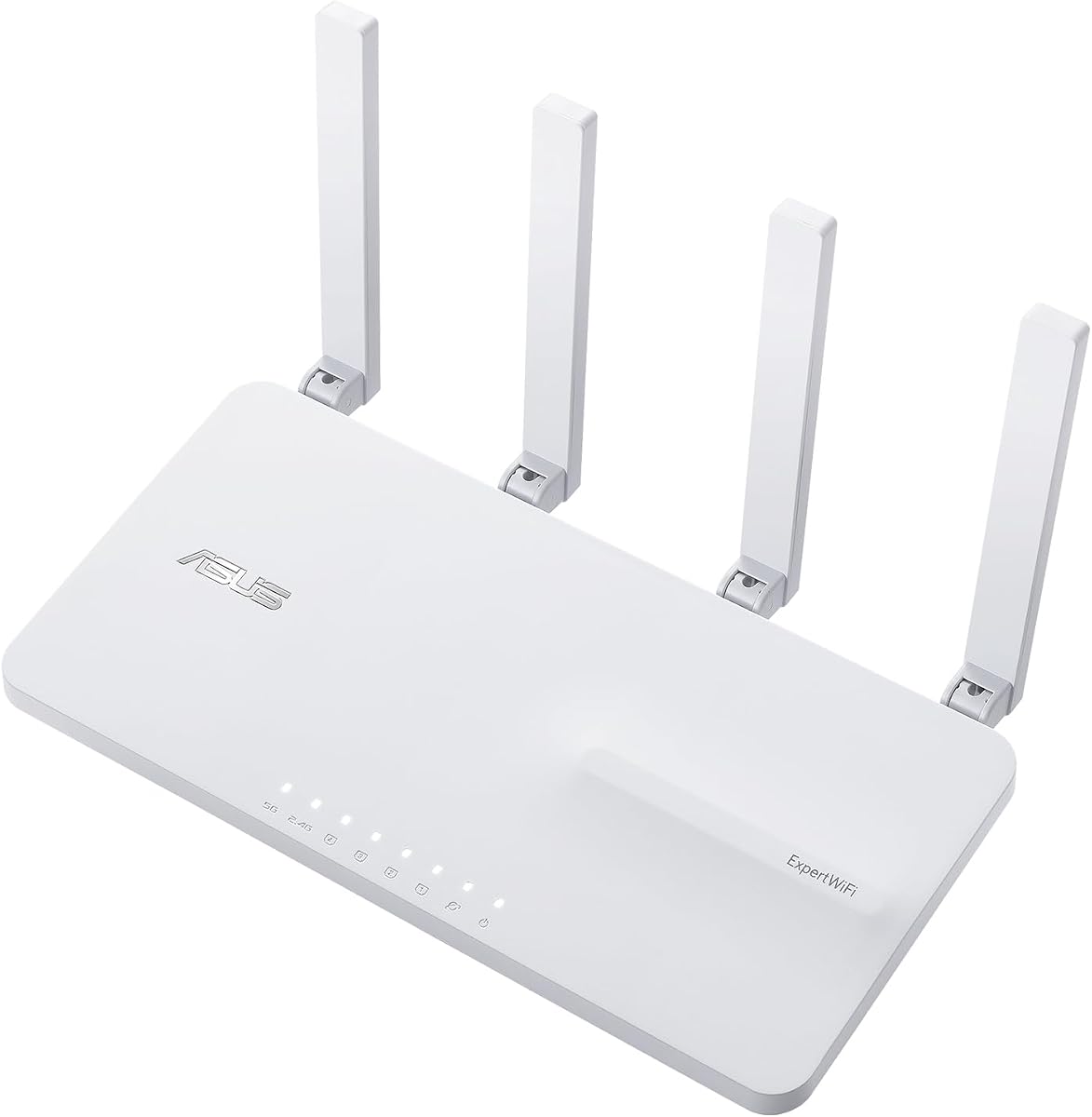
The ASUS ExpertWiFi EBR63 AX3000 stands out as a robust solution for small to medium businesses needing reliable Wi-Fi 6 performance. With a solid 4.2 rating, it balances cost and functionality effectively for modern office environments.
We may earn a commission when you buy through this link, at no additional cost to you.
Its standout features include a customizable guest portal that lets you brand your network connection, which is vital for customer-facing establishments. The device supports up to five SSIDs, allowing you to segment traffic between staff, guests, and IoT devices securely.
While it lacks the ultra-high speeds of Wi-Fi 7, its enterprise-grade security and ease of management make it a practical choice. The backup WAN feature via USB ensures business continuity if your primary connection fails, reducing downtime risks.
If you prioritize seamless setup and strong security without overspending, this router is an excellent pick. It scales well with other ExpertWiFi devices, making it a smart long-term investment for growing businesses.
Businesses can tailor the login page to match their brand, enhancing customer experience and professionalism during Wi-Fi access.
Up to five SSIDs allow you to isolate traffic, protecting sensitive business data from public or guest network exposure.
We may earn a commission when you buy through this link, at no additional cost to you.
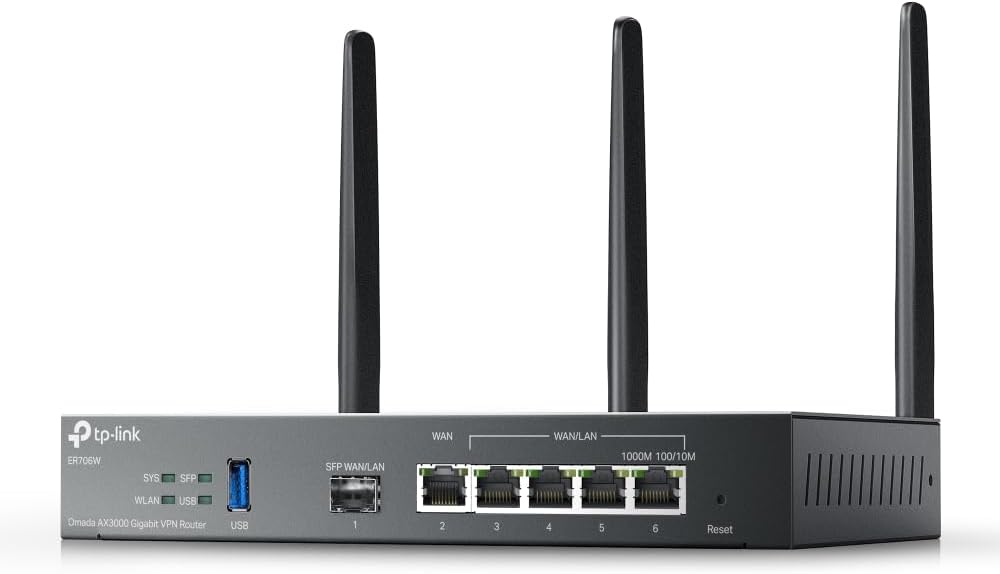
The Omada ER706W is engineered for businesses that need to aggregate multiple internet connections for redundancy and speed. It delivers AX3000 Wi-Fi 6 performance with advanced routing capabilities essential for larger office setups.
We may earn a commission when you buy through this link, at no additional cost to you.
Its ability to balance load across up to five WAN ports maximizes your broadband utilization, ensuring consistent performance even during peak usage. The SFP slot provides fiber connectivity options, while extensive VPN support secures remote access effectively.
While powerful, setting up the SDN controller and mesh integration might be more involved than simpler routers. However, for IT managers managing complex networks, the flexibility and control offered are well worth the effort.
This router is ideal for businesses seeking high availability and secure remote access. It pairs seamlessly with Omada access points to create a unified network infrastructure across multiple sites.
Distributing traffic across multiple WAN lines ensures stable connectivity even if one internet line experiences issues or congestion.
The built-in SFP slot enables direct fiber connections, offering higher reliability and speeds than standard copper cables in office settings.
We may earn a commission when you buy through this link, at no additional cost to you.
The Ruckus R750 is a high-performance indoor access point designed specifically for ultra-dense environments like conference centers or lecture halls. It maintains stable connections even when hundreds of devices connect simultaneously.
We may earn a commission when you buy through this link, at no additional cost to you.
Ruckus is known for its robust beamforming technology, which directs signal strength to where it is needed most. This reduces interference and ensures that each client gets reliable throughput regardless of location or load.
Its price reflects its enterprise-grade capabilities, making it a larger investment than consumer routers. However, for businesses where network reliability is critical to operations, the performance gains justify the cost.
Consider this access point if you need to support high-density user scenarios with minimal downtime. It integrates well with Ruckus controllers for centralized management and scalability.
Advanced optimization handles hundreds of simultaneous users, preventing the slowdowns that occur with standard equipment in busy areas.
Designed specifically for indoor use, the R750 blends into office environments while delivering top-tier wireless coverage throughout the space.
We may earn a commission when you buy through this link, at no additional cost to you.
The Ruckus R670 delivers Wi-Fi 7 performance in a robust indoor access point designed for mainstream deployment in modern offices. It offers exceptional speeds and capacity for demanding applications like 8K streaming and AR/VR.
We may earn a commission when you buy through this link, at no additional cost to you.
Its BeamFlex+ adaptive antenna technology optimizes signal delivery to reduce errors and increase throughput. This ensures that devices get the best possible connection quality, maximizing the potential of the Wi-Fi 7 standard.
Pricing is high, reflecting its advanced features and enterprise focus. However, for businesses planning long-term infrastructure upgrades, this provides future-proofing against rapidly evolving wireless demands.
Choose the R670 if you need top-tier performance and security in a unified network. Its BLE and Zigbee capabilities also support smart building integration, adding versatility beyond just Wi-Fi connectivity.
Smart antenna technology adjusts signal patterns to maximize speed and reduce interference, ensuring optimal performance for all connected devices.
With Wi-Fi 7 and 5 GbE ports, this device supports next-generation speeds and bandwidth needs, keeping your network relevant for years.
We may earn a commission when you buy through this link, at no additional cost to you.
The NETGEAR Orbi 970 Series offers a premium mesh solution capable of covering up to 10,000 square feet with blazing-fast Wi-Fi 7 performance. It is designed for large spaces where seamless connectivity is critical.
We may earn a commission when you buy through this link, at no additional cost to you.
Its quad-band technology reserves a dedicated lane for satellite traffic, ensuring that devices never slow down due to congestion. The inclusion of 10 Gig ports supports high-speed wired needs for critical business hardware.
While costly, the system eliminates dead zones and supports hundreds of devices simultaneously. This makes it ideal for multi-story offices or campuses that need uniform coverage across vast areas.
If you need whole-site coverage without compromise, this mesh system is the top choice. Its advanced security features also protect your network from external threats effectively.
A reserved channel for mesh communication ensures fast speeds for all connected devices, preventing congestion during heavy usage.
Multiple 10G and 2.5G ports allow for ultra-fast wired links to servers and PCs, balancing wireless load with reliable connections.
We may earn a commission when you buy through this link, at no additional cost to you.
The Omada EAP650 delivers true Wi-Fi 6 speeds in a sleek design that fits modern offices. With free cloud management, it removes the need for expensive hardware controllers, reducing initial setup costs.
We may earn a commission when you buy through this link, at no additional cost to you.
Its compatibility with Omada SDN offers flexibility, allowing you to choose between hardware, software, or cloud-based control. This adaptability makes it a favorite for small businesses scaling their network incrementally.
While it requires a PoE switch for optimal installation, the included DC adapter simplifies setup if needed. The five-year warranty adds confidence, ensuring long-term support for your investment.
For those seeking affordable yet powerful Wi-Fi coverage, this access point is a standout choice. It balances performance, cost, and manageability effectively.
No extra fees for cloud management mean you can monitor and control your network from anywhere without buying a dedicated controller.
Support for seamless roaming ensures devices switch between access points smoothly, maintaining connections as users move around the office.
We may earn a commission when you buy through this link, at no additional cost to you.
The Ubiquiti U6+ provides a compact and reliable solution for businesses needing efficient wireless communication. With transfer rates up to 3 Gbps, it handles daily tasks and moderate streaming without issues.
We may earn a commission when you buy through this link, at no additional cost to you.
Its wall mountable form factor ensures it can be installed in tight spaces while maintaining strong coverage. PoE+ support means you can power and transmit data over a single cable, simplifying cabling needs.
Data encryption features protect valuable information from unauthorized access, a critical need for any commercial setting. However, managing multiple units may require setting up the UniFi controller.
If you want a simple yet robust access point for general business use, this model fits the bill. It is a solid choice for maintaining a secure and stable wireless network.
PoE+ support allows for power and data to be delivered through one cable, reducing the need for extra electrical outlets.
Robust data encryption keeps business communications safe, ensuring sensitive information remains secure from external threats.
We may earn a commission when you buy through this link, at no additional cost to you.
The TP-Link BE6500 brings future-ready Wi-Fi 7 technology to businesses needing next-gen performance at a reasonable price. It features Multi-Link Operation to improve throughput and reduce latency significantly.
We may earn a commission when you buy through this link, at no additional cost to you.
Its 6.5 Gbps total bandwidth supports demanding applications like 8K streaming and large file transfers. The 2.5 Gb ports ensure your wired connections keep up with high-speed internet plans.
EasyMesh compatibility lets you expand the network without needing a full mesh system, which is a practical choice for growing offices. However, ensure your existing devices are compatible to get the most out of Wi-Fi 7.
If you are looking to future-proof your network without breaking the bank, this router is a strong contender. It balances performance and affordability well for forward-thinking businesses.
Multi-Link Operation transfers data across bands simultaneously, lowering latency and ensuring smoother connections for real-time tasks.
2.5 Gbps ports support faster wired speeds, essential for connecting high-performance devices directly to your router.
We may earn a commission when you buy through this link, at no additional cost to you.
The NETGEAR Nighthawk WiFi 7 delivers a tri-band solution that keeps up with busy offices needing high-speed connectivity. It supports up to 100 devices and offers reliable coverage for small to medium spaces.
We may earn a commission when you buy through this link, at no additional cost to you.
With dedicated 6 GHz bands, faster devices get their own lane, ensuring they do not slow down other users. Multi-gig ports allow you to utilize modern internet plans without bottlenecks.
Setup and management are straightforward via the Nighthawk app, making it accessible for non-technical users. However, advanced security features require a separate subscription, which adds to the total cost.
If you need a mid-range router that handles high traffic well, this is a solid choice. Its balance of speed and ease of use makes it ideal for expanding business networks.
A separate band for newer devices prevents congestion, ensuring fast speeds for devices that support the latest Wi-Fi standards.
Gigabit Ethernet ports allow you to take full advantage of high-speed internet plans for critical wired devices.
We may earn a commission when you buy through this link, at no additional cost to you.
The ASUS RT-BE88U is a powerhouse router combining Wi-Fi 7 speeds with exceptional wired capacity. Two 10G ports make it a unique choice for businesses needing high-speed local network transfers.
We may earn a commission when you buy through this link, at no additional cost to you.
With a quad-core CPU, it handles multiple applications and devices efficiently. The USB port supports 5G tethering, offering a fail-safe internet option if primary connections fail.
While it requires advanced configuration to maximize its features, the security and performance it offers are unmatched in its class. AiMesh compatibility ensures you can expand coverage as needed.
Choose this router if you need high throughput and flexible connections for complex networks. It stands out for its robust wired and wireless capabilities.
Two 10 Gigabit ports support massive data transfers, ideal for connecting servers or NAS devices to your network.
The USB port allows 5G mobile tethering as a backup, ensuring you stay online even if your main ISP connection fails.
We may earn a commission when you buy through this link, at no additional cost to you.
Choosing the right commercial wireless router involves evaluating several technical and practical factors to meet your business needs.
Wi-Fi 6 is the current standard, offering improved efficiency and speed. For future-proofing, consider Wi-Fi 7 models that deliver higher throughput and lower latency for demanding applications.
Select a standard that aligns with your device capabilities and performance expectations to avoid bottlenecks.
Assess the size of your office and the number of devices that will connect. Larger spaces may require mesh systems or multiple access points to eliminate dead zones.
Ensure the router supports enough simultaneous connections to handle peak usage without performance drops.
Look for built-in security solutions like intrusion protection and VPN support. Enterprise-grade security helps protect sensitive data and prevents unauthorized access to your network.
Prioritize routers with regular security updates to defend against evolving cyber threats.
Cloud-based management tools allow you to monitor and configure your network remotely. This flexibility is crucial for multi-site businesses or those with limited IT staff.
Choose a system that offers intuitive interfaces to simplify ongoing network administration tasks.
High-speed LAN and WAN ports are essential for modern broadband connections. Look for models with 2.5G or 10G ports to support multi-gigabit internet plans and wired devices.
Ensure your router has sufficient ports to connect all necessary hardware without needing additional switches.
A scalable network allows you to add more devices or expand coverage as your business grows. Mesh-compatible systems or SDN platforms provide flexibility to expand infrastructure seamlessly.
Select a product line that supports adding components without replacing the entire network.
Business networks require reliable support to minimize downtime. Check for warranty terms that cover hardware defects and technical support availability.
Opt for brands with a strong reputation for customer service and community support resources.
Businesses often need separate networks for visitors to protect internal systems. Features like guest portals and SSID segmentation make this management easier and more secure.
Ensure the router supports custom branding and access controls for guest users.
Place your router in a central, elevated location away from obstructions to maximize signal strength. Avoid placing it near large metal objects or appliances that cause interference.
Regularly update your router's firmware to benefit from security patches and performance improvements. Set up automatic updates if available to ensure you never miss critical updates.
Monitor network usage through the router's admin panel or app to identify unusual activity. Reset passwords periodically and limit access to network settings to maintain security.
A router manages traffic between your local network and the internet, while an access point provides wireless connectivity to devices. Many modern devices combine both functions for convenience.
Most commercial routers require a separate modem to connect to the internet. Check your model's specifications to ensure compatibility with your current broadband infrastructure.
This depends on the router model, but high-end commercial routers can support hundreds of simultaneous connections without performance degradation.
Yes, many models support mesh systems or additional access points, allowing you to scale your network as your business grows.
Look for WPA3 encryption, intrusion protection, VPN support, and regular firmware updates to ensure your network remains secure against threats.
Wi-Fi 6 is sufficient for most businesses, but Wi-Fi 7 offers better performance for future needs and high-density environments.
The ASUS ExpertWiFi EBR63, Omada EAP650, and NETGEAR Orbi 970 stand out as top picks for different business needs. Whether you prioritize budget, ease of management, or ultimate performance, these models deliver strong results.
Prioritize security and scalability when making your choice to protect your assets and allow room for growth. The right router is an investment in your business operations and customer satisfaction.
Check current availability and specifications before purchasing to ensure the model fits your exact requirements. Network technology evolves quickly, so staying informed helps you make the best decision.