
Upgraded Watt Power Meter Plug
4.6Editor score
Monitors 7 power parameters easily
Backlight display for night reading
Adjustable overload protection threshold
This guide compares the top electricity meter for RV options including sub-meters, plug-in monitors, and surge protectors with energy tracking features.
Finding the right electricity meter for RV use ensures you monitor power consumption accurately. Whether you need a hardwired sub-meter or a simple plug-in monitor, knowing your usage helps prevent overloads and saves money on park fees.
We compared ten highly rated products based on accuracy, installation ease, display clarity, and additional features like surge protection or Modbus communication. Each option serves different needs from simple monitoring to professional billing systems.
Every pick shows key specs and real-world use cases to help you choose wisely. Prices and availability change frequently so verify details on Amazon before purchasing your new energy monitoring solution for your vehicle or site.
4.6Editor score

4.8Editor score

3.5Editor score
This side-by-side comparison lists all ten products with key specifications to help you find the ideal electricity meter for RV monitoring needs ranging from simple plug-in units to professional sub-meters.
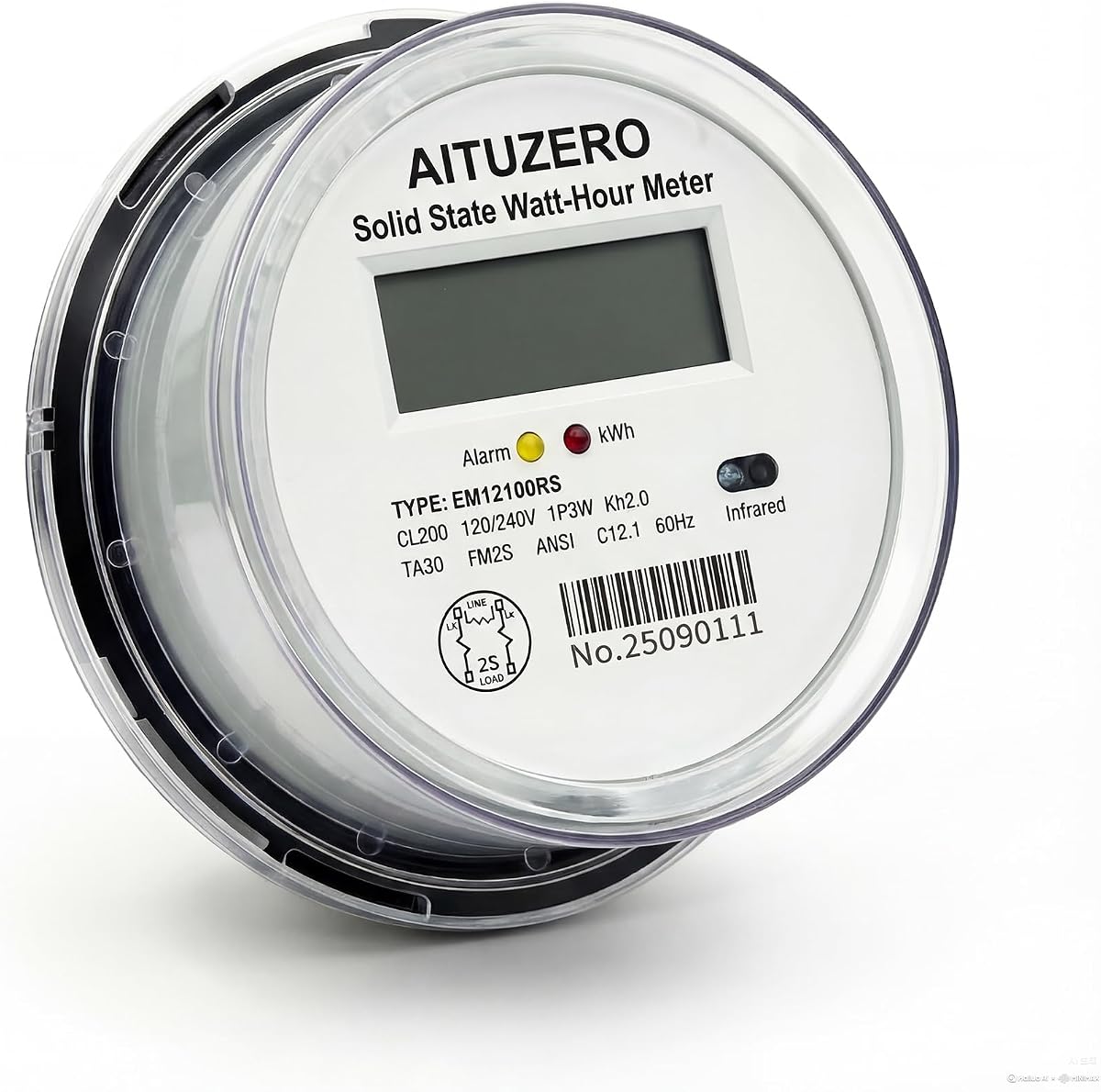


This digital electric meter combines high definition display with 0.5-level measurement accuracy for precise energy tracking. It is rated 4.8 stars and stands out for its robust defensive functions that protect against dust and water.
We may earn a commission when you buy through this link, at no additional cost to you.
The meter uses a standard 240V working voltage and meets ANSI C12.1 industry standards ensuring safety and accuracy. It supports CL200 kWh monitoring and TA30 current measurement making it ideal for RV pedestals and household panels.
While it offers triple resistance to dust water and pressure the installation requires a standard 4-jaw meter socket. This means you may need a professional electrician to ensure compliance with local codes.
Buyers seeking reliable accuracy for long-term monitoring should choose this unit. It balances professional performance with practical usability for RV owners who need consistent energy data without compromising safety.
The 0.5-level measurement accuracy ensures that every kilowatt-hour is recorded correctly which is essential for billing or budgeting.
Triple resistance to dust water and pressure allows this meter to withstand harsh outdoor conditions typical at RV parks or job sites.
We may earn a commission when you buy through this link, at no additional cost to you.
This unit acts as both a surge protector and an energy monitor with a 16000 Joule rating. It has a 3.5 rating but offers premium features like temperature safety monitoring and precise energy tracking for long-term RV park stays.
We may earn a commission when you buy through this link, at no additional cost to you.
It monitors six key electrical parameters including voltage current power power factor frequency and energy. The LCD displays accumulated energy kWh which helps you calculate costs without guessing at the end of your stay.
Despite its advanced features the overall rating is lower than pure meters likely due to complexity or cost concerns. You pay more for the combined functionality which might not be necessary for simple monitoring needs.
Choose this if you want comprehensive protection alongside energy monitoring. It is best for Class A Motorhomes or 5th Wheels where safeguarding electronics from spikes is as important as tracking usage.
The massive 16000 Joule absorption rating acts as a shield protecting your expensive electronics from lightning strikes and grid spikes.
An internal sensor continuously monitors plug temperature to alert you if high load generates abnormal heat adding an extra layer of safety.
We may earn a commission when you buy through this link, at no additional cost to you.
This plug-in monitor offers an affordable way to track energy usage for specific appliances. It is rated 4.6 stars and features seven display modes including power energy volts and amps making it versatile for detailed tracking.
We may earn a commission when you buy through this link, at no additional cost to you.
The display allows you to see parameters like voltage hertz power factor and cost. You can calculate electricity bills for individual devices easily. The large screen and backlight make reading data simple even in dark areas.
The main trade-off is that it only monitors devices plugged directly into it not your whole RV system. This limits it to spot-checking high-use items rather than overall power management.
Buyers wanting to identify power hogs without a hardwired install will find this perfect. It is simple to use and saves money by helping you adjust consumption habits for expensive appliances like heaters.
Seven display modes let you switch between different parameters like cost energy and power factor giving you flexible insights into appliance performance.
If an appliance exceeds the preset threshold the LCD warns you with an overload message to prevent dangerous situations with your wiring.
We may earn a commission when you buy through this link, at no additional cost to you.
This digital meter is designed for sub-metering applications allowing you to separate power usage across different circuits. It is rated 4.5 stars and fits standard ANSI form 2S socket bases for quick and reliable installation.
We may earn a commission when you buy through this link, at no additional cost to you.
You can use it for solar monitoring to track import and export kWh which is crucial for off-grid systems. The solid-state design supports heavy loads like welders and HVAC units without losing accuracy.
While versatile the meter requires installation on a sub-panel or breaker box which may involve professional wiring. It is not a plug-and-play solution for quick temporary setups.
Landlords or workshop owners needing precise billing data will find this reliable. It ensures fair cost allocation and provides detailed kWh tracking for any environment that needs dependable electricity insight.
Track real-time power flow between inverter and battery to evaluate panel performance and balance loads efficiently.
Separate power usage across tenants or individual circuits ensuring everyone pays for what they use without disputes.
We may earn a commission when you buy through this link, at no additional cost to you.
This energy monitor fits ANSI Form 2S specifications making it compatible with standard 4-jaw meter sockets. It is rated 4.7 stars and supports systems up to 200A providing accurate cost allocation for workshops or RV spaces.
We may earn a commission when you buy through this link, at no additional cost to you.
The display shows voltage current power and kWh consumption clearly. Its LED status indicator quickly confirms normal operation. Data retention during power outages ensures you do not lose important records.
Like other hardwired meters it needs a standard socket and professional installation which may be a hurdle for renters. It is built for durability but requires a permanent setup to function.
Those needing a reliable standard solution for fixed installations should choose this. It simplifies energy management with clear data and durable construction for demanding environments like RV electrical systems.
Handles systems up to 200A allowing for accurate tracking of heavy loads without compromising accuracy or safety.
Stored energy data is preserved even if power fails so you can maintain complete consumption records without interruption.
We may earn a commission when you buy through this link, at no additional cost to you.
This digital sub meter supports RS485 Modbus communication for advanced energy monitoring systems. It is rated 4.8 stars and measures both imported and exported energy making it ideal for solar applications.
We may earn a commission when you buy through this link, at no additional cost to you.
The display shows multiple parameters like L1 and L2 current power factor and reactive power. Pulse output terminals allow connection to external counters for automated data collection across multiple meters.
Using Modbus features requires compatible gateways or software which adds complexity for simple users. You need technical knowledge to utilize the full potential of this meter compared to basic displays.
Professional energy managers or those with solar setups should choose this. It offers flexible integration and precise measurement for those needing detailed data access and centralized monitoring capabilities.
Connect multiple meters to a network for centralized data collection and remote energy management with compatible devices.
Measure import and export energy to understand system balance and verify inverter behavior accurately.
We may earn a commission when you buy through this link, at no additional cost to you.
This meter is designed specifically for 240V 2 wire electrical systems with a perfect 5.0 rating. It features a clear LCD display that makes checking electricity consumption data simple for users.
We may earn a commission when you buy through this link, at no additional cost to you.
It supports CL200 kWh monitoring with TA30 current measurement capability providing reliable tracking for RV and home needs. The Type C1S Form 2S design ensures compatibility with standard 4-jaw sockets.
Its limitation is that it is tailored for 2 wire systems which may not fit 3-wire setups without adapters. Ensure your pedestal matches before purchasing to avoid compatibility issues.
Users needing a dependable monitor for trailers or campers should consider this. Its sturdy housing and clear readout deliver practical energy tracking for daily use in various environments.
Specifically built for 240V 2 wire systems ensuring precise measurement without needing complex 3-wire conversions.
A clear digital LCD helps you quickly check electricity consumption data without complicated reading steps for convenience.
We may earn a commission when you buy through this link, at no additional cost to you.
This meter covers 240V 3 wire systems with 0.5-level measurement accuracy for precise readings. It is rated 4.8 stars and adheres to strict safety and metering standards for reliable performance.
We may earn a commission when you buy through this link, at no additional cost to you.
It features all-around protection functions making it dustproof waterproof and pressure-resistant. The C1S structure is practical and straightforward to install for those familiar with electrical wiring.
It is tailored for 3-wire RV or home systems so verify your setup before installation. If your pedestal does not match you may need an adapter or electrician.
Those needing a precise monitor for 3-wire RV power should choose this. Its durable build and clear display make it ideal for long-term monitoring without compromising accuracy.
Meets ANSI C12.1 industry specifications ensuring strict adherence to electrical safety and metering standards for peace of mind.
Triple protection against dust water and pressure ensures stable operation even in harsh environmental conditions.
We may earn a commission when you buy through this link, at no additional cost to you.
This upgraded plug offers eight display modes for detailed appliance tracking. It is rated 4.6 stars and includes premium ABS material construction for fireproof and anti-drop durability.
We may earn a commission when you buy through this link, at no additional cost to you.
The display shows voltage frequency current cost and unit price. The backlight is white with black words for clear reading. You can reset the device easily without tools if needed.
Like other plug-in models it monitors only the device plugged directly into it not the whole RV. You must move it between outlets to track different appliances separately.
Buyers needing a simple plug-in solution for cost tracking should choose this. Its premium build and multi-mode display help manage consumption habits effectively for home or RV use.
Eight display modes let you monitor voltage cost energy and power factors to understand total appliance usage thoroughly.
High-quality ABS material ensures fireproof and anti-drop durability for safe use in various environments.
We may earn a commission when you buy through this link, at no additional cost to you.
This hardwired power meter uses a split-core CT that clamps around live conductors for easier installation. It is rated 4.4 stars and covers a wide AC range from 80 to 260 volts.
We may earn a commission when you buy through this link, at no additional cost to you.
It monitors voltage current wattage and kWh energy in one panel display. The power-off memory stores energy data even if the system loses power ensuring you keep your records.
While easier than cutting wires the installation still involves hardwiring and safety precautions. You need to handle live circuits carefully to ensure the meter functions correctly.
Users needing a versatile monitor for workshop or RV panels should choose this. The split-core design reduces effort while providing accurate tracking for load balancing and energy use.
The included 100A current transformer clamps around one live conductor so you do not need to cut the monitored wire.
The backlight flashes when the preset power threshold is exceeded giving a clear visual warning for load monitoring.
We may earn a commission when you buy through this link, at no additional cost to you.
Choosing the right electricity meter for RV requires considering several technical factors to ensure safety and accuracy. This guide explains the key elements to evaluate before making a purchase.
You must decide whether you need a hardwired meter or a plug-in monitor. Hardwired meters like the sub-meters connect directly to your breaker panel for whole-vehicle monitoring but require professional installation. Plug-in monitors simply plug into an outlet and track specific appliances making them ideal for renters or temporary use.
Ensure your electrical setup matches the meter requirements such as 4-jaw sockets for hardwired units before buying.
Most RVs operate on 240V split-phase systems but some portable units use 120V. Verify that the meter supports your system voltage for example choosing a 120/240V model for split-phase setups. Using the wrong voltage can damage the meter or fail to provide accurate data.
Check product specs for voltage ranges like 80-260VAC to ensure flexibility across different power sources.
A clear display is essential for monitoring consumption quickly. Look for LCDs with backlighting so you can read data in dim conditions like a dark utility box. Displays that cycle through multiple parameters like voltage and power factor give deeper insights into your system health.
Prioritize displays that show kWh and wattage simultaneously to track usage efficiently without switching modes constantly.
Accuracy is measured by levels such as 0.5-level accuracy meaning the meter has minimal error margin. High precision is crucial for billing purposes or verifying solar production data. Lower accuracy meters may lead to estimation errors in long-term energy planning.
Select meters with rated accuracy levels if you need precise billing data or solar verification.
Advanced meters offer RS485 Modbus or pulse output to connect with external data loggers. This is useful if you want to track energy over time using software. Basic models without communication require manual readings but are simpler to set up.
Choose a model with communication if you plan to automate data collection or integrate with smart home systems.
If you plan to install outdoors the meter needs protection against dust and moisture. Look for units with triple resistance to dust water and pressure to extend lifespan. Durability ensures consistent performance in harsh environments like RV parks or job sites.
Confirm the housing meets standard protection ratings to prevent damage from rain or debris.
Some units combine energy monitoring with surge protection to safeguard electronics. These provide value by reducing the need for separate devices. Features like internal temperature warnings add safety layers especially in high-load situations.
Consider if combined functionality fits your budget and space needs better than buying separate products.
Plug-in meters cost less than hardwired sub-meters which require wiring and sockets. Determine if you need whole-vehicle data or just appliance monitoring. Hardwired models offer higher accuracy but come with higher initial and installation costs.
Assess whether the cost of installation justifies the accuracy gained for your specific usage patterns.
For hardwired meters turn off the main breaker before installing. Ensure the socket matches the meter type like Form 2S. Connect the lines to labeled terminals carefully and secure the meter in place. Power on the system and check the LED indicators for correct operation.
For plug-in monitors insert them into a wall outlet and plug your appliance into the meter. Press the mode buttons to cycle through voltage power and energy data. Reset cumulative data by holding the specific button as described in the manual to start fresh.
Regularly clean the LCD screen with a soft cloth to maintain readability. Check for dust accumulation in the vents of outdoor units and wipe them down. If the display dims or shows errors check your wiring or replace batteries if applicable.
A sub-meter connects directly to your RV electrical panel to track total household consumption requiring professional installation. A plug-in monitor only tracks individual appliances and connects to standard outlets making it portable and cheaper. Choose a sub-meter for full system visibility and a plug-in for specific device tracking.
Most hardwired meters support 120/240V systems used in both 30 and 50 amp setups. Ensure the amp rating of the meter matches your RV amperage like 200A capacity. Plug-in monitors are limited by their outlet capacity but work for devices plugged into standard receptacles.
Yes many sub-meters support import export monitoring which tracks power generated by solar panels. They detect reverse current flow from inverters to the grid or batteries. Check for solar monitoring features like reverse LED indicators before buying to ensure compatibility.
High-end sub-meters typically offer 0.5-level accuracy meaning less than 1 percent error which is sufficient for billing. Plug-in monitors are accurate for household voltage but may vary slightly. Always look for certified accuracy levels if precise billing is a requirement.
Yes installing a hardwired meter involves working with live wires and breaker panels which requires electrical knowledge. Improper wiring can void warranties or cause safety hazards. Most homeowners hire an electrician to ensure compliance with local codes.
Most modern units retain data during power outages using internal non-volatile memory like EEPROM. This ensures cumulative usage records remain intact even after a power cycle. Check product specs for power-off memory features to be certain.
You can install multiple sub-meters on different breakers to isolate usage by zone or tenant. Some units support Modbus communication to link them into one data log. Alternatively use a plug-in monitor to check each high-consumption circuit individually.
Meters track usage but do not protect equipment from voltage spikes unless specified. Some models combine surge protection with monitoring which adds value. If you want safety for expensive electronics ensure your meter has a dedicated surge rating like 16000 Joules.
We reviewed ten top electricity meter for RV options ranging from plug-in monitors to advanced hardwired sub-meters. Each product serves different needs from simple appliance tracking to professional billing systems with Modbus integration.
Prioritize accuracy and installation ease based on your usage. If you rent an RV choose a plug-in monitor for simplicity. For permanent setups or solar systems a hardwired sub-meter ensures precise data for long-term savings.
Prices and availability change frequently so check current listings on Amazon before purchasing. Verify your electrical compatibility carefully to ensure you get a unit that fits your system needs perfectly.