
Omada Gigabit SFP to RJ45 Media Converter
4.7Editor score
Plug and play setup
Compatible with SFP modules
Auto-negotiation gigabit port
This guide compares the top Ethernet Fiber Media Converter models for extending networks, focusing on speed, distance, and reliability for enterprise and home
Connecting distant network segments requires reliable hardware that bridges copper and fiber optics seamlessly. An Ethernet Fiber Media Converter enables high speed data transfer over long distances where standard cabling fails to perform effectively under load.
We evaluated ten leading models based on their technical specifications, compatibility with existing infrastructure, and real world performance metrics. Our analysis covers gigabit capabilities, fiber type support, and ease of deployment for various networking environments.
Each selection highlights specific strengths to help you match the right device to your unique connectivity needs. Please note that product availability and pricing may fluctuate over time so verify details before purchasing your final hardware.
4.7Editor score

5.0Editor score

4.6Editor score
The following table provides a side by side comparison of all ten selected models highlighting their key specifications and capabilities for easy reference during your selection process.
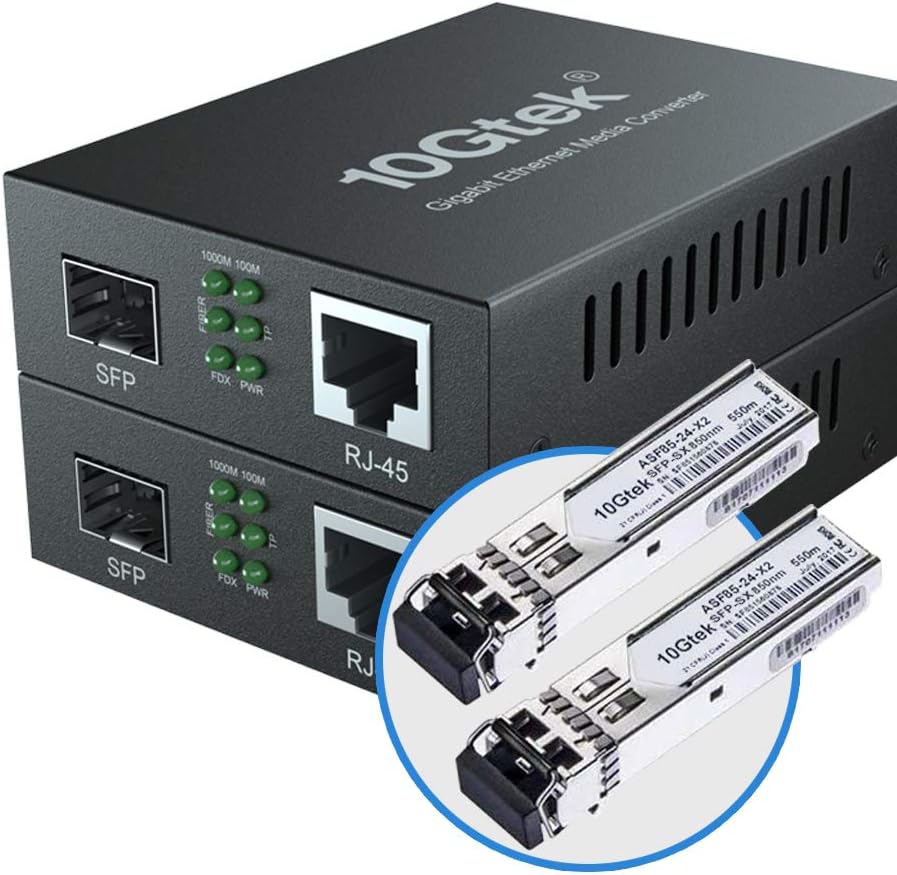


This model delivers robust performance for connecting network segments within a 550 meter limit. Its high rating reflects consistent reliability in office environments requiring fast data transfer speeds without complex configuration.
We may earn a commission when you buy through this link, at no additional cost to you.
The inclusion of two multimode transceivers ensures you can deploy both ends of the link immediately. The UL certification adds a layer of safety assurance for continuous operation in critical infrastructure settings.
While it lacks advanced management features, the auto-negotiation simplifies integration with diverse copper devices. The trade-off is acceptable for users prioritizing straightforward connectivity over complex diagnostic tools.
Ideal for small to medium businesses needing a cost effective solution to extend Ethernet over fiber. It provides the essential performance required for modern network demands without unnecessary overhead or cost.
The pack includes all necessary modules so you can install both ends of the fiber link without sourcing additional parts.
UL certification ensures the device meets strict safety standards for electrical components used in commercial environments.
We may earn a commission when you buy through this link, at no additional cost to you.
This converter offers excellent value for users seeking to extend network reach without breaking the budget. Its compatibility with various SFP modules allows flexibility in choosing distance based on specific site requirements.
We may earn a commission when you buy through this link, at no additional cost to you.
The ability to support transmission distances up to 12.4 miles makes it versatile for campus wide deployments. Auto-negotiation ensures smooth connection with existing copper infrastructure regardless of device speed.
It lacks advanced management options but excels in basic connectivity tasks. The trade-off is reasonable for users who prioritize affordability and simplicity over remote diagnostic capabilities.
Perfect for small businesses or home labs needing an affordable bridge between fiber and copper networks. It provides reliable gigabit performance at a price point that suits cost conscious buyers effectively.
You can swap SFP modules to adjust the link distance from short multimode runs to long single mode spans.
Delivers essential gigabit connectivity features without the premium price tag associated with managed network hardware.
We may earn a commission when you buy through this link, at no additional cost to you.
This device caters to high bandwidth needs by supporting 10Gigabit fiber speeds alongside adaptive copper ports. It is designed for environments where data throughput requirements are increasing rapidly and infrastructure must stay current.
We may earn a commission when you buy through this link, at no additional cost to you.
The RJ45 port automatically adjusts speeds from 100M up to 10G ensuring compatibility with legacy devices while supporting future upgrades. LED indicators provide immediate visual feedback on link status and configuration settings.
While the price is higher than standard gigabit converters the performance ceiling justifies the cost for enterprise use. The warranty and support options add peace of mind for critical network infrastructure investments.
Best suited for data centers or heavy duty office networks where speed and reliability are paramount. It ensures your fiber links can handle the demands of modern high speed applications without bottlenecks.
The copper port senses the connected device speed and adjusts automatically to optimize performance for each link.
Supporting 10G ensures your network remains viable as data demands grow without needing immediate hardware replacement.
We may earn a commission when you buy through this link, at no additional cost to you.
This pair of converters supports bidirectional fiber transmission which can be useful for specific cabling configurations. The inclusion of Bidi transceivers simplifies deployment by ensuring the optical components are matched correctly for operation.
We may earn a commission when you buy through this link, at no additional cost to you.
Support for 9K byte jumbo frames improves efficiency for large data transfers in backup or storage scenarios. The wide power supply voltage range makes it adaptable to various electrical environments globally.
The setup requires understanding bidirectional technology but offers unique flexibility for certain fiber setups. The trade-off involves a steeper learning curve for initial configuration compared to standard duplex fiber links.
Ideal for specialized network segments where bidirectional communication on single fiber strands is needed. It provides the necessary features to maintain high speed links with efficient data handling capabilities.
Bidi technology allows data to travel in both directions on a single fiber strand reducing cable requirements.
The wide voltage range ensures the device operates reliably regardless of local electrical supply variations.
We may earn a commission when you buy through this link, at no additional cost to you.
This model excels at extending network connections over distances up to 20 kilometers using single mode fiber. Its high rating indicates strong performance reliability for users needing long reach without signal degradation or repeaters.
We may earn a commission when you buy through this link, at no additional cost to you.
The SC connector type is a standard in many enterprise environments making it compatible with existing fiber patch panels. The included pack of two ensures you have the necessary hardware to complete a full link immediately.
While single mode fiber may cost more than multimode the distance capability justifies the investment for wide area networks. The trade-off is manageable for users who need to bridge buildings or campuses effectively.
Best for campus networks or industrial sites requiring long distance fiber connections. It provides a stable high speed bridge that maintains integrity over significant distances without performance loss.
Supports up to 20km allowing connections between distant buildings without the need for additional signal boosters.
Uses the widely accepted SC connector type which fits standard patch panels and fiber management systems.
We may earn a commission when you buy through this link, at no additional cost to you.
This pair offers a straightforward solution for single mode fiber links with pre-installed modules ready for immediate use. The exceptional user rating suggests high reliability and ease of deployment for standard network extension tasks.
We may earn a commission when you buy through this link, at no additional cost to you.
The ability to support 20km distances ensures it covers most campus wide requirements efficiently. U.S.-based technical support adds a layer of confidence for businesses needing quick assistance if issues arise.
It focuses on core connectivity features without advanced management overhead. The trade-off is acceptable for networks where simple and reliable connections are prioritized over complex monitoring systems.
Ideal for IT teams needing a quick and reliable single mode link between sites. It provides the essential performance and support needed to maintain consistent network availability.
Modules are included so you can install the link immediately without searching for compatible transceivers.
Access to U.S.-based technical support ensures you get timely assistance for configuration or hardware issues.
We may earn a commission when you buy through this link, at no additional cost to you.
This device is designed for LC fiber standards which are prevalent in modern data centers. The Link Fault Pass-through feature helps maintain network visibility by propagating fiber faults to the copper side.
We may earn a commission when you buy through this link, at no additional cost to you.
The inclusion of the LC SFP module ensures you can start deploying right away without additional purchases. DIP switches allow for precise control over settings like speed and fault handling without complex software.
It offers a balance of physical configurability and performance stability. The trade-off is a slightly less automated setup compared to fully managed switches but works well for point to point links.
Best for data centers using LC fiber connectors needing reliable link status feedback. It ensures you can monitor the health of your fiber link effectively from the network switch.
The Link Fault Pass-through feature ensures the switch sees fiber link status improving troubleshooting efficiency.
DIP switches allow you to customize behavior like speed and storm control without needing a software interface.
We may earn a commission when you buy through this link, at no additional cost to you.
This converter offers an open SFP slot giving you the freedom to choose any MSA compliant transceiver. This flexibility makes it ideal for environments where future distance upgrades or specific vendor modules are required.
We may earn a commission when you buy through this link, at no additional cost to you.
TAA compliance ensures it meets standards for government procurement projects. The compact design and optional chassis mount capability allow for organized rack installation in server rooms.
While the open slot requires separate module purchase it provides long term scalability. The trade-off is higher initial complexity but rewards users with maximum adaptability over time.
Perfect for enterprise networks needing flexible and compliant fiber solutions. It supports a wide range of fiber types and distances while maintaining professional deployment standards.
The open slot accepts any MSA compliant module allowing you to match specific fiber needs.
TAA compliant status makes it suitable for government projects and procurement requirements.
We may earn a commission when you buy through this link, at no additional cost to you.
This model provides comprehensive support for various multimode grades from OM1 to OM5 ensuring compatibility with existing fiber plants. The pre-installed module simplifies deployment by removing the need to source matching optical components.
We may earn a commission when you buy through this link, at no additional cost to you.
The included Cat6 patch cable and wall-mount ears make it ready for immediate desktop or rack installation. DIP switches allow for advanced settings like VLAN transparency and broadcast storm control.
While limited to shorter multimode distances it is robust for data center internal cabling. The trade-off is acceptable for users who already have multimode fiber infrastructure and need a quick upgrade.
Best for data centers utilizing multimode fiber that require VLAN transparency. It ensures your existing cabling works effectively with modern network devices without complex configuration.
Supports OM1 through OM5 grades ensuring compatibility with legacy and newer multimode fiber plants.
Passes VLAN tags intact allowing the link to function as a trunk without stripping tags.
We may earn a commission when you buy through this link, at no additional cost to you.
This model stands out with a perfect rating reflecting high reliability and performance in demanding environments. Its TAA compliance makes it a suitable choice for government projects requiring certified hardware.
We may earn a commission when you buy through this link, at no additional cost to you.
Advanced features like remote monitor status allow for better visibility into network health. The open SFP slot ensures you can choose the specific fiber module that fits your distance requirements.
While the price is higher than basic converters the features and compliance justify the cost. The trade-off is a larger investment but pays off in long term reliability and adherence to standards.
Ideal for enterprise networks requiring compliance and high performance. It provides the robust features needed to maintain secure and reliable fiber connections over time.
Advanced remote monitor status lets administrators track device health without physical access to the unit.
Perfect user rating and TAA compliance ensure it meets high standards for reliability and procurement.
We may earn a commission when you buy through this link, at no additional cost to you.
Selecting the right converter depends on your specific network distance requirements fiber types and desired management features.
You must determine if your existing fiber is single mode or multimode as converters are designed for specific types. Using the wrong type can result in link failure or significantly reduced performance.
Always match the converter to your fiber plant to ensure a reliable and consistent network connection.
Evaluate how far the signal needs to travel as multimode typically covers shorter distances than single mode. Choosing a model that supports your specific distance range is critical for signal integrity.
Select a device that exceeds your maximum distance needs to account for environmental factors.
Ensure the converter supports the necessary throughput for your network such as gigabit or 10G speeds. Mismatched speeds can cause bottlenecks that hinder overall network performance.
Opt for models that meet or exceed your current speed needs to allow for future growth.
Check if your fiber cable uses LC SC or other connectors to match the port on the converter. Mismatched connectors will require additional adapters or cable replacements.
Verify connector compatibility before purchasing to simplify installation and reduce costs.
Decide if you need advanced features like link fault pass-through or remote monitoring for easier troubleshooting. Basic models offer simple connectivity while managed units provide more control.
Choose a device that offers the level of control necessary for your network size.
Consider whether the device needs to be wall mounted rack mounted or left on a desktop based on your space. Some units come with hardware for specific mounting styles while others are generic.
Ensure the physical form factor fits your installation environment to maintain an organized setup.
Verify that the power supply voltage is compatible with your location especially if installing in different regions. Universal voltage support makes deployment easier across various locations.
Check power requirements to avoid electrical issues during operation.
Look for brands that offer reliable technical support to assist with configuration or hardware issues. Good support ensures you can resolve problems quickly without prolonged downtime.
Prioritize vendors with established support networks for peace of mind.
First connect the fiber cable to the SFP port ensuring the LC or SC latch clicks securely into place. Avoid touching the fiber end faces as oils can degrade signal quality.
Plug the RJ45 Ethernet cable into the copper port and then connect the power adapter. Watch the LED indicators to confirm that both the fiber and copper links are active.
Keep the device in a well ventilated area to prevent overheating and inspect connections periodically for dust. Proper care ensures your network extension remains reliable and efficient.
The primary benefit is the ability to extend network distances beyond the limits of copper cabling. Fiber optics are immune to electromagnetic interference ensuring cleaner data transmission.
It depends on the model as some come with pre-installed transceivers while others have open slots. Check the product description to see if modules are included in the box.
No you cannot mix fiber types as single mode and multimode have different core sizes and light sources. Using incompatible fiber will result in signal loss or total failure.
This feature allows the converter to signal a fiber link failure to the connected switch automatically. It helps in troubleshooting by making the fault visible on the network device.
Multimode typically supports up to 550 meters while single mode can reach up to 20 kilometers or more. Your specific distance needs should dictate which fiber type you choose.
Most basic converters are plug and play requiring no software installation or complex settings. Advanced models might need DIP switches or web interfaces for specific management features.
TAA compliance means the product meets specific standards required for government procurement in the United States. It ensures the device is sourced from approved countries for federal projects.
Many modern converters pass VLAN tags transparently so your network segmentation remains intact. Check the specs for IEEE 802.1Q support to confirm VLAN compatibility.
We reviewed ten models ranging from budget friendly options to high speed premium solutions. The top picks offer reliable connectivity and specific features tailored to different enterprise needs.
Prioritize your distance requirements and fiber type before looking at advanced management features. Ensuring compatibility with your existing infrastructure is the most critical step in the selection process.
Keep in mind that prices and availability may change so always verify current details before buying. Choosing the right converter now will save time and resources during installation.