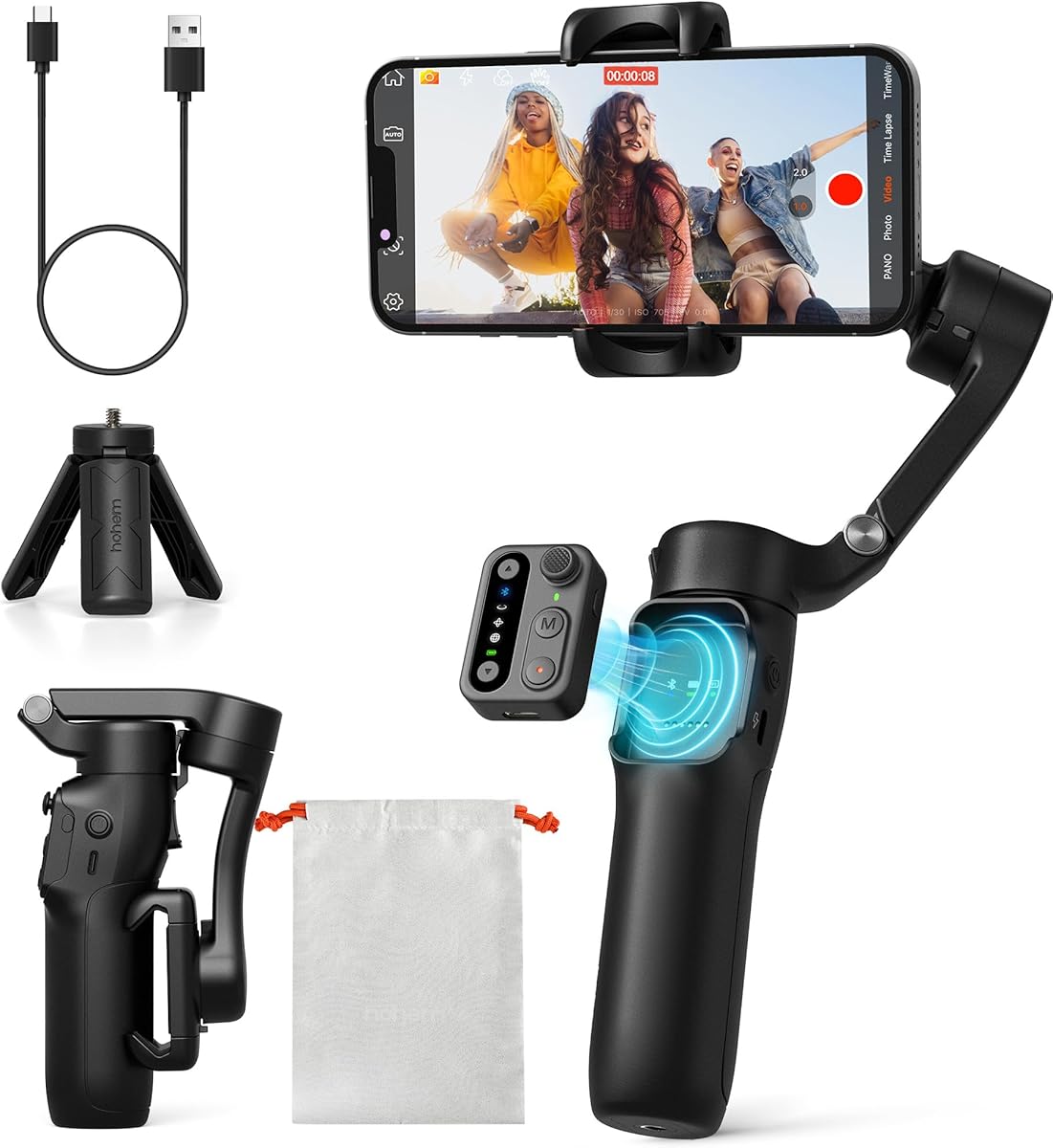
hohem iSteady X3 SE
4.2Editor score
Lightweight pocket-sized design
11-hour battery life
Detachable remote controller
Capturing smooth footage while climbing requires specialized gear. A high-quality gimbal ensures your videos remain steady despite rugged terrain and sudden movements during outdoor adventures.
We compared ten top-rated gimbals based on stabilization performance, battery endurance, weight, and compatibility with action cameras and smartphones used by mountaineers worldwide.
Each pick highlights key strengths for outdoor filming. Note that prices fluctuate regularly so verify current listings before purchasing to ensure you get the best value for your needs.
4.2Editor score

4.1Editor score

4.5Editor score
As an Amazon Associate we earn from qualifying purchases.
Below is a detailed side-by-side comparison of all ten gimbals to help you select the right tool for your mountaineering video needs.


The DJI Osmo Mobile 8 is a top-tier smartphone gimbal rated 4.4 stars offering reliable 3-axis stabilization for mountaineering content creators who prioritize mobile footage.
We may earn a commission when you buy through this link, at no additional cost to you.
Its standout quality lies in seamless active tracking that keeps subjects in focus during treks while the built-in tripod enables hands-free shots from scenic viewpoints.
Trade-offs include dependency on smartphone compatibility and recent app platform restrictions but these are acceptable given the robust physical stability and long battery life.
Mountaineers seeking premium mobile stabilization should buy this model for its blend of features and ease of use during demanding outdoor filming sessions.
Active tracking ensures your climber remains centered in the frame even during rapid ascents or descents on rocky terrain.
A 10-hour battery allows full day shooting without needing extra power banks for extended mountaineering expeditions.
We may earn a commission when you buy through this link, at no additional cost to you.
Rated 4.4 stars the DJI Osmo Mobile 7 offers a lightweight and ergonomic design ideal for climbers who want steady phone footage without added wrist strain.
We may earn a commission when you buy through this link, at no additional cost to you.
Key strengths include ActiveTrack 7.0 for accurate subject tracking and a foldable design that packs easily into climbing packs for impromptu recording moments.
While limited to smartphones and having a lower payload the stability and ease of use make it a strong choice for casual mountaineering vloggers.
Buy this gimbal if you prioritize portability and ease of use for daily recording or quick clips during outdoor adventures and expeditions.
At just 300 grams this gimbal adds minimal weight to your pack ensuring it does not burden your mountaineering gear load.
ActiveTrack 7.0 leverages dual-lens tracking to keep subjects in focus even when they move quickly across uneven mountain trails.
We may earn a commission when you buy through this link, at no additional cost to you.
The Hohem iSteady Pro 4 is rated 4.1 stars and designed specifically for action cameras making it a rugged choice for mountaineering video capture in harsh weather.
We may earn a commission when you buy through this link, at no additional cost to you.
Its IPX4 splashproof rating and long 14-hour runtime allow climbers to film through rain or snow without worrying about equipment failure or battery drain.
Trade-offs include limited control for some camera models but the stabilization quality and durability make it a reliable companion for action-packed outdoor shoots.
Buy this gimbal if you use GoPro or similar action cameras and need weather-resistant stabilization for mountaineering expeditions in variable conditions.
IPX4 splashproof protection ensures the gimbal remains functional during unexpected rain showers on high-altitude climbs.
A 14-hour battery life supports all-day shooting without frequent recharging during long climbing sessions.
We may earn a commission when you buy through this link, at no additional cost to you.
Rated 4.2 stars this variant of the Hohem iSteady Pro 4 brings identical durability with added creative features like Inception mode for dynamic mountaineering transitions.
We may earn a commission when you buy through this link, at no additional cost to you.
Key strengths include the 3-sec quick release clip for fast camera swaps and the Inception mode which enables spinning shots during descents or rappelling.
Trade-offs include identical control limits as the standard model but the extra creative freedom justifies this choice for action-oriented climbers wanting unique content.
Buy this gimbal if you want creative filming options like Inception mode alongside rugged performance for capturing intense mountaineering sequences.
A spring-loaded quick release allows swapping cameras in seconds for fast setups during critical climbing moments.
600° rotational Inception mode enables mind-bending transitions ideal for cinematic storytelling in mountaineering videos.
We may earn a commission when you buy through this link, at no additional cost to you.
The hohem iSteady X3 SE is rated 4.2 stars and offers an affordable entry into gimbal stabilization ideal for budget-conscious mountaineering content creators.
We may earn a commission when you buy through this link, at no additional cost to you.
Its standout quality is its ultra-lightweight design and detachable remote that enables hands-free shooting from safe distances during dangerous climbing segments.
Trade-offs include a lower payload and basic algorithms but the ease of use and long battery life make it a strong budget pick for casual use.
Buy this gimbal if you are new to stabilization or need a lightweight affordable tool for capturing mobile footage on mountaineering trips.
The detachable remote allows safe filming from a distance for capturing wide-angle shots or selfie clips during climbs.
Simple button controls and app integration make it easy for first-time gimbal users to start filming quickly.
We may earn a commission when you buy through this link, at no additional cost to you.
Rated 4.5 stars the DJI Osmo Mobile 7P stands out with an integrated microphone receiver for high-quality audio capture during mountaineering vlogs and interviews.
We may earn a commission when you buy through this link, at no additional cost to you.
Key strengths include the multifunctional module that handles mic reception and lighting ensuring clear audio and video quality even in challenging outdoor lighting conditions.
Trade-offs include phone-only compatibility and module pairing requirements but the audio quality and stabilization make it a top choice for vloggers.
Buy this gimbal if you prioritize audio quality alongside stabilization for mountaineering vlogs or interview-style content creation.
The multifunctional module supports DJI Mic receivers allowing professional-grade audio capture without external accessories.
A built-in extension rod provides flexible framing options for group shots or wide scenic views during outdoor shoots.
We may earn a commission when you buy through this link, at no additional cost to you.
The DJI RS 3 Mini is rated 4.3 stars and offers a compact camera gimbal solution ideal for mountaineers using mirrorless cameras for higher quality footage.
We may earn a commission when you buy through this link, at no additional cost to you.
Its standout quality is the 795g weight combined with a 2kg payload allowing stable handling of heavier lenses without adding excessive burden to climbing gear.
Trade-offs include app dependency and platform restrictions but the stabilization performance and vertical shooting capability make it a powerful tool for creators.
Buy this gimbal if you use mirrorless cameras and need a lightweight versatile stabilizer for professional-quality mountaineering video production.
Compatible with Canon Sony Nikon and Fujifilm cameras the RS 3 Mini supports a wide range of professional imaging gear.
A 1.4-inch touchscreen allows quick access to settings without needing to navigate phone menus during shooting sessions.
We may earn a commission when you buy through this link, at no additional cost to you.
Rated 4.5 stars the DJI Osmo Pocket 3 is an all-in-one vlogging camera offering exceptional image quality and stabilization for mountaineering content without extra gear.
We may earn a commission when you buy through this link, at no additional cost to you.
Key strengths include a 1-inch CMOS sensor and 4K/120fps recording capability ensuring crisp low-light footage during mountain dawn or dusk shoots.
Trade-offs include a higher price and fixed camera but the simplicity and image quality make it a top choice for high-end mountaineering vloggers.
Buy this device if you want premium video quality and ease of use without managing multiple cameras or external gimbals during expeditions.
The 1-inch CMOS sensor captures stunning details even in low-light conditions common during mountain sunrises or sunsets.
The rotating touchscreen simplifies framing for horizontal and vertical content without needing external monitors or phones.
We may earn a commission when you buy through this link, at no additional cost to you.
The FeiyuTech SCORP Mini-3-Pro is rated 4.9 stars and leads in AI tracking making it ideal for solo mountaineers who need hands-free subject tracking.
We may earn a commission when you buy through this link, at no additional cost to you.
Its standout quality is built-in AI tracking 4.0 which follows subjects without an app ensuring smooth footage even when you are alone filming a climb.
Trade-offs include its higher weight and cost but the AI features and high payload make it a powerful tool for solo creators.
Buy this gimbal if you are a solo mountaineer needing reliable AI tracking and high payload capacity for professional-quality filming.
AI Tracking 4.0 ensures subjects stay in frame without external sensors ideal for solo mountaineering shoots.
The detachable handle serves as a wireless remote for framing shots from a distance during dangerous climbs.
We may earn a commission when you buy through this link, at no additional cost to you.
Rated 4.5 stars the hohem iSteady MT3 Pro is a premium 4-in-1 gimbal offering unmatched versatility for mountaineers using multiple camera types on one trip.
We may earn a commission when you buy through this link, at no additional cost to you.
Key strengths include a 2.5kg payload 20-hour battery and detachable touchscreen remote enabling professional control for complex shooting scenarios in harsh environments.
Trade-offs include higher weight and setup complexity but the payload capacity and long battery life make it a powerhouse for serious creators.
Buy this gimbal if you need a single versatile device for mirrorless action and smartphone cameras with premium features like RGB lighting.
A 2.5kg payload supports heavier mirrorless setups ensuring stability even with long telephoto lenses during mountain shoots.
The detachable remote offers full control over camera settings and framing without needing to access the camera body.
We may earn a commission when you buy through this link, at no additional cost to you.
Selecting the right gimbal for mountaineering involves balancing weight stabilization features and compatibility with your camera gear.
Effective stabilization ensures smooth footage despite uneven terrain and rapid movements common in mountaineering environments. Look for 3-axis stabilization with advanced anti-shake algorithms to handle dynamic conditions.
Prioritize gimbals that offer superior stabilization to prevent shaky footage during climbs.
Long battery life is essential for full-day expeditions where recharging opportunities are limited. Aim for at least 10 hours of runtime to cover extended shooting sessions.
Choose models with extended battery life to ensure uninterrupted filming during remote climbs.
Mountaineering gear requires minimizing weight without sacrificing stability. Lightweight gimbals reduce physical strain and fit easily into climbing packs for transport.
Select a lightweight design that balances durability with ease of carrying on long ascents.
Outdoor conditions demand gear that can withstand rain snow and cold temperatures. IPX4 splashproof ratings or better ensure reliable performance in harsh mountain weather.
Look for splashproof designs to maintain functionality during unpredictable outdoor conditions.
Ensure the gimbal supports your specific camera type whether smartphone GoPro or mirrorless. Proper payload capacity prevents motor strain and ensures smooth operation.
Verify camera compatibility and payload limits before purchasing to avoid operational issues.
Mountaineers need intuitive controls to set up quickly during brief breaks. Simple interfaces and quick-release mechanisms save time and reduce stress.
Opt for user-friendly designs that allow fast setup and adjustment in the field.
Advanced features like AI tracking or remote control enhance creativity and convenience during shoots. These tools help capture dynamic shots without physical camera handling.
Consider smart features that match your filming style and need for hands-free operation.
Rugged construction ensures the gimbal survives drops and rough handling during climbs. High-quality materials and secure locking mechanisms contribute to long-term reliability.
Choose durable builds that withstand the physical demands of mountaineering expeditions.
Begin by balancing your camera on the gimbal following manufacturer instructions to ensure smooth motor operation. Proper calibration prevents wobbling and extends battery life.
Protect the gimbal from extreme cold and moisture by storing it in a padded case when not in use. Regularly check motors and joints for debris or wear.
Charge batteries fully before each expedition and carry backups if needed. Clean lenses and sensors after trips to maintain clear footage and equipment longevity.
The Hohem iSteady Pro 4 stands out for GoPro users due to its splashproof design and quick Bluetooth connection. It offers robust stabilization suitable for rugged climbs without needing heavy additional accessories.
Most gimbals work in cold weather but batteries may drain faster. Choose models with long battery life and keep spare batteries warm in your pockets to maintain performance.
Splashproofing is critical for reliability in rain or snow. Look for at least IPX4 ratings to prevent moisture damage during unexpected weather on mountain trails.
Yes many phone gimbals like the DJI Osmo Mobile 7 are great for hiking. They are lightweight and easy to carry for capturing trail views without bulky equipment.
Mirrorless cameras require gimbals with at least 1 to 2kg payload capacity. Models like the DJI RS 3 Mini support up to 2kg ensuring stable operation for heavier setups.
Calibrate by following the app or button instructions to level the camera on flat surfaces. Quick calibration ensures smooth footage without needing professional tools on trails.
Wireless remotes allow hands-free shooting from safe distances which is valuable on dangerous climbs. They enable creative angles without risking physical camera handling on steep terrain.
The top three picks offer distinct advantages from budget-friendly phone options to premium action camera gimbals with advanced features tailored for rugged outdoor use.
Prioritize stabilization battery life and weather resistance based on your specific filming needs and camera type to ensure reliable performance during expeditions.
Remember to verify current prices and compatibility before purchase as offerings evolve quickly to meet the changing demands of mountaineering content creators.