
LONELY BINARY Logic Analyzer Kit
4.2Editor score
24MHz sampling rate
8 input channels
Includes breakout boards
Explore the top logic analyzers for electronics projects comparing speed, channels, and protocol support to help you choose the right tool for your work.
Choosing the right logic analyzer for electronics projects is essential for debugging digital signals effectively. Whether you are working with microcontrollers, IoT devices, or complex communication protocols, having a reliable tool ensures accurate signal capture and analysis for your designs.
We compared ten leading logic analyzers based on sampling rates, channel counts, software compatibility, and user feedback. This guide covers everything from budget-friendly options for students to professional-grade instruments for advanced embedded systems development and testing.
Each pick highlights specific strengths like portability, protocol decoding, or memory depth to match different project needs. Note that availability and specifications may vary over time, so verify details before purchasing to ensure the tool fits your current electronics development requirements.
4.2Editor score

4.5Editor score
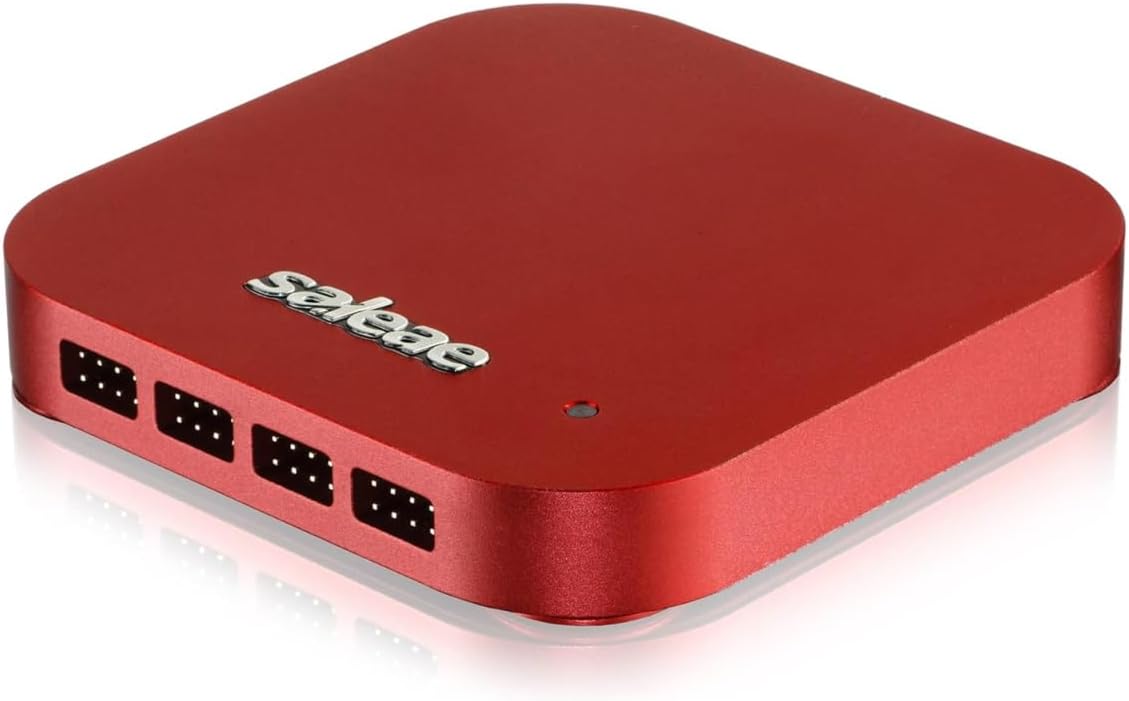
4.8Editor score
This side-by-side comparison evaluates all ten models based on key specifications like sampling speed, channel count, memory depth, and software features to help you identify the most suitable analyzer for your specific electronics development needs.




The LONELY BINARY Logic Analyzer Kit offers an affordable entry point for hobbyists needing reliable digital signal analysis. With a 4.2 rating, it balances cost and functionality well for basic electronics projects involving common protocols.
We may earn a commission when you buy through this link, at no additional cost to you.
Its high-speed 8-channel analysis captures signals at up to 24MHz, enabling precise debugging of I2C, SPI, and UART. The included breakout boards and breadboard adapters simplify connections to microcontrollers and prototyping setups without extra cost.
While it lacks the advanced features of premium models, the dual USB connectivity ensures compatibility across Windows, Mac, and Linux systems. The compact storage case keeps components organized, making it portable for on-the-go work.
This kit is ideal for students and hobbyists working on embedded systems or IoT projects who need immediate out-of-the-box usability. For those prioritizing budget and convenience over high-speed performance, it remains a strong choice.
The breakout board and breadboard adapter allow direct access to all 8 channels, reducing wiring complexity and saving setup time for rapid testing.
Bundled test clips, alligator clips, and jumper wires mean you can start debugging right away without purchasing additional accessories separately.
We may earn a commission when you buy through this link, at no additional cost to you.
The LA1010 USB Logic Analyzer stands out as a cost-effective tool with impressive 100MHz sampling per channel across 16 input channels. Its 4.5 rating reflects strong performance for embedded system development and digital circuit testing.
We may earn a commission when you buy through this link, at no additional cost to you.
Real-time signal visualization converts captured digital signals into clear waveforms on your PC screen, while protocol decoding extracts human-readable data from formats like I2C, SPI, and UART. This accelerates debugging significantly compared to manual signal tracing.
The included KingstVIS PC software supports Windows, Mac, and Linux with auto-installing drivers, ensuring hassle-free cross-platform compatibility. Its portable design and low power consumption make it suitable for long-term monitoring tasks.
Professionals and advanced hobbyists developing MCU or FPGA systems will appreciate its balance of speed and channel count. It offers a reliable middle ground between basic budget models and expensive professional analyzers.
Decoding over 30 standard protocols helps you quickly identify communication errors without manually interpreting raw binary data from waveforms.
Simultaneous capture of 16 digital signals displayed instantly on screen allows you to see timing relationships and glitches as they occur.
We may earn a commission when you buy through this link, at no additional cost to you.
The Saleae Logic Pro 16 is a top-tier tool for professionals needing exceptional precision with up to 500 MS/s digital sample rates and over 10 billion samples. Its 4.8 rating confirms its reliability for complex embedded system analysis.
We may earn a commission when you buy through this link, at no additional cost to you.
It features 16 multi-use digital and analog inputs, allowing simultaneous capture of both signal types for comprehensive debugging. The included software decodes SPI, I2C, and 23+ protocols, simplifying analysis of intricate communication layers.
While the price reflects its high-end capabilities, the USB 3.0 interface ensures fast data transfer and minimal latency during capture. Cross-platform compatibility with Mac, Windows, and Linux makes it versatile for diverse development environments.
Engineers working on advanced IoT, automotive, or FPGA designs will find its speed and memory depth indispensable. For those who demand the highest accuracy and performance, this model sets the industry standard.
With sample rates up to 500 MS/s, you can detect fast signal transitions and narrow glitches that slower analyzers might miss entirely.
Supporting over 10 billion digital samples lets you capture long-duration events without running out of memory during critical testing phases.
We may earn a commission when you buy through this link, at no additional cost to you.
The Saleae Logic Pro 8 delivers professional-grade performance in a compact form with 500 MS/s digital sample rates and over 10 billion samples. It earns a 4.8 rating for its ability to handle complex protocol analysis effectively.
We may earn a commission when you buy through this link, at no additional cost to you.
Eight multi-use digital and analog inputs provide flexibility for mixed-signal debugging, while the software decodes over 23 standard protocols. Its ultra-portable design makes it easy to carry between workstations or field sites.
Like its 16-channel sibling, it supports cross-platform operation on Mac, Windows, and Linux with USB 3.0 connectivity. The build quality ensures durability for regular professional use without compromising on precision or features.
This model suits engineers who need high-speed capture but require fewer than 16 channels for their specific projects. It offers a streamlined alternative for those prioritizing portability alongside top-tier performance.
Eight multi-use inputs allow you to mix digital logic and analog voltage capture for comprehensive system debugging in one device.
The ultra-portable design ensures you can transport this powerful analyzer easily without sacrificing robustness or advanced decoding capabilities.
We may earn a commission when you buy through this link, at no additional cost to you.
This USB Logic Analyzer provides a budget-friendly option with 24MHz sampling and 8 digital channels suitable for basic Arduino and ARM debugging. A 4.5 rating highlights its reliability for entry-level electronics projects.
We may earn a commission when you buy through this link, at no additional cost to you.
It is compatible with Saleae Logic Analyzer software and supports PulseView, offering flexibility in how you visualize and analyze signals. The voltage range of 0V to 5.5V accommodates common logic levels for most microcontrollers.
Sampling rates can be adjusted down to 25KHz, allowing you to optimize capture settings based on your specific project needs. This versatility ensures you can monitor both slow serial data and faster digital signals effectively.
For hobbyists needing a straightforward tool to debug UART, SPI, or I2C without investing in expensive gear, this analyzer works well. Its simplicity makes it ideal for learning digital logic concepts quickly.
Compatibility with popular tools like Saleae and PulseView means you benefit from established interfaces without learning new software from scratch.
Changing sampling rates from 24MHz down to 25KHz lets you capture long durations or focus on high-speed edges as needed.
We may earn a commission when you buy through this link, at no additional cost to you.
The DSLogic Plus offers a strong mid-range option with 400MHz sampling and 16 channels, supported by 256Mbits of onboard memory. Its 4.6 rating reflects reliable performance for embedded testing and debugging tasks.
We may earn a commission when you buy through this link, at no additional cost to you.
It features dual stream and buffer modes allowing long capture duration or high-speed sampling depending on your needs. The shielded fly wires and aluminum case help reduce interference for cleaner waveform results.
DSView software is open-source and compatible with Windows, macOS, and Linux, supporting nearly 100 protocol decoders. Adjustable thresholds with 0.1 step precision let you fine-tune logic level detection for different voltage systems.
This analyzer is a solid choice for intermediate users needing high speed without the premium price tag of professional brands. Its open-source nature ensures long-term software support and community-driven improvements.
Switching between stream and buffer modes lets you choose between long capture times or maximum sample rates for different test scenarios.
DSView being open-source ensures you can extend functionality and access updates indefinitely without vendor lock-in or licensing fees.
We may earn a commission when you buy through this link, at no additional cost to you.
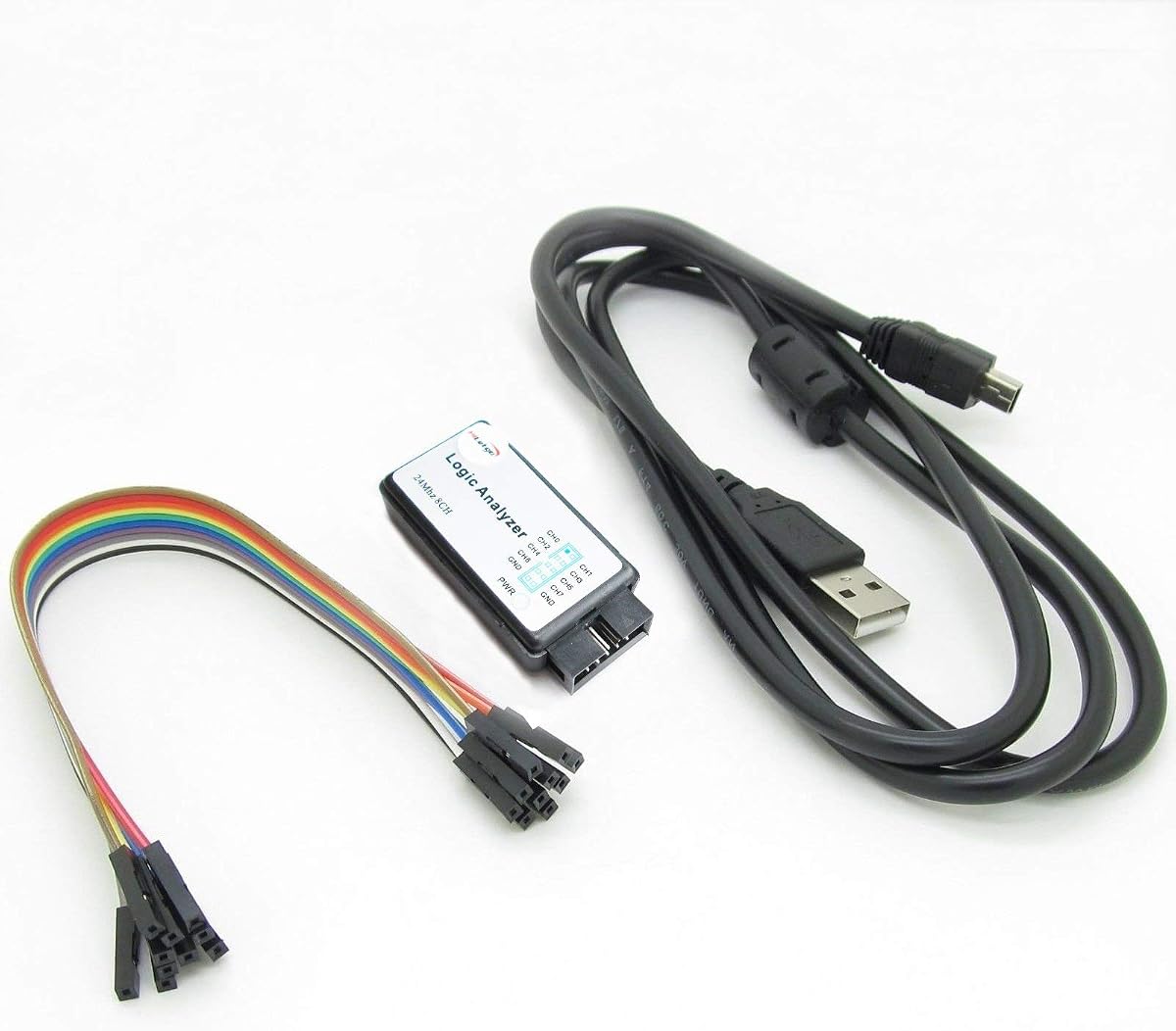
The HiLetgo USB Logic Analyzer provides a simple solution for debugging digital signals with 24MHz sampling and 8 channels at an accessible price. A 4.5 rating indicates consistent performance for basic protocol analysis needs.
We may earn a commission when you buy through this link, at no additional cost to you.
Its USB cable includes an EMI ferrite ring to reduce noise interference during signal capture, resulting in cleaner waveforms for accurate analysis. Input voltage range supports standard 3.3V and 5V logic levels widely used in electronics.
Sampling rates can be adjusted from 24MHz down to 25KHz depending on the application. This adaptability ensures you can monitor both slow serial communication and faster digital transitions effectively.
This model is best suited for hobbyists and students needing a straightforward tool for UART, SPI, and I2C debugging. Its low cost makes it an easy addition to any basic electronics toolkit.
The built-in ferrite ring minimizes electromagnetic interference, leading to more stable readings during sensitive signal measurements.
Flexible sampling rates allow you to optimize capture for various communication speeds without needing multiple tools for different projects.
We may earn a commission when you buy through this link, at no additional cost to you.
The Saleae Logic 8 delivers reliable performance with 100 MS/s digital sampling and 8 multi-use inputs suitable for mixed-signal projects. A 4.5 rating confirms its consistency for decoding common protocols like SPI and I2C.
We may earn a commission when you buy through this link, at no additional cost to you.
It supports over 10 billion samples of digital memory, allowing extensive capture of long-running events via USB 2.0. Its ultra-portable design makes it convenient for fieldwork or shared lab environments.
Cross-platform software compatibility ensures seamless operation on Mac, Windows, and Linux systems. The build quality maintains the high standards expected from Saleae despite being an older or entry-tier model in their line.
This analyzer is ideal for engineers needing a compact tool for routine debugging without requiring 16 channels. It balances price and performance well for mid-level development tasks.
Over 10 billion samples allow extended capture sessions so you can analyze rare glitches that occur over longer periods.
Its small form factor lets you easily carry the analyzer between different workstations without adding bulk to your toolkit.
We may earn a commission when you buy through this link, at no additional cost to you.
This DSLogic Plus variant provides robust performance with 400MHz sampling across 16 channels and an impressive 16G sample depth. Its 4.7 rating reflects high satisfaction among users dealing with complex embedded system tasks.
We may earn a commission when you buy through this link, at no additional cost to you.
The dual-mode support enables real-time streaming for long durations or high-speed buffering for detailed analysis. Shielded wires and adjustable thresholds help reduce noise and improve signal clarity during measurements.
DSView software remains open-source on GitHub, supporting nearly 100 protocol decoders across Windows, macOS, and Linux. This ensures flexibility and long-term usability for various hardware and software environments.
Advanced users requiring high channel counts and deep memory will appreciate its capabilities at a competitive price. It serves as a strong alternative to premium proprietary analyzers for demanding projects.
With 16G sample depth in stream mode, you can capture very long events without losing data integrity due to memory limits.
Support for nearly 100 protocol decoders simplifies the process of interpreting complex communication data in embedded designs.
We may earn a commission when you buy through this link, at no additional cost to you.
The Analog Discovery 3 combines a logic analyzer with oscilloscope and power supply capabilities for a versatile all-in-one lab solution. Its 4.5 rating highlights its adaptability for mixed-signal testing and embedded development.
We may earn a commission when you buy through this link, at no additional cost to you.
It features 16 digital I/O channels up to 125 MS/s along with programmable power supplies and waveform generators. The included software supports multiple instrument views like spectrogram and eye diagram for advanced analysis.
The SDK allows hardware control in C, Python, and MATLAB, enabling custom scripting for automated testing workflows. Compatibility with LabVIEW and further expands its utility in educational or research environments.
This device suits engineers needing a compact multifunctional tool without purchasing separate instruments for scope, logic, and power. Its flexibility makes it a powerful addition to any electronics workshop.
Having oscilloscope, logic analyzer, and power supply in one unit reduces desk clutter and simplifies setup for complex testing.
SDK support in multiple languages lets you automate measurement tasks and integrate the device into custom testing scripts.
We may earn a commission when you buy through this link, at no additional cost to you.
Selecting the right logic analyzer requires evaluating several technical factors that align with your specific electronics development needs and project complexity.
Sampling rate determines how many data points the analyzer captures per second, directly affecting its ability to detect fast signal transitions. Higher rates like 100MHz or 500 MS/s are essential for debugging high-speed protocols or narrow glitches.
For most hobbyist projects, 24MHz to 100MHz is sufficient, while professional designs may require rates above 200MHz for accurate timing analysis.
Channel count defines how many digital signals you can monitor simultaneously, which is critical for multi-wire protocols like SPI or I2C. Ensure the analyzer provides enough channels for all signals you plan to debug at once.
While 8 channels cover basic needs, 16-channel models offer greater flexibility for complex systems without needing multiple probes or devices.
Memory depth impacts how long you can record data at a given sampling rate, affecting your ability to capture intermittent errors or long sequences. Larger memory allows extended capture without dropping data or needing to trigger prematurely.
Look for models with at least 256Mbits of memory for most applications, while professional units may offer billions of samples for extended monitoring.
Built-in protocol decoders translate raw digital signals into human-readable formats like UART or CAN frames, saving significant debugging time. More supported protocols mean the analyzer can handle a wider variety of communication standards.
Check if the software supports common protocols you use often to ensure efficient analysis without manual interpretation of raw waveforms.
The companion software should run on your operating system, whether Windows, Mac, or Linux, to integrate smoothly with your existing workflow. Open-source options offer more flexibility for customization and long-term support.
Ensure drivers install easily and the interface is intuitive to reduce setup time and learning curves for daily use.
Input voltage range must match the logic levels of your target circuits, commonly 3.3V or 5V, to avoid damage or incorrect readings. Adjustable thresholds help differentiate high and low states across different signal types.
An analyzer supporting 0.5V to 5.5V accommodates most microcontroller and FPGA logic levels used in typical electronics projects.
USB connectivity ensures data transfer and power from your computer, with Type-C or USB-A offering compatibility across modern and older PCs. Higher USB standards like 3.0 improve data transfer speeds during capture.
Choose a model with cables and connectors that fit your existing setup to avoid additional purchase costs or setup delays.
For fieldwork or shared labs, a compact and lightweight design allows you to carry the analyzer easily without compromising functionality. Rugged cases and organized accessories protect components during transport.
Prioritize portability if you need to move between workstations frequently, as bulky setups can limit testing flexibility.
Begin by connecting the analyzer's ground lead to a common ground on your circuit to establish a reference point before attaching signal probes. Ensure voltage levels match the analyzer's range to prevent hardware damage.
Open the companion software and configure the sampling rate and number of channels based on your target protocol. Trigger settings help capture specific events like rising edges to isolate glitches effectively.
After capturing data, review waveforms and enable protocol decoders to interpret signals. Keep probes and cables organized and store the unit in a dry place to maintain signal integrity and longevity.
A logic analyzer captures and displays digital signals over time to help debug timing issues and communication protocols. It converts binary states into visual waveforms allowing you to verify correct data transmission between components.
The number of channels depends on how many signals you need to monitor simultaneously. Basic projects often require 4 to 8 channels while complex systems may need 16 to capture multiple protocols at once.
Most standard logic analyzers only handle digital signals but some hybrid models include mixed inputs for both digital and analog. Check the specs to confirm analog capture capability if voltage monitoring is needed.
Yes, logic analyzers work well with Arduino and Raspberry Pi projects by connecting to GPIO pins. They help debug serial communication like UART, SPI, or I2C commonly used with these boards.
Most analyzers include proprietary software for Windows, Mac, or Linux with protocol decoding features. Open-source options are also available providing flexibility for custom analysis across different operating systems.
Ensure input voltage ranges match your circuit's logic levels and always connect ground before probing signals. Avoid shorting probes together and use adapters if necessary to isolate voltage differences safely.
Higher sampling rates capture finer signal details but may require more memory and processing power. For most projects, moderate rates around 100MHz balance performance and cost effectively without unnecessary complexity.
Many modern analyzers offer user-friendly interfaces and auto-detection features to simplify setup for beginners. Learning basic trigger settings and protocol decoding will help you get accurate results quickly.
This guide covered ten logic analyzers ranging from budget models like LONELY BINARY to premium tools like Saleae Logic Pro 16. Each option offers distinct strengths in sampling speed, channel count, and software features.
Prioritize sampling rate and protocol support that match your most common debugging tasks. A balanced choice ensures you capture accurate data without overspending on unnecessary high-end capabilities.
Remember that availability and specifications can vary over time so verify current details and user reviews before buying. Selecting the right analyzer will streamline your electronics development process significantly.