
M350 AUPHY Mechanical Metronome
4.4Editor score
High-strength PC body
Metal clockwork movement
Transparent dust cover
Accent bell options
Low center of gravity
This guide compares the top ten mechanical metronome for piano options available today for accuracy, durability, sound, and value.
Finding the right timing tool is crucial for every pianist aiming for precision. A mechanical metronome for piano offers timeless reliability without batteries or digital screens. It helps musicians internalize rhythm through consistent auditory and visual cues during practice sessions.
We evaluated ten models based on build quality, tempo range, bell options, and ease of use. Each unit was assessed for its ability to maintain steady beats across different speeds. Our analysis highlights standout features that cater to beginners and advanced players alike.
This list presents detailed insights into every selected product with real user ratings. You will see exactly what makes each choice unique for your practice needs. Remember that availability and stock levels can change so check current status before ordering.
4.4Editor score

4.5Editor score

4.6Editor score
The following table provides a side-by-side overview of all ten mechanical metronome for piano options. Compare key specifications like construction materials, tempo ranges, and bell features to find your ideal match quickly.



This Tempi mechanical metronome for piano stands out with its elegant brown grain veneer finish. It holds a strong 4.5 star rating from users who appreciate its precision and build quality. The device establishes accurate timing for musicians while offering a visual sense of rhythm through the pendulum.
We may earn a commission when you buy through this link, at no additional cost to you.
Its steel gears ensure long lasting durability which is crucial for frequent practice sessions. The wind up mechanism provides an average of 20 minutes of runtime reducing frustration during long study periods. You can adjust beats from 40 to 208 BPM with optional bell rings for specific beat patterns.
While it carries a higher price point than budget options the included two-year warranty justifies the investment. Some users note the pendulum requires gentle handling to maintain accuracy over time. These trade-offs are acceptable given the classic look and reliable performance it delivers daily.
It is ideal for serious piano students and adults who value both aesthetics and function. The device helps develop finger agility and preciseness making it a versatile companion for home practice. We recommend this model for those seeking a timeless tool that enhances musical awareness.
The brown grain veneer makes this metronome a beautiful piece of home decor.
Steel gears ensure that the beat remains accurate even with years of regular use.
We may earn a commission when you buy through this link, at no additional cost to you.
The M350 AUPHY model offers a great balance of cost and functionality for piano players. It features a high-strength PC body with a transparent dust cover that protects the internal clockwork. Users rate it highly for its accurate beat and classic shape that fits well on any piano stand.
We may earn a commission when you buy through this link, at no additional cost to you.
Its metal clockwork and POM gears are tightly fitted to prevent rust or corrosion over time. The low center of gravity ensures stability during vigorous practice sessions without tipping over easily. You can choose from five beat selections including an accent bell to highlight downbeats clearly.
Although it requires wind up it is battery free which reduces long-term operational costs. The error margin is controlled within 1 percent which meets most practice needs effectively. Some may find the wind up mechanism requires initial adjustment to get used to.
This model is perfect for students and instrumentalists wishing to improve their playing without overspending. Its simple design makes it easy to set the tempo and start practicing immediately. We recommend it as an accessible entry point into mechanical rhythm tools.
The lowered center of gravity keeps the unit steady even when placed on uneven surfaces.
Selecting different beat numbers allows you to practice complex time signatures with ease.
We may earn a commission when you buy through this link, at no additional cost to you.
The Wittner 836 Taktell Piccolo is a classic choice for pianists who value brand reliability. It holds an impressive 4.6 star rating for its consistent performance over many years. This black mechanical metronome features a compact design that fits easily into a music bag for lessons.
We may earn a commission when you buy through this link, at no additional cost to you.
Its plastic casing makes it durable yet lightweight compared to heavier wood or metal models. The device relies on pure mechanical timing which ensures no battery interruptions during critical performances. It lacks a bell but provides a clear tick that is easy to follow.
While it does not offer bells its simplicity is often preferred by professional performers. The compact size means you can carry it to recitals without adding bulk to your gear. Some users might prefer additional features but the accuracy remains top tier.
This model is ideal for those who need a dependable tool for daily practice and travel. It simplifies the practice process by focusing purely on tempo without extra distractions. We recommend this for musicians who prioritize portability and proven brand quality.
The piccolo size ensures it takes up minimal space on a crowded piano top.
Wittner has been a trusted name in music accessories for generations.
We may earn a commission when you buy through this link, at no additional cost to you.
This Ueteto model focuses on providing a loud and clear sound for effective practice. It has a 4.4 star rating reflecting its success in helping users maintain tempo accurately. The device is applicable for most instruments including piano violin and guitar making it versatile.
We may earn a commission when you buy through this link, at no additional cost to you.
Its wind up mechanism produces metrical beats without needing batteries or electricity. You can adjust the tempo from 40 to 208 beats per minute to suit any piece. The bell ring option helps distinguish beat counts for complex musical patterns during play.
The simple operation makes it accessible even for children and beginners starting out. Users report it helps increase musical awareness by providing a steady rhythmic anchor. Some may find the plastic body less premium but it stands up well to daily use.
It is an excellent choice for those who need a straightforward loud tool for home practice. The durable construction ensures it can withstand regular handling without breaking easily. We recommend it for anyone seeking a cost-effective reliable mechanical metronome.
The audible click and bell ring ensure you never lose the beat during play.
Works effectively across multiple instruments so one tool serves all your needs.
We may earn a commission when you buy through this link, at no additional cost to you.
This model combines an elegant wood grain look with a high precision mechanical movement. It holds a 4.4 star rating for its ability to help beginners track beat and tempo effectively. The all metal movement ensures long time use without error which is vital for consistent practice.
We may earn a commission when you buy through this link, at no additional cost to you.
You can choose from various beat selections to meet the requirements of any musical instrument. The loud sound allows you to focus on playing rather than counting beats mentally. It helps master rhythm skills and improve your sense of rhythm significantly.
The easy to use design lets you remove the stopper wind it up and start quickly. Users appreciate how it helps play accurately and increase musical awareness over time. Some might prefer a full wood body but the finish provides a classic aesthetic touch.
It is suitable for piano guitar violin and other instruments making it a versatile choice. The high precision track makes it reliable for students who need to learn tempo strictly. We recommend this for those who want style mixed with accurate timing.
Simple setup steps allow new users to start practicing without frustration or confusion.
Metal components ensure that the timing remains consistent and accurate over years.
We may earn a commission when you buy through this link, at no additional cost to you.
This mechanical metronome offers a high precision beat that helps beginners establish the concept of rhythm. It carries a 4.2 star rating from users who value its loud sound and intuitive visual feedback. The metal movement of the pendulum helps maintain accurate timing over long periods.
We may earn a commission when you buy through this link, at no additional cost to you.
The body is made of high-strength PC with a transparent dust cover to protect internal parts. You can select from five beat options including an accent bell for specific rhythmic patterns. Its error is controlled within 1 percent which meets most daily practice needs.
It features a simple operation process that includes pulling out the bottom brake before use. The walnut color adds an elegant touch to your room while meeting daily practice needs. Some users note it is great for beginners but requires gentle winding to avoid damage.
It is a solid choice for students who need a clear visual and auditory practice aid. The device works well for piano guitar violin and saxophone making it broadly applicable. We recommend it for anyone seeking a reliable tool for mastering rhythm skills.
The moving pendulum helps subconsciously establish the concept of the beat.
Metal movement ensures resistance to rust and corrosion over time.
We may earn a commission when you buy through this link, at no additional cost to you.
This universal mechanical metronome is designed to work across a wide range of instruments. It holds a strong 4.6 star rating for its accurate and durable performance. The movement is made of high-hardness plastic and metal which ensures precise rhythm and stability.
We may earn a commission when you buy through this link, at no additional cost to you.
You can adjust beats from 40 to 208 bpm with heavy bell sound options available. The device is easy to use for beginners and children who want to improve their sense of rhythm. It offers multiple colors to choose from so you can match your decor.
Its sturdy build ensures it can withstand regular practice sessions without failing. The manufacturer offers a 30-day unconditional return and a one-year warranty for peace of mind. Some may find the design simple but it is highly functional for daily needs.
It is an excellent choice for those who need a reliable tool for piano violin or drums. The durable construction ensures long-lasting performance without frequent replacements. We recommend this for anyone seeking a universal and dependable mechanical timing device.
Works seamlessly with piano violin drums and guitar for all your practice needs.
One-year manufacturer warranty provides assurance against potential quality issues.
We may earn a commission when you buy through this link, at no additional cost to you.
This Ueteto model features a classic wood grain finish that looks great on any piano. It has a 4.3 star rating for providing clear and audible click sounds that are easy to recognize. The loud and crisp tick cuts through practice providing a steady rhythmic anchor.
We may earn a commission when you buy through this link, at no additional cost to you.
It is a mechanical device that requires no batteries ensuring long operational life without replacements. A full wind lasts about 54 minutes at slower tempos which reduces the need for frequent winding. The simple operation allows beginners to start practicing immediately with setup.
Its precision rhythm control covers a full tempo range to suit any musical style. Users note the clear scale and audible tick make it a versatile companion for multiple instruments. Some must be careful not to force the winding key to avoid spring damage.
It is suitable for piano violin guitar and drums making it a great choice for all-round use. The elegant appearance complements home decor while serving a vital practice function. We recommend this for those who appreciate classic aesthetics in their tools.
The wood grain finish adds a touch of elegance to your practice space.
Never worry about dead batteries during a recital or focused session.
We may earn a commission when you buy through this link, at no additional cost to you.
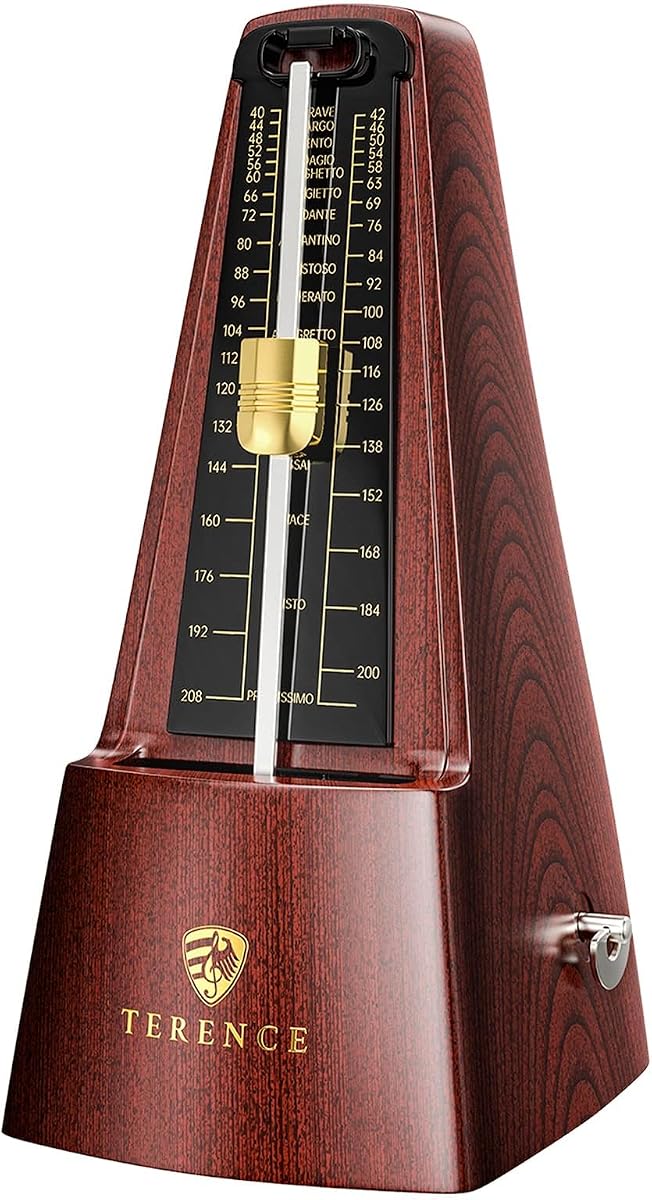
This TERENCE model stands out with a unique transparent design that is visually appealing. It holds a 4.0 star rating and features upgraded mechanical movement for better performance. The transparent material makes the internal gears and movement visible which adds a modern touch.
We may earn a commission when you buy through this link, at no additional cost to you.
It uses an all-copper pendulum that adjusts beat speed with a metal knob. The upgraded mechanical movement design allows you to use it longer without frequent winding. Users appreciate that the ABS material remains bright without yellowing over long-term use.
The clear scale and adjustable speed range help improve practice efficiency and concentration. It is suitable for piano violin guitar and dance training making it versatile. Some users may prefer more traditional looks but this offers a fresh modern aesthetic.
It is a great gift for teaching beginners who want a device that looks interesting. The loud sound and high precision track help master beat and speed effectively. We recommend it for those seeking a unique visual tool for music learning.
The transparent body allows you to see the mechanical movement at work.
Upgraded movement ensures sound clarity and reduced winding frequency.
We may earn a commission when you buy through this link, at no additional cost to you.
This budget-friendly mechanical metronome delivers precise beats with a loud clear sound. It has a 3.8 star rating reflecting its value for those seeking a simple reliable tool. It offers five tempo settings ranging from 40 to 208 beats per minute for flexibility.
We may earn a commission when you buy through this link, at no additional cost to you.
The device is crafted from premium materials with engraved markings to ensure long-lasting durability. It allows you to choose the most suitable tempo during training for any instrument. Users note it meets daily training requirements and is easy for new learners to start.
Its simple operation involves removing the dust cover and winding the mainspring clockwise. It is suitable for beginners exam candidates and professional performers alike. Some may find the build basic but it provides functional reliability for daily use.
It is an ideal choice for students who need a dependable tool without high cost. The loud sound ensures you can hear the beat over other environmental noise. We recommend it for anyone seeking an accessible entry-level mechanical metronome.
Delivers essential functionality at a price point that is accessible to all.
Loud sound ensures the beat is audible even in a busy room.
We may earn a commission when you buy through this link, at no additional cost to you.
Choosing the right mechanical metronome for piano involves evaluating build quality, sound clarity, and ease of use. This section breaks down the key factors to consider before making your purchase decision.
Mechanical metronomes rely on internal gears and springs that must withstand frequent use. Look for models with metal movements or high-strength PC bodies to ensure long-term reliability. The casing should protect the internal parts from dust and accidental drops during practice. High durability ensures you do not need to replace the unit frequently.
Prioritize devices with proven materials like metal gears or hard plastic shells. Check user feedback regarding breakage or wear after months of use.
A wide tempo range allows you to practice pieces from slow adagios to fast allegros. Most quality units offer 40 to 208 beats per minute to cover all standard musical requirements. Ensure the weight slides smoothly so you can adjust the speed precisely without slippage. A broad range supports growth as your skill level increases.
Check the minimum and maximum tempo settings to ensure they match your repertoire needs. Smooth adjustments are key to accurate timing across all speeds.
Bell rings help you identify the first beat of a measure which is critical for time signatures. Many models offer selectable bell rings for two three four or six beats to match your piece. Being able to turn the bell off allows for pure click practice when needed. This feature is especially useful for complex rhythmic structures.
Look for beat selections that give you control over which counts sound with an accent. This flexibility helps internalize the rhythm structure more effectively.
The sound must be loud enough to hear clearly over piano keys and ambient noise. Look for descriptors like loud sound or crisp tick in product descriptions. A clear click reduces confusion so you stay focused on playing rather than counting. Audible feedback ensures you do not miss a beat during intense practice.
Read reviews to confirm that the sound remains audible in your specific practice environment. A clear click is essential for effective rhythm training.
Since mechanical units require no batteries check how long a full wind lasts for your use. Longer runtime means less frequent winding during long practice sessions. Look for descriptions stating 15 to 45 minutes of operation depending on tempo. A smooth winding mechanism prevents damage to the spring over time.
Ensure the winding process is smooth and does not require excessive force. A good spring ensures consistent performance throughout the session.
The look of your metronome can affect your motivation and the decor of your studio. Options include classic wood grain, sleek black plastic, or transparent modern designs. Consider whether you want a device that blends in or adds visual appeal to your setup. A pleasing design can make practice more inviting and enjoyable.
Choose a finish that matches your piano and room style. Aesthetic appeal can enhance the overall practice experience significantly.
Beginners should prioritize models that are simple to set up and operate without confusion. Features like a bottom brake lever and clear scale markings help start quickly. Ensure you can adjust beats and tempo intuitively before practicing. A user-friendly interface saves time that you can spend on playing music.
Look for models with clear instructions and easy access to wind and stop buttons. Simplicity ensures you spend more time playing than fumbling with settings.
Mechanical metronomes vary in price depending on materials and brand reputation. Higher cost often reflects better durability and more features like bells or metal movements. Check for warranty terms to ensure you are protected against defects. A good warranty offers peace of mind and potential replacement value.
Balance your budget with the expected lifespan of the unit. Investing in a model with a solid warranty often proves cost-effective over time.
Place the metronome on a flat stable surface near your piano to ensure it does not tip during use. Engage any locking brake before winding to prevent accidental movement while setting up. Position it so you can see the pendulum swing clearly without straining your neck.
To start remove the dust cover if present and wind the key clockwise gently until you feel resistance. Set your desired tempo by sliding the weight up or down the scale. Select your beat pattern using the bell switch and flick the pendulum to release the spring.
Regularly clean the exterior with a soft cloth to prevent dust from entering the mechanism. Store the unit in a dry place away from extreme temperatures to preserve the spring tension. Avoid forcing the wind key if it becomes hard to turn as this may damage the internal gears.
No, mechanical metronomes do not require batteries to operate. They are powered by a spring mechanism that you wind up manually. This ensures you can use them indefinitely without worrying about battery replacements or electronic failures during practice.
Quality mechanical metronomes are highly accurate when properly calibrated and placed on a stable surface. While digital apps may offer precise timers, mechanical units provide a consistent wind-up rhythm that helps internalize timing better. Most users find them sufficiently precise for daily practice and performance prep.
Yes, these devices are suitable for all instruments including guitar violin drums and saxophone. They deliver a clear audible click that helps maintain rhythm regardless of the instrument. Many models explicitly mention multi-instrument support in their descriptions for versatility.
Most standard mechanical metronomes offer a tempo range between 40 and 208 beats per minute. This range covers almost all musical styles from slow classical pieces to fast technical studies. Always check the product specifications to confirm the range meets your specific practice needs.
The pendulum may stop if the spring is not fully wound or if the device is tilted. Ensure you wind the key until you feel gentle resistance to fully charge the spring. Place the metronome on a flat level surface to maintain consistent operation without interruption.
Yes, many models include an accent bell that sounds on specific beats like every second or third. This feature is adjustable so you can turn it off or select different beat patterns. It is ideal for practicing time signatures where the first beat needs emphasis.
The beat pattern you choose should match the time signature of the music you are playing. For example, choose three for a waltz or four for common 4/4 time. Select zero if you only need the steady click without accents or rhythmic cues.
It is recommended to wipe the exterior monthly with a dry cloth to remove dust and fingerprints. Avoid using liquid cleaners that could seep inside and damage the gears or springs. Proper care ensures the device remains functional and visually appealing for years.
We have explored ten distinct mechanical metronome for piano options ranging from classic designs to modern transparent builds. Each unit offers unique features that cater to different priorities like sound volume, design, or durability. Choosing the right one depends on your specific practice needs and aesthetic preferences.
Prioritize a model that matches your skill level and the style of music you play. Beginners may appreciate simpler wind up mechanisms while professionals often favor steel gears for accuracy. Ensure the tempo range and bell options align with the complexity of your repertoire.
Remember that current stock and availability can change so verify product details before ordering. We hope this guide helps you find a reliable rhythm companion that enhances your musical journey.